

Choosing an Electric Handpiece System
A bur that slows down in dense enamel, a handpiece that runs hot after a short procedure, or an upgrade that requires unexpected adapter purchases can turn a promising equipment decision into daily frustration. The right electric handpiece system gives clinicians controlled, dependable cutting power while helping practices standardize performance across restorative, crown and bridge, endodontic, and surgical workflows.
Electric systems are no longer limited to high-end operatories. For practices balancing clinical performance with disciplined capital spending, they offer a practical path to stronger torque, more consistent speed, and a more refined patient experience. The best choice is not simply the system with the highest specification. It is the one that fits your existing delivery units, supports the attachments your team uses, and can be maintained without disrupting the schedule.
What a Dental Electric Handpiece System Includes
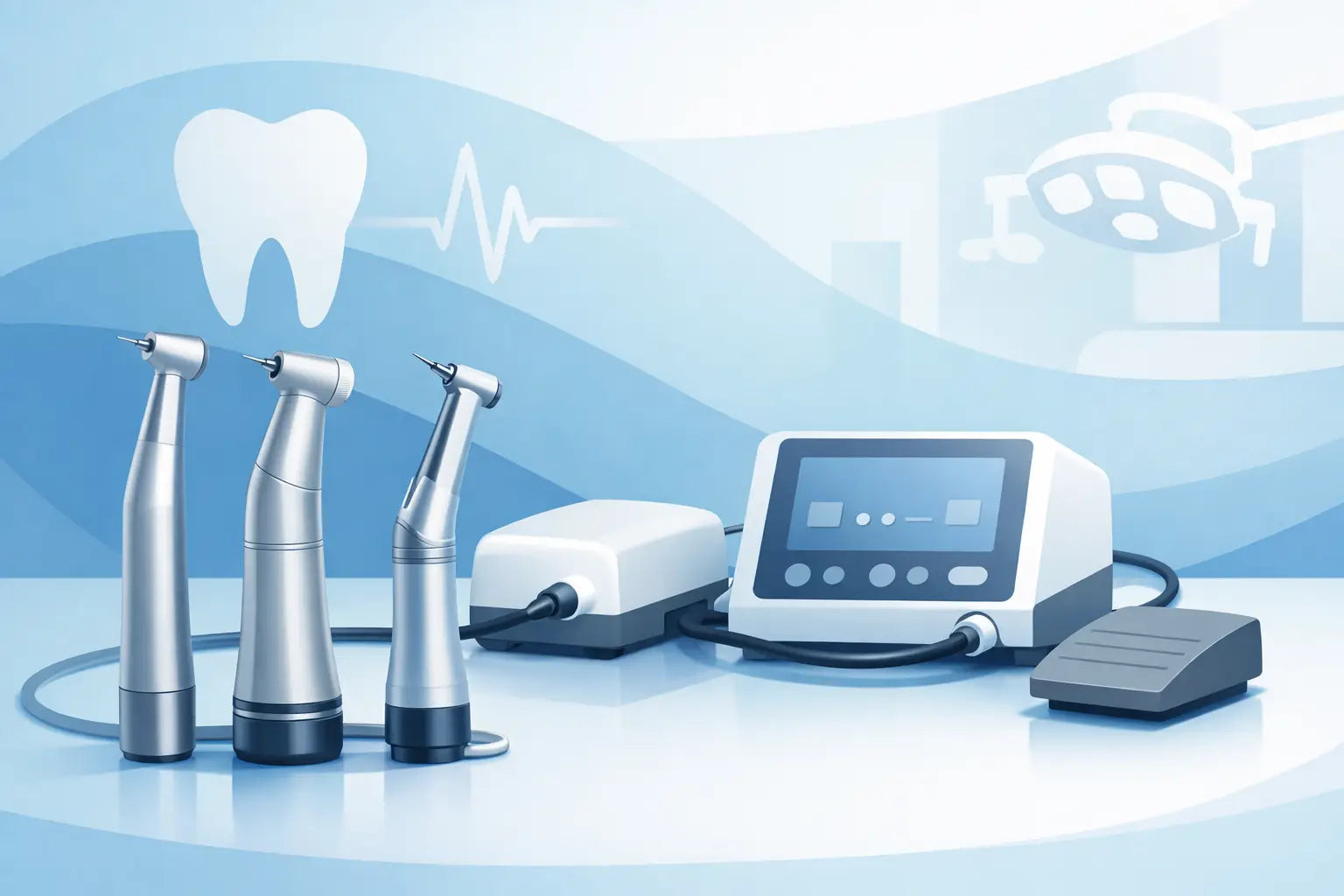
An electric handpiece setup is a connected system, not just a motor. The core components are an electric micromotor, a control module or integration connection, a motor hose or coupler, and one or more attachments. Those attachments may include a 1:5 increasing contra-angle for high-speed restorative work, a 1:1 straight or contra-angle, and a reduction attachment such as 20:1 for endodontic or implant applications.
The motor produces rotational energy, while the attachment determines the final speed and torque delivered to the bur or file. This distinction matters during purchasing. A strong motor can only deliver its full value when paired with appropriate, well-maintained attachments and compatible control settings.
Unlike an air-driven turbine, an electric motor maintains more consistent torque as resistance increases. That can be especially noticeable during crown preparation, removal of restorative material, or cutting through tougher tooth structure. Electric systems also run at lower operating noise than traditional turbines, which can make the operatory feel calmer for both patients and clinical teams.
Why Practices Move From Air to Electric
The primary advantage is control. Air turbines can feel fast and familiar, but their torque falls as cutting resistance rises. Electric handpieces offer more stable rotational performance, allowing the clinician to work with less pressure and greater predictability.
For restorative dentistry, a 1:5 attachment can reach high working speeds with a controlled, powerful feel. During long preparations, that consistency can reduce the tendency to press harder or pause repeatedly because the bur is bogging down. For endodontic and implant applications, reduction attachments support lower-speed, high-torque procedures where precision is more important than raw speed.
There are workflow benefits as well. Electric motors can provide adjustable speed ranges, directional control, and programmable settings depending on the system. A practice that uses different attachments across multiple rooms can create more repeatable setups, reducing variation from one operatory to another.
The trade-off is that electric systems typically involve a higher upfront investment than a basic air turbine. They also require attention to attachment ratios, lubrication requirements, autoclavable components, and integration details. For many practices, those considerations are manageable, but they should be part of the buying decision from the beginning.
Start With Your Procedures, Not the Product Sheet
A general practice performing a high volume of crown and bridge procedures will likely prioritize a reliable 1:5 increasing attachment, powerful high-speed cutting, and compatibility with daily sterilization cycles. An endodontic practice may place greater value on reduction options, accurate speed control, and forward-reverse capability. Implant-focused providers may need low-speed torque control and a system that complements their surgical protocol.
Before comparing models, look at where the handpiece will be used most often. Consider the procedure mix, the number of operatories, the number of clinicians sharing equipment, and whether your office needs a replacement for an existing electric setup or a complete conversion from air-driven handpieces.
This approach prevents overbuying. A multi-function system with advanced programming may be worthwhile in a specialty setting, but unnecessary complexity can add cost without improving the workflow in a straightforward general practice. Conversely, selecting a basic motor without the attachment range your clinicians need can create a bottleneck as the practice grows.
Key Specifications That Affect Daily Performance
Torque, speed range, and attachment ratio should be evaluated together. A 1:5 increasing attachment is commonly used for high-speed restorative work, while 1:1 attachments provide direct drive and reduction attachments lower speed while increasing torque. The usable result depends on the motor and attachment combination, not either component alone.
Also review water spray configuration. Adequate spray helps manage heat during tooth preparation and improves visibility in the treatment field. The number and positioning of spray ports can affect how well water reaches the bur during clinical use.
Lighting is another practical consideration. Fiber optic illumination can improve visibility, particularly during posterior preparations and detailed restorative work. Confirm whether light transmission is supported through the motor, hose, and attachment combination. A light-ready attachment does not automatically mean the full system will provide illumination.
Noise, balance, and head size deserve equal attention. Specifications can look excellent on paper, yet a handpiece that feels awkward in the hand may not be the best match for clinicians completing long procedures. Smaller heads can improve access in posterior areas, while a balanced design may help reduce hand fatigue. When possible, involve the clinicians who will use the equipment before standardizing a system across the practice.
Confirm Compatibility Before You Buy
Compatibility is one of the most overlooked parts of an electric handpiece purchase. Delivery-unit configuration, hose connections, existing couplers, control electronics, and attachment interfaces all determine whether installation will be simple or require additional parts and service.
Ask clear questions before ordering: Does the motor integrate with the existing chair? Is an external control unit required? Which attachments are compatible with the motor? Are fiber optic functions supported? What installation work is needed, and who will perform it?
For multi-location groups and DSOs, standardization has additional value. Using the same motor and attachment platform across several sites can simplify purchasing, staff training, preventive maintenance, and spare-equipment planning. That does not mean every location needs the same configuration. Specialty sites may require different attachments, but a common core platform can reduce unnecessary variation.
Regulatory status should be part of procurement due diligence as well. Dental practices should verify that equipment is appropriate for professional clinical use in the United States and follow the manufacturer’s instructions for installation, operation, cleaning, lubrication, and sterilization. Buying from a supplier that can provide responsive product support helps avoid uncertainty after the sale.
Budget for the Full System and Its Lifecycle
The purchase price of the motor is only one part of the investment. A realistic budget includes the control unit or integration components, attachments, lighting features, couplers if needed, installation, and backup capacity. A practice that relies on one electric motor for every high-speed procedure should consider how it will continue operating if that unit is being serviced.
Maintenance also affects long-term value. Electric attachments need routine cleaning, lubrication when required by the manufacturer, and proper sterilization. Skipping these steps can shorten bearing life, reduce spray performance, and create costly downtime. Establishing a simple handpiece care process protects the investment far better than treating maintenance as an afterthought.
Replacement parts and service availability matter just as much as the initial warranty. A lower-priced system may be a smart purchase if replacement attachments, repairs, and technical support are accessible. On the other hand, a low price becomes less attractive when an issue sidelines an operatory for days.
At ProElite Dental Supply, practices can evaluate professional-grade equipment with an emphasis on transparent communication, responsive support, and smart-practice pricing. That is particularly valuable when a purchase involves multiple components and installation questions rather than a single disposable item.
A Practical Purchasing Plan
First, identify the procedures the system must support and the attachment ratios required. Next, confirm chairside compatibility and determine whether integration or an external control module is the better fit. Then compare systems based on usable clinical features: torque consistency, spray, illumination, ergonomics, sterilization requirements, warranty coverage, and service support.
Finally, plan for continuity. Keep a backup handpiece or alternative operatory available, train assistants on the manufacturer-approved care process, and maintain an organized record of model numbers and purchase dates. These small operational details often determine whether a new system feels like a true upgrade or another item to troubleshoot.
A well-chosen electric setup should make the clinical day feel more controlled, not more complicated. Select the system around the work your practice performs most, support it with the right attachments and maintenance routine, and it can deliver reliable performance case after case.