

Sonic Endodontic Irrigation Activation Explained
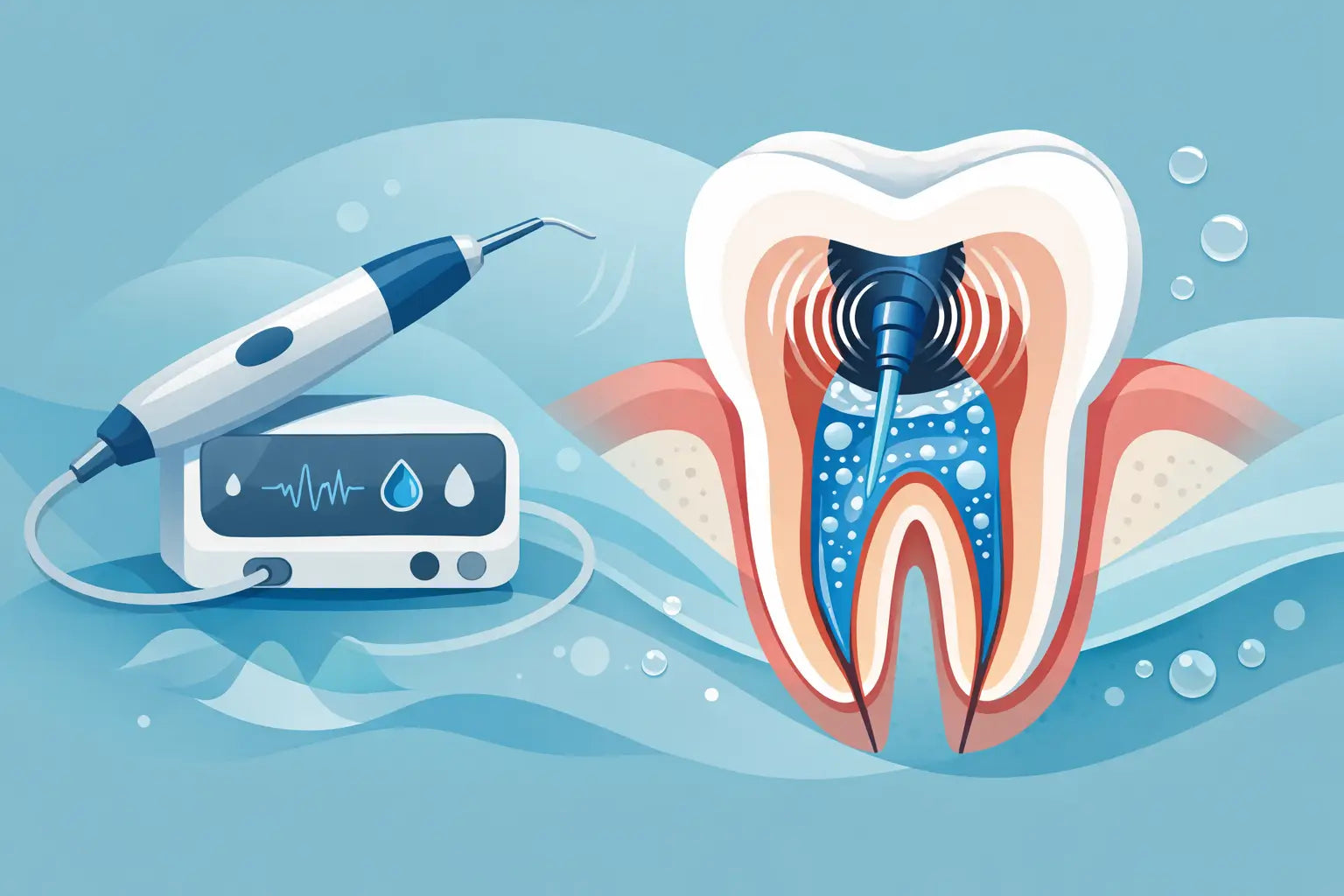
A canal can look well-shaped on the radiograph and still retain debris, biofilm, and tissue remnants in fins, isthmuses, and other anatomy a file never fully contacts. That is where sonic endodontic irrigation activation earns its place in a contemporary protocol. It is not a substitute for sound access, glide path management, shaping, or a properly selected irrigant. It is a practical way to improve irrigant movement after those fundamentals are in place.
For general dentists and endodontic practices, the value is straightforward: better irrigation activation can support more predictable cleaning without adding a complicated workflow or a major capital expense. The key is understanding what sonic activation does, where it performs best, and how to use it without creating unnecessary risk.
What Sonic Endodontic Irrigation Activation Does
Sonic activation uses a flexible, noncutting polymer tip that oscillates in an irrigant-filled canal. The device operates at sonic frequencies, commonly in the low-thousands of cycles per second, creating hydrodynamic movement within the solution. This movement helps refresh the irrigant around the canal walls and promotes exchange between the main canal and areas shaped instrumentation may not reach directly.
The objective is not to make the tip cut dentin or aggressively scour the canal. Instead, the oscillation agitates the irrigant, encouraging it to penetrate more effectively into irregular anatomy. In a properly prepared canal, this can improve the effectiveness of sodium hypochlorite for organic tissue dissolution and can support chelating solutions used for smear-layer management.
Sonic devices are generally designed to be accessible and forgiving. Their flexible tips are less likely than metal activation tips to alter canal walls when used correctly, making them a sensible option for clinicians who want a repeatable activation step in routine endodontic cases.
Why Activated Irrigation Matters After Shaping
Mechanical preparation remains essential, but it has physical limits. Rotary and reciprocating files create a tapered preparation that provides access for irrigants and obturation materials. They do not, however, instrument every square millimeter of a complex root canal system.
Oval canals, lateral anatomy, apical deltas, internal resorption defects, and isthmuses can all retain tissue and debris despite appropriate shaping. Passive delivery of irrigant through a syringe may leave stagnant zones, especially when the needle cannot safely approach working length or becomes wedged within the canal.
Activation improves fluid dynamics. It can help move fresh solution into the prepared space, dislodge loosely attached debris, and increase contact between the irrigant and canal walls. This is particularly relevant during the final irrigation sequence, when the clinical goal shifts from creating shape to preparing the canal system for a clean, well-sealed obturation.
That said, activation is only as effective as the chemistry and preparation behind it. A short sonic cycle cannot compensate for inadequate sodium hypochlorite volume, poor replenishment, blocked canals, or a preparation that does not allow irrigant penetration.
Sonic vs. Ultrasonic Activation: A Practical Comparison
Sonic and ultrasonic activation are often discussed together because both aim to improve irrigant agitation. Their operating mechanics differ, and neither method is automatically the right answer for every practice.
Ultrasonic systems operate at substantially higher frequencies and commonly use thin metal inserts. Under favorable conditions, ultrasonic activation can create strong acoustic streaming and may provide effective agitation in complex anatomy. It can also require more careful technique. A metal insert contacting canal walls can reduce free oscillation, and aggressive use in a curved or narrow canal may increase the chance of unintended dentin alteration or procedural complications.
Sonic activation operates at lower frequencies with flexible polymer tips. The amplitude of movement can be greater, even though the frequency is lower. In daily use, many clinicians appreciate the tactile simplicity, lower learning curve, and reduced concern about a rigid metal tip contacting canal walls.
The trade-off is clinical rather than promotional: ultrasonic activation may be preferred by clinicians with established protocols, specific equipment, and experience in challenging anatomy. Sonic activation can be a highly practical choice for routine cases, for offices standardizing an efficient final-irrigation workflow, and for clinicians seeking a reliable adjunct without unnecessary complexity.
A Reliable Sonic Activation Protocol
The best protocol is the one your clinical team can perform consistently while respecting canal anatomy and irrigant safety. Sonic activation is usually most valuable after shaping is complete or nearly complete, when the canal has enough space for the activation tip to move freely.
Start With Adequate Irrigant Delivery
Before activation, deliver the irrigant with a side-vented needle using controlled pressure. Avoid binding the needle in the canal, and do not force solution apically. Place the needle short of working length according to the anatomy, preparation size, and your clinical judgment.
For sodium hypochlorite, volume and replenishment matter. Activation works on the irrigant present in the canal, so depleted solution should be refreshed rather than activated repeatedly without exchange. In a typical sequence, clinicians may alternate delivery and activation several times to maintain chemical activity.
Select a Tip That Moves Freely
Choose an activation tip that can enter the prepared canal without binding. The tip should generally remain short of working length and should not be forced into the apical region. Free movement is central to effective sonic action.
A tip that is too large for the preparation, inserted too deeply, or pressed against a canal wall will not oscillate as intended. It also introduces avoidable risk. This is one reason preparation size, apical anatomy, and curvature should guide activation decisions rather than a one-size-fits-all depth.
Use Short, Controlled Activation Cycles
Short activation cycles are easy to incorporate into a predictable workflow. During each cycle, keep the tip in the irrigant, use gentle in-and-out movement where appropriate, and avoid locking it in place. Replenish the irrigant between cycles when indicated.
There is no universal time setting that fits every tooth. A straightforward single-rooted case with a well-prepared canal may need less activation than a molar with known isthmus anatomy or a retreatment case with persistent debris. The clinician should tailor the sequence to anatomy, irrigant choice, and the overall treatment plan.
Keep EDTA and Sodium Hypochlorite Steps Deliberate
Sonic activation can be used with both sodium hypochlorite and EDTA when following the directions for the specific system and solution. The irrigants have different jobs. Sodium hypochlorite supports organic tissue dissolution and antimicrobial action, while EDTA is commonly used to address the inorganic portion of the smear layer.
Avoid treating the final rinse as an afterthought. A deliberate sequence with adequate solution exchange, activation, and a final rinse consistent with your protocol can improve cleanliness before drying and obturation. Compatibility, concentration, contact time, and safety procedures should always follow manufacturer instructions and accepted clinical standards.
Common Technique Errors That Reduce Results
Most shortcomings with sonic activation are workflow issues, not equipment failures. Activating a canal with insufficient irrigant is one of the most common mistakes. The tip needs fluid around it to create useful movement; a partially dry canal will not deliver the intended hydrodynamic effect.
Another issue is forcing the tip toward working length. Sonic tips are designed for noncutting activation, not for negotiating restrictive anatomy. If a tip binds, step back, reassess the preparation, and choose a more appropriate tip or depth.
Clinicians should also avoid overestimating what activation can accomplish in a poorly shaped or blocked canal. If debris has accumulated apically or the canal has not been adequately opened, first restore patency and improve irrigation access using sound endodontic principles. Activation comes after access and shaping - not before them.
Finally, use irrigant safety measures every time. A rubber dam, controlled needle placement, gentle delivery, and attention to patient comfort remain non-negotiable. Better fluid movement is valuable only when the irrigant is managed safely.
Choosing a Sonic Activation System for Your Practice
When evaluating sonic irrigation equipment, focus on practical clinical fit. The system should provide reliable oscillation, tips in sizes that match your typical preparation techniques, and a handpiece design that feels stable during posterior access. Disposable or autoclavable components, replacement-tip availability, and straightforward maintenance also affect the real cost of ownership.
For multi-provider practices and dental schools, standardization may matter as much as raw performance. A system that is intuitive to learn can help reduce variation between operators while giving the team a consistent final-irrigation step. For a specialist office, the decision may depend more heavily on how the device complements existing ultrasonic equipment and advanced retreatment protocols.
Value should include support, availability, and confidence in the supply chain. FDA-cleared equipment from dependable manufacturers, paired with responsive dealer support, helps practices make technology purchases that remain useful long after the first cases.
Sonic activation is a focused upgrade, not a flashy distraction from core endodontic principles. Used with effective irrigants, thoughtful canal preparation, and controlled technique, it gives clinicians one more practical way to improve cleaning where files alone cannot reach. For practices building a more efficient endodontic workflow, ProElite Dental Supply can help make that step attainable without losing sight of clinical reliability.