

Choosing a Warm Vertical Obturation System
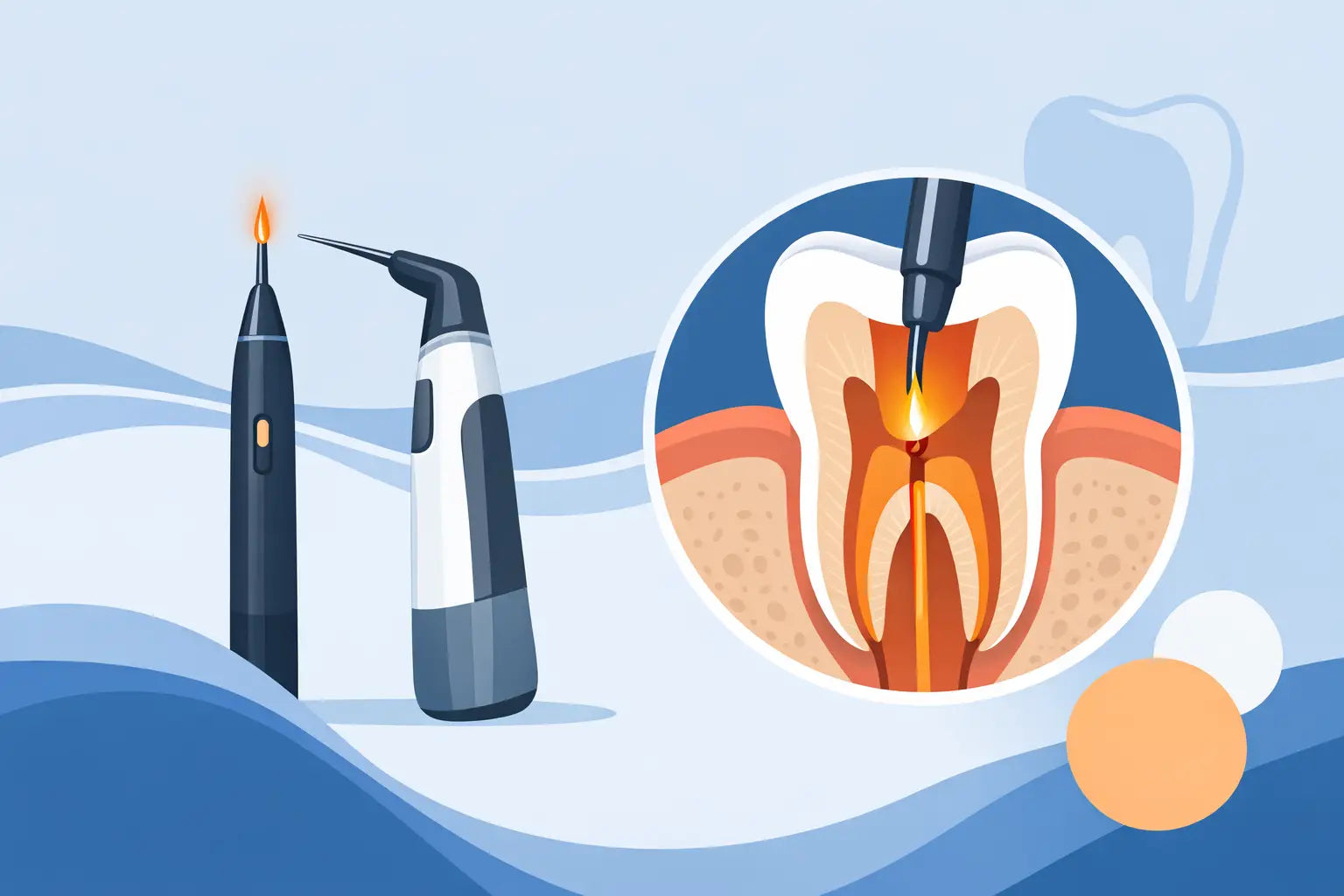
A challenging canal does not become predictable because a device has more heat settings. It becomes predictable when the clinician can deliver heat, pressure, and backfill material with control at the right moment. A warm vertical obturation system can support that control, helping practices create dense, well-adapted fills while maintaining a more efficient endodontic workflow.
For general dentists expanding their endodontic capabilities, specialists replacing aging equipment, and procurement teams standardizing multiple operatories, the purchase decision goes beyond a unit’s price. The right system should fit the clinician’s technique, case mix, sterilization protocol, and service expectations. Here is what to evaluate before adding warm vertical obturation to your practice.
What a Warm Vertical Obturation System Does
Warm vertical obturation uses heat-softened gutta-percha and controlled vertical compaction to fill the prepared root canal system. In a typical workflow, a heated plugger performs the downpack, leaving an apical fill while creating space for the remaining canal. A backfill device then delivers thermoplasticized gutta-percha to complete the fill in increments.
The practical advantage is adaptability. Heat-softened gutta-percha can better follow canal irregularities, fins, and anatomy than a cold technique in the right hands. That does not eliminate the need for sound shaping, irrigation, drying, apical gauging, and sealer selection. Obturation is the final clinical step, not a correction for inadequate cleaning or preparation.
For many practices, the larger benefit is workflow consistency. A system that heats quickly, holds a selected setting reliably, and provides comfortable handpieces can reduce friction between the master cone fit and final restoration. That is especially valuable in a busy general practice where endodontic procedures must stay organized without disrupting the rest of the schedule.
Choosing a Warm Vertical Obturation System for Your Workflow
The best system is not necessarily the one with the most settings. It is the one your clinicians can use confidently and repeatedly. Start by considering whether the unit supports a complete continuous-wave workflow: a downpack handpiece, compatible heated pluggers, and a backfill gun or injection handpiece.
A standalone downpack unit may be appropriate if your clinicians already use a preferred method for backfilling or perform a lower volume of root canal procedures. A complete dual-function setup is often the more practical choice for offices seeking a standardized protocol across providers and operatories.
Look closely at these purchasing factors:
- Temperature control: The unit should offer clear, repeatable heat settings appropriate to its intended clinical use, with controls that are easy to read during treatment.
- Plugger compatibility: Confirm the available plugger sizes, tapers, and connection style. A useful system should support access to common canal sizes without forcing clinicians to compromise their preferred technique.
- Backfill performance: Evaluate heat-up time, material delivery control, needle or cannula options, and how comfortably the handpiece reaches posterior teeth.
- Ergonomics and mobility: Corded and battery-powered designs each have a place. Weight, balance, cable management, charging routine, and handpiece grip matter over a full day of procedures.
- Service and replacement parts: Tips, needles, pluggers, batteries, chargers, and heating elements are not afterthoughts. Confirm that the supplier can help you source compatible accessories and support the unit after purchase.
Heat Control Is About Precision, Not Maximum Temperature
Heat is necessary for thermoplasticizing gutta-percha, but higher temperature is not automatically better. The clinical goal is controlled softening and delivery, not aggressive heating. Select a device with stable output and settings that align with the manufacturer’s instructions for use and your chosen obturation materials.
Pay attention to the response time as well. A downpack handpiece that reaches the intended temperature quickly can support a smooth continuous-wave technique, while a backfill gun that delivers material consistently helps prevent interruptions between increments. Inconsistent heating can create unnecessary variability in a step that should be deliberate.
Downpack and Backfill: Why Both Components Matter
The downpack establishes the apical portion of the obturation. It requires a plugger that reaches the intended depth without binding, along with tactile control during heat application and vertical compaction. This portion of the procedure is technique-sensitive, so clinicians should choose plugger sizes based on canal preparation and anatomy rather than forcing one size into every case.
The backfill phase completes the canal space coronally. A controlled injection handpiece can make this stage faster than repeated placement of small pieces of gutta-percha, particularly in wider preparations. Still, backfill should be delivered in manageable increments and compacted appropriately. Filling too much material at once can make control more difficult, especially in curved or irregular canal systems.
The two components should feel like one workflow. If the downpack handpiece is intuitive but the backfill device is slow to load, difficult to clean, or awkward in posterior access, the overall system can lose its advantage. Ask the clinicians who will use the equipment to evaluate both handpieces before a practice-wide purchase.
Match the System to Your Case Mix
A general practice that performs routine single-canal and premolar endodontics has different needs from a high-volume endodontic office managing retreatments, complex molars, and challenging anatomy every day. Higher procedure volume can justify greater emphasis on durable handpieces, readily available consumables, rapid heat-up, and a backup plan for equipment downtime.
For lower-volume offices, a straightforward system with dependable performance and uncomplicated maintenance may provide better value than an advanced platform with features that remain unused. Training also affects return on investment. A well-built device cannot create consistency if each provider uses a different technique or avoids the system because the learning curve feels steep.
Dental schools and multi-provider organizations should consider standardization. Using comparable equipment, plugger configurations, and clinical protocols can simplify training, purchasing, and inventory. It also makes it easier for clinicians to move between operatories without adjusting to a completely different setup.
Practical Questions to Ask Before You Buy
Before placing an order, confirm what is included in the package. A low entry price may cover the base unit but not the range of pluggers, needles, gutta-percha cartridges, or accessories needed to put the device into service immediately. Clarify whether the unit is intended for cordless use, how long charging takes, and what replacement parts are available.
Review cleaning and sterilization instructions carefully. Components that enter the clinical field must fit your infection-control protocol, and the team should know which parts are single-use, autoclavable, wipeable, or replaced between cases. This is a practical operational detail that can influence which model is right for your office.
Also verify product documentation, warranty terms, and the device’s regulatory status for its intended use. For US practices, purchasing from a professional supplier that understands dental equipment, license requirements, and post-purchase support helps reduce avoidable uncertainty. ProElite Dental Supply focuses on helping licensed professionals select equipment that balances clinical capability with accessible pricing and dependable service.
Build Technique Around the Equipment
A warm vertical system is most effective when the clinical team establishes a repeatable protocol. That includes selecting the master cone, confirming working length, choosing plugger depth, setting the device according to its instructions, and determining how backfill increments will be placed and compacted. Consistency should be documented during training, particularly when several clinicians or assistants share the equipment.
Use magnification and radiographic verification as appropriate to your process. The system provides controlled heat and delivery, but the clinician still needs to judge canal anatomy, material placement, and the final result. For difficult anatomy, retreatment cases, open apices, or situations with uncertain apical control, technique selection should be driven by the case rather than by a desire to use a newly purchased device.
A well-chosen obturation system earns its place by making good technique easier to repeat. Choose one that fits your team’s hands, your clinical volume, and your support expectations. Then give your clinicians the training and accessories to use it with confidence, case after case.