

CuringPen Dental Curing Light: A Practical Guide to Reliable, Efficient Light Curing
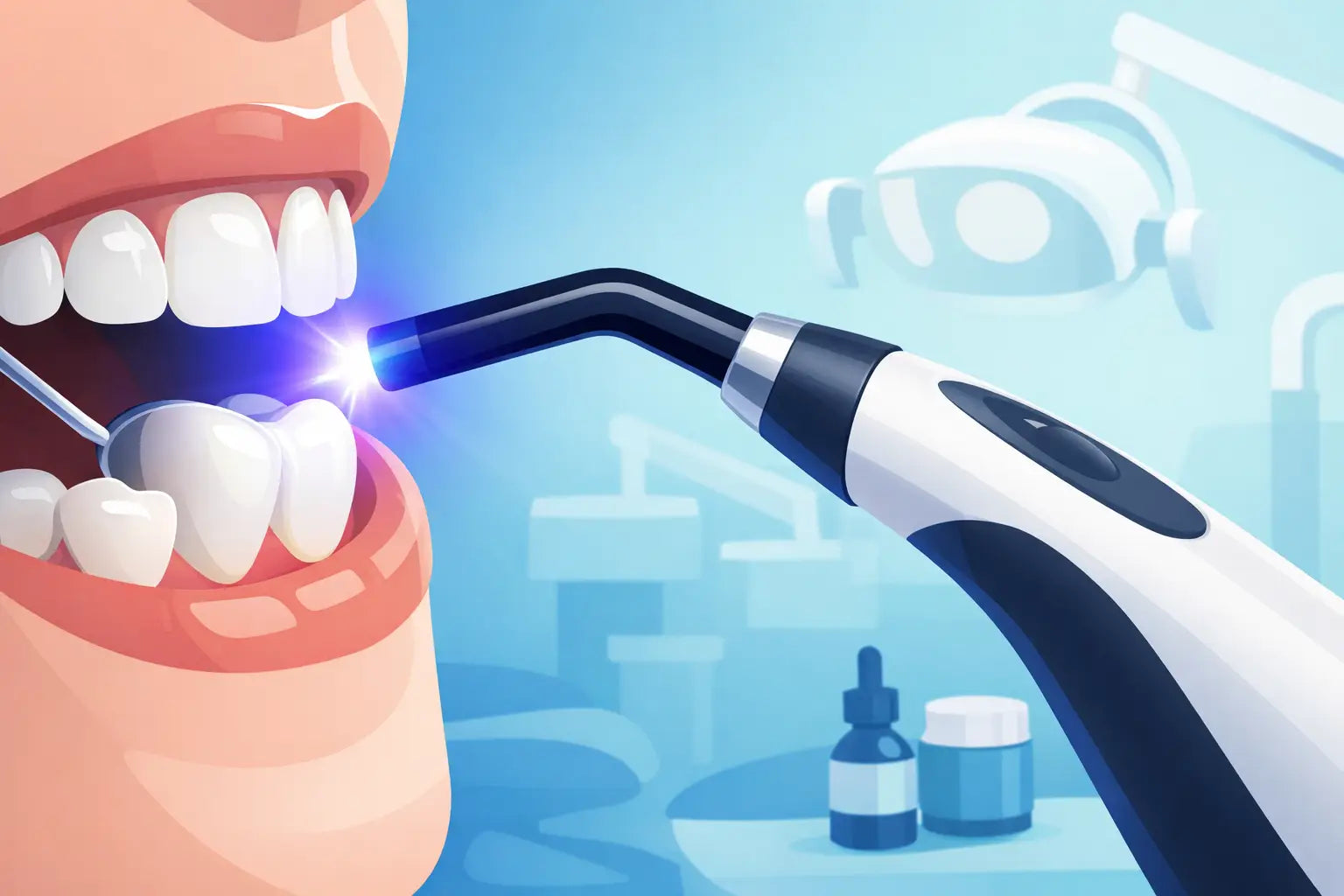
A dental curing light rarely gets much attention until it slows down a restorative appointment. Then the consequences are immediate: uncertain cure depth, repeated exposure cycles, awkward access in posterior areas, or a curing light that simply does not hold up through a full clinical schedule.
The CuringPen dental curing light is the kind of everyday clinical tool that deserves a closer purchasing review because reliable curing performance can directly affect restorative workflow, chair time, and clinical confidence.
For dental practices upgrading operatory essentials, the right question is not simply whether a LED dental curing light turns on. It is whether it delivers dependable energy where the restorative material needs it, fits naturally into the dental team's workflow, provides convenient access throughout the mouth, and represents a smart long-term value.
What a Dental Curing Light Should Deliver
Light-cured restorative materials depend on proper energy delivery. A dental curing light must provide an output spectrum compatible with the photoinitiators found in the composites, adhesives, sealants, and resin cements used throughout the dental practice. It must also deliver that energy consistently enough for clinicians to follow manufacturer-recommended exposure times with confidence.
That makes wavelength range more meaningful than simply looking for an impressive output number.
Many dental restorative materials use camphorquinone, which responds within the blue-light range. Some modern restorative materials may incorporate alternative photoinitiators that require violet or broader-spectrum output. Before selecting any curing light, dental professionals should compare the unit's stated wavelength range with the materials already being used in the practice.
This can be particularly important for multi-provider dental offices where composite, adhesive, and cement preferences may vary from one operatory to another.
A practical curing light also needs an optical and ergonomic design that supports visibility and access. Posterior restorations, indirect restorations, and difficult angles can quickly expose the limitations of a bulky curing light or poorly positioned light guide.
The compact pen-style design of the CuringPen curing light can be particularly useful when maneuverability matters. Comfortable handling can make a noticeable difference when working around posterior teeth, treating patients with limited opening, or maintaining a stable curing position during a timed exposure.
Clinical Performance Depends on More Than Curing Light Output
High irradiance can support efficient curing cycles, but faster is not automatically better.
The appropriate exposure protocol depends on the restorative material, shade, opacity, increment thickness, distance from the curing tip, and direction of the light. A curing light positioned farther away from a composite because of difficult access will not necessarily deliver the same energy to the restoration as a light positioned close and perpendicular to the restorative surface.
For that reason, dental professionals should consider a LED curing light as part of the overall restorative system rather than an isolated piece of dental equipment.
Always review the restorative material manufacturer's instructions for use, particularly when working with bulk-fill composites, highly opaque shades, dual-cure materials, indirect restorations, or restorations with deep proximal boxes.
If the curing light cannot be positioned close to the restorative surface, additional exposure may be appropriate according to the restorative manufacturer's recommendations.
Consistency is equally important. A curing light that produces strong output initially but begins declining because of battery condition, damaged optics, contamination, or buildup on the curing tip introduces unnecessary uncertainty into restorative procedures.
A simple quality-control routine can help protect clinical results:
- Inspect the curing light regularly.
- Keep the curing tip clean and free of cured composite or debris.
- Make sure protective barriers do not obstruct the light output.
- Follow the manufacturer's cleaning and maintenance instructions.
- Periodically evaluate curing-light performance using an appropriate testing method.
A curing-light radiometer can also be useful for monitoring performance trends, although it should not replace manufacturer specifications or validated testing procedures.
Curing Light Features That Improve the Restorative Workflow
The best dental curing light purchase often comes down to details that doctors and dental assistants experience dozens of times throughout the day.
The CuringPen dental curing light should be evaluated not only for curing performance but also for the workflow advantages that can reduce unnecessary friction during restorative procedures.
Ergonomics deserve real consideration.
A comfortable grip, intuitive controls, easy-to-understand curing settings, and a lightweight design allow dentists and dental assistants to move efficiently from one procedure to another. In a high-volume restorative practice, reduced hand fatigue and easier positioning can be just as valuable as shaving a few seconds from an exposure cycle.
A cordless design can also help keep the dental operatory cleaner and less cluttered while making it easier to move the curing light between treatment rooms.
Battery management remains an important consideration for any cordless dental curing light. A practice should establish consistent charging habits so the curing light is ready when needed. High-volume and multi-operatory practices may also benefit from having more than one curing light available to prevent treatment interruptions.
If multiple operatories share a CuringPen, consider how easily the device can be transported, charged, protected, disinfected, and returned to its designated location between patients.
Curing modes and exposure settings should also be easy to select and confirm. The goal is to provide clinicians with useful flexibility without creating unnecessary complexity.
The ideal LED curing light for dentists should be straightforward enough that doctors and dental assistants can confidently operate it without navigating complicated menus during treatment.
Selecting the Right Dental Curing Light for Your Practice
Start by considering the procedures your dental practice performs most frequently.
A general dental practice placing routine direct composite restorations may prioritize dependable curing performance, comfortable handling, portability, and convenient charging.
A cosmetic or restorative-focused dental office using a wider range of composites, bonding agents, resin cements, and restorative materials may place additional emphasis on wavelength compatibility and exposure flexibility.
Pediatric dental practices may value quick setup, a lightweight handpiece, and uncomplicated controls. Mobile dental professionals may place even greater importance on portability, compact storage, durability, and dependable battery performance.
The compact design of the CuringPen curing light can make it an attractive option for practices looking for a portable curing solution without unnecessarily adding bulky equipment to the operatory.
It is also worth considering how many curing lights your practice actually needs.
One shared curing light may be adequate for a smaller dental office with limited restorative volume. A busy multi-operatory practice may benefit from dedicated curing lights in multiple treatment rooms, particularly when charging, infection-control turnover, and assistant workflow are considered.
The cost of adding another curing light can be relatively modest compared with the disruption of pausing treatment because the practice's only device is being used in another room or sitting on a charger.
When comparing dental curing lights for sale, look beyond the headline price.
Consider:
- Curing-light wavelength and output
- Exposure modes and settings
- Handpiece ergonomics
- Size and weight
- Posterior access
- Battery performance
- Charging components
- Included accessories
- Warranty coverage
- Replacement-part availability
- Technical support
- Supplier responsiveness
These factors contribute to the actual long-term value of a curing light.
A clinically capable professional dental curing light backed by a dependable dental equipment supplier is often a stronger investment than an inexpensive device with unclear documentation, questionable performance, or limited after-sale support.
For U.S. dental practices, product documentation and regulatory status should also be part of the purchasing decision. Professional dental equipment should be sourced through reputable channels capable of providing transparent product information, warranty support, and assistance after the sale.
That is particularly important for equipment used directly during patient treatment, where dependable performance is essential.
Simple Habits That Help Protect Dental Curing Results
Even a well-selected curing light requires disciplined daily use.
Train the dental team to position the curing tip as close and perpendicular to the restorative surface as clinical access allows. Avoid unnecessarily angling the light away from the material when repositioning or an additional curing exposure can provide better coverage.
For larger restorations, clinicians should consider whether multiple curing positions are necessary based on the restorative material instructions and restoration geometry.
Proper eye protection is equally important. Use appropriate protective eyewear or curing-light shields and avoid directing the curing light toward unprotected eyes.
Disposable protective barriers can support infection-control protocols, but they should be fitted correctly and changed between patients. A poorly positioned barrier should not unnecessarily interfere with light transmission from the curing tip.
Regular inspection is worthwhile because cured resin, scratches, chips, contamination, or other residue around the curing area can potentially affect useful light transmission.
Practices can also create a simple recurring checklist covering:
- Curing-light output verification
- Tip inspection and cleaning
- Battery performance
- Charging performance
- Physical condition
- Infection-control procedures
This does not need to become a burdensome process. A short recurring operatory check can identify a weakening battery, damaged component, or contaminated curing surface before it interferes with patient treatment.
Consistency is the goal: clinicians should be confident that their selected curing protocol is being delivered as intended.
Why the CuringPen Is a Practical Dental Equipment Upgrade
A curing light may be a relatively small piece of dental equipment, but it plays an outsized role in everyday restorative dentistry.
The CuringPen dental curing light provides dental practices with a compact solution designed for one of the most frequently performed steps in restorative treatment. For dentists and dental assistants who repeatedly cure composites, bonding agents, sealants, and other light-activated dental materials throughout the day, handling and dependable performance matter.
Whether a practice is replacing an aging curing light, adding another unit to a busy operatory, outfitting a new dental office, or simply upgrading its everyday restorative equipment, the CuringPen deserves consideration as part of the practice's clinical workflow.
Before purchasing any curing light, verify compatibility with the restorative materials used in your office, evaluate the ergonomics your clinical team will work with every day, and purchase through a dental supplier prepared to provide ongoing product support.
The goal is not simply to find a dental curing light for sale.
It is to select a reliable cordless LED dental curing light that fits naturally into the operatory, supports efficient restorative procedures, and delivers the dependable performance your dental team expects every day.
-
Posted in
curingPen