

JINME Motor Review for Modern Endodontics
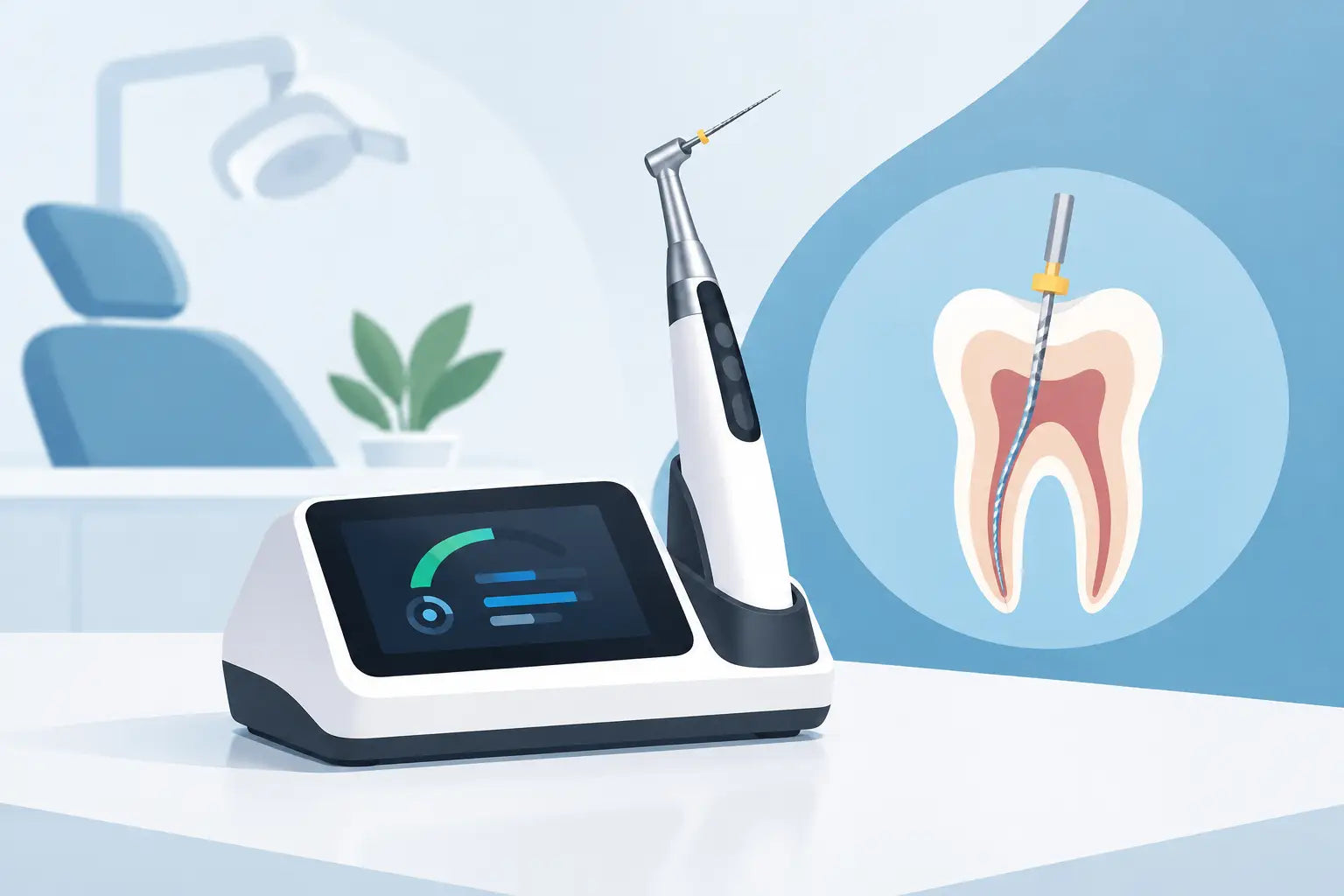
A rotary file system can be clinically excellent on paper and still become a source of frustration if the motor is awkward to program, inconsistent under load, or difficult to trust during a busy day. This JINME motor review focuses on the factors that matter once the motor is in the operatory: control, ergonomics, file-system compatibility, workflow speed, and long-term purchasing value.
For general dentists adding endodontic capability, dedicated endodontists managing high procedure volume, and group practices standardizing equipment, the right motor is not simply the one with the most settings. It is the one that gives the clinician predictable performance without making every case feel like an equipment setup exercise.
What a JINME Motor Should Deliver Clinically
An endodontic motor earns its place by helping the clinician maintain a controlled, repeatable instrumentation sequence. Speed and torque adjustment matter, but they are only useful when settings are easy to locate, confirm, and change chairside. A practical system should support the file protocols your practice actually uses while keeping the interface clear enough for the whole clinical team.
JINME endodontic motors are worth consideration for practices looking for professional-grade functionality at a more accessible investment than many legacy-brand alternatives. The value proposition is strongest when a practice needs a dedicated motor that supports modern rotary or reciprocating workflows without paying for features that will go unused.
That does not mean every JINME motor is the right fit for every operatory. Model-specific functions, included accessories, preset file libraries, handpiece configuration, and apex-location capability can vary. The purchasing decision should begin with your clinical protocol rather than a feature checklist.
Control Is More Than a Torque Number
Torque control and auto-reverse behavior are central to safer, more confident rotary instrumentation. When resistance increases, the motor should respond according to the selected mode and settings, helping the clinician reduce unnecessary torsional stress on the file. The goal is not to eliminate clinical judgment. It is to give that judgment a dependable tool behind it.
In a busy general practice, intuitive control can be just as valuable as advanced programming. If a dentist regularly uses one or two file systems, quick access to those preferred settings may matter more than an extensive menu of customizable programs. An endodontic specialist, by comparison, may place greater value on fine adjustment, multiple saved protocols, and rapid switching between systems.
Before purchasing, confirm that the motor's speed range, torque range, motion modes, and auto-reverse settings align with the file system and manufacturer instructions you use. Never assume a preset is appropriate simply because it appears on a display. File instructions and clinical judgment remain the reference point.
JINME Motor Review: Workflow and Ergonomics
The best equipment upgrades make a procedure feel more organized. A well-designed motor reduces the small interruptions that add up across a schedule: checking a setting, reaching for a control, untangling a cord, or stopping to replace a depleted battery.
For that reason, assess a JINME motor in terms of the complete workflow. Consider the handpiece balance, head size, display visibility, button response, charging setup, and how easily the unit can be disinfected between patients. A compact cordless setup can be especially attractive for practices where operatories are tight, mobile dental teams need portability, or clinicians prefer fewer cables around the treatment area. A corded configuration may still be the better choice when a practice prioritizes a fixed setup and continuous power.
Battery performance should be evaluated realistically. A stated runtime is useful, but it is not the same as knowing how the device will perform through a full day of procedures. Ask how charging works, whether backup batteries are available for the model, and what the practice's plan will be if the unit is needed unexpectedly between charges. For multi-provider offices, a second motor or a shared backup plan can protect production better than relying on a single device.
Apex Location Can Change the Buying Equation
Some endodontic motor configurations may integrate or work alongside apex-location functions. For clinicians who want fewer devices on the cart and fewer steps in the workflow, that can be a meaningful advantage. It can help consolidate instrumentation and working-length monitoring into a more efficient process.
Still, integration is not automatically the best answer. A practice that already owns a dependable standalone apex locator may prefer a motor-only configuration. Separating the devices can simplify replacement decisions and allow the team to choose each component independently. The better value depends on what you already own, how your clinicians work, and whether integrated functionality will genuinely be used case after case.
Where the Value Proposition Makes Sense
The strongest reason to consider JINME is practical value, not just initial price. Equipment should be evaluated over its useful life: purchase cost, clinical utilization, support access, training time, maintenance expectations, and the cost of downtime all matter.
A lower-priced motor is not a smart purchase if it creates uncertainty during treatment or leaves the practice without support when a problem arises. Conversely, paying a premium for a familiar logo does not always produce a proportionate improvement in daily clinical results. For many practices, the sensible middle ground is a capable motor from a recognized manufacturer, purchased through a supplier that can provide clear product guidance and responsive post-purchase support.
JINME can be particularly compelling in several situations: a general practice building a dedicated endodontic setup, a growing office equipping an additional operatory, a dental school seeking feature-to-cost efficiency, or a DSO looking to standardize a practical solution across locations. In each case, purchasing consistency and support can be more important than pursuing the most elaborate unit available.
Questions to Ask Before You Buy
A focused conversation before checkout can prevent a disappointing equipment match. Start by identifying the files and motion protocols your clinicians use most often. Then verify the motor's compatibility and available presets, rather than trying to adapt an established clinical system around a new device.
Also ask whether the listed package includes the handpiece, charging components, accessories, and any apex-location attachments required for your intended workflow. Confirm warranty coverage, available service support, and the expected process if a unit needs troubleshooting or repair. For professional dental equipment, transparent answers are part of the product value.
Regulatory documentation should receive the same attention as performance specifications. Practices should verify the current product labeling and applicable FDA status for the exact model being purchased. This is especially relevant for procurement teams and multi-location organizations that need clean records for standardized purchasing and compliance review.
Finally, consider training. A motor with multiple modes can be a clinical asset, but only if the team understands the selected settings and follows a consistent protocol. A short implementation plan, documented presets, and clear instructions for assistants can make the difference between an upgrade that sits in a drawer and one that improves the operatory every day.
The Bottom Line for Dental Practices
A JINME motor is most appealing when your practice wants dependable endodontic capability, efficient chairside control, and a more manageable equipment investment. Its fit will depend on the exact model and on how closely its functions match your preferred file system, power preferences, and treatment workflow.
As an authorized JINME dealer, ProElite Dental Supply can help licensed dental professionals clarify those model-level details before purchase. Choose the motor that supports your clinicians' habits, protects consistency across the team, and leaves room in the equipment budget for the technologies that will make the next procedure better.