

Endodontic Motors That Support Better Workflow
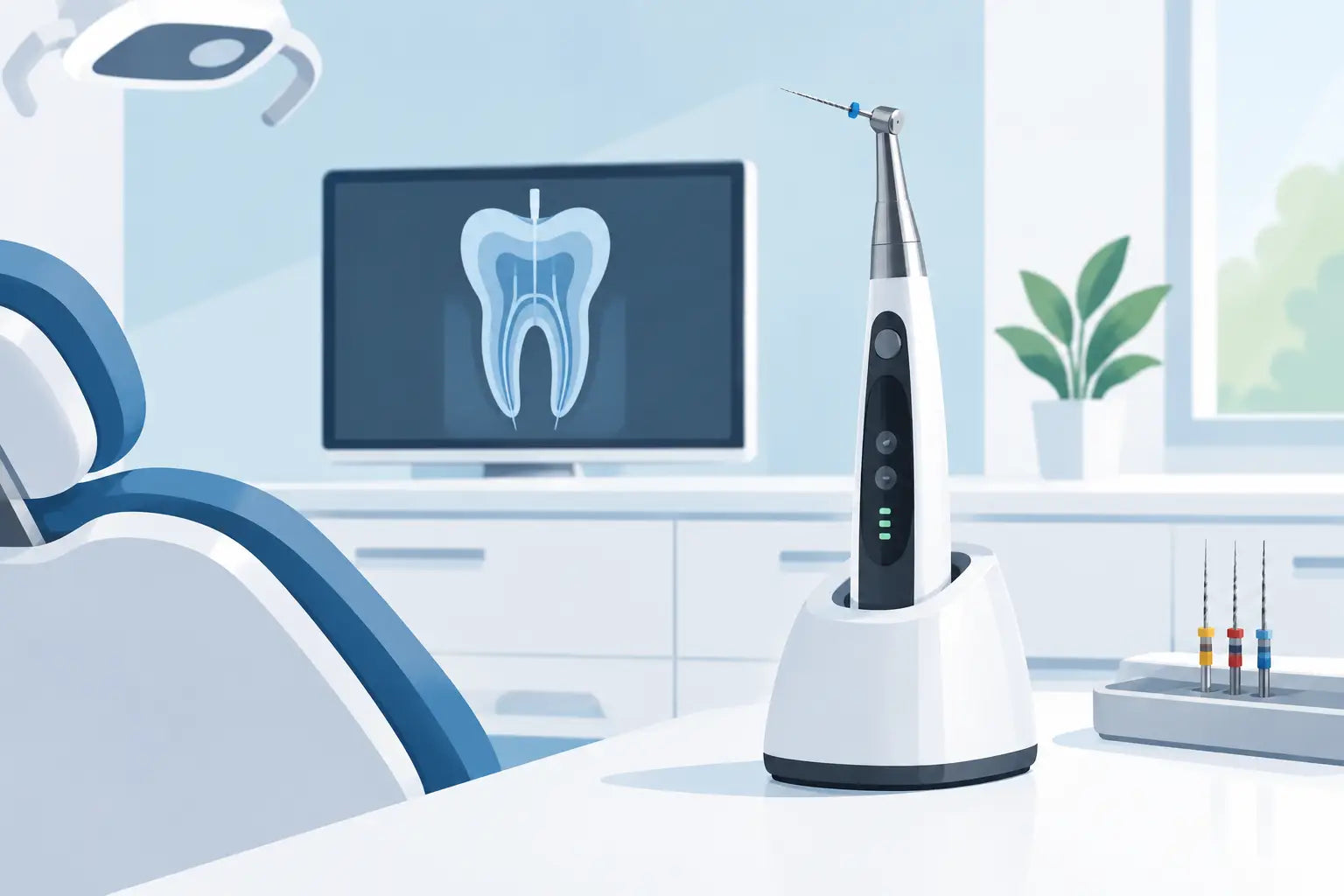
A motor failure, an awkward handpiece, or a poorly matched file setting can interrupt a root canal at exactly the wrong moment. Endodontic motors are not simply another operatory accessory. They are a central part of predictable rotary and reciprocating instrumentation, affecting clinician control, procedure time, and confidence throughout canal preparation.
For a general practice adding endodontic capability, a specialist replacing older equipment, or a DSO standardizing operatories, the best choice is rarely just the motor with the longest feature list. The right system must fit the file systems your clinicians use, the pace of your schedule, and the level of control required for the cases you treat.
How to Compare Endodontic Motors
Start with the clinical workflow, not the price tag alone. A lower acquisition cost can be a smart decision when a motor provides the settings, handpiece performance, and support your team needs. But a unit that creates uncertainty at the chair or requires workarounds may cost more in lost time than it saves upfront.
The most useful comparison points are torque and speed control, available motion modes, auto-reverse behavior, handpiece design, and programming options. Each matters, but their value depends on the file system and technique used in your practice.
Torque control and auto-reverse protection
Torque control helps the clinician manage the rotational force delivered to the file. When resistance rises, an auto-reverse function can reverse file rotation according to the selected setting, helping reduce torsional stress during instrumentation. This is particularly relevant in narrow, curved, or calcified canals, where file engagement can change quickly.
More torque is not automatically better. The goal is controlled operation within the file manufacturer's recommended parameters. A motor should allow practical adjustment of speed and torque while making those values easy to verify chairside. Clear display information and intuitive controls matter when assistants and multiple providers share equipment.
Auto-reverse modes vary by unit. Some reverse when a torque threshold is reached and then resume forward rotation once resistance decreases. Others may stop or continue in reverse depending on the programmed mode. Confirm how the motor behaves before putting it into daily use, then align settings with the instructions for use for the specific file system.
Continuous rotation, reciprocation, and adaptive motion
A practice that uses rotary nickel-titanium files exclusively may prioritize a dependable continuous-rotation motor with precise speed and torque settings. Practices using reciprocating systems need a compatible reciprocation mode with the appropriate angles and settings. Some motors also offer adaptive or mixed-motion functions designed to respond to file load.
These modes are not interchangeable by default. File systems are designed and tested around specific operating parameters, so clinicians should not assume a generic preset is appropriate for every file. A motor with customizable programs can be valuable for offices using several systems, but preset libraries should still be reviewed against current manufacturer guidance.
For multi-provider practices, stored programs can reduce setup time and help support consistent protocols. The real benefit is not having dozens of programs. It is having the few that your clinicians use most often clearly labeled and quickly accessible.
Handpiece comfort affects clinical control
The contra-angle handpiece is where motor performance becomes tactile. Weight, balance, head size, visibility, and access all influence how the motor feels during treatment. A lightweight handpiece may reduce hand fatigue during back-to-back procedures, while a compact head can improve access in posterior regions.
Check the reduction ratio and compatibility requirements. A 16:1 contra-angle is common for endodontic applications, but the motor and handpiece must be configured correctly to deliver the selected speed and torque. Also consider whether the handpiece is autoclavable, how easily it connects, and whether replacement components are readily available.
Cordless motors can bring welcome flexibility, especially in operatories where minimizing cords improves positioning and turnover. Their trade-off is battery management. Look at realistic battery life, charging time, charging-base footprint, and whether the device can be used while charging if that matters to your schedule. Console-based systems may offer a larger display and continuous power, making them a strong fit for dedicated endodontic rooms.
Features That Matter in Busy Operatories
A motor should simplify a procedure, not ask the clinician to navigate a complicated interface while managing isolation, irrigation, and instrumentation. Prioritize practical details that hold up through a full day of clinical use:
- A readable display that shows the active program, speed, torque, and rotation mode at a glance.
- A simple way to save frequently used settings for different file systems or clinicians.
- Adjustable sound or visual alerts that communicate torque events without becoming distracting.
- A handpiece and motor body that can be cleaned and maintained according to clear manufacturer instructions.
- Dependable battery status indicators or a reliable wired power configuration.
Match the Motor to Your Case Mix
General dentists often need an endodontic motor that is straightforward to operate, compatible with familiar file systems, and easy to move between operatories. In this setting, an intuitive cordless unit with reliable rotary and reciprocation functions may deliver excellent value without adding unnecessary complexity.
Endodontic specialists may place greater weight on customization, advanced motion control, balance, and high-volume durability. The motor becomes part of a refined clinical system that includes magnification, apex location, irrigation protocols, obturation equipment, and trained assistant support. A unit that feels slightly faster to configure or more comfortable over a long day can make a meaningful difference.
For DSOs and dental schools, standardization deserves special attention. Selecting a manageable number of models can simplify training, ordering, preventive maintenance, and replacement planning. That does not require buying the most expensive model in every operatory. It requires choosing equipment with consistent operation, documented settings, available support, and a supply path that purchasing teams can rely on.
Look Beyond the Initial Equipment Cost
The purchase price is only one part of the investment. Consider the total operating picture: expected service needs, warranty terms, battery replacement, handpiece availability, training time, and downtime if a unit needs repair. An endodontic motor that is affordable but difficult to support may not be the best value for a high-production practice.
Buy from a supplier that can provide clear product information and responsive answers before and after the sale. For professional equipment, transparency around what is included is especially important. Confirm whether the package includes the contra-angle handpiece, charging base, power adapter, accessories, and any required consumables. Ask about warranty coverage and the process for technical support or service.
At ProElite Dental Supply, the focus is on making professional-grade technology more attainable without treating support as an afterthought. For practices evaluating new endodontic equipment, that means comparing specifications carefully, verifying clinical fit, and choosing a configuration that supports daily performance rather than just a promotional price.
Setup and Maintenance Protect Performance
Once the motor arrives, build a short implementation process around it. Review the manufacturer's instructions for use, set up approved programs for the file systems in your office, and make sure every clinician understands the selected torque, speed, and motion settings. A few minutes of team alignment can prevent confusion when the unit changes hands between operatories.
Maintenance should be equally deliberate. Follow cleaning, lubrication, sterilization, charging, and storage instructions for the motor and contra-angle. Inspect connections and handpiece components routinely, and remove equipment from service if performance becomes inconsistent. Do not rely on a motor setting to compensate for a damaged file, excessive apical pressure, or an inappropriate glide path.
A well-chosen motor should feel dependable before the first file enters the canal. When the controls are familiar, the handpiece is comfortable, and the settings match the clinical system, your team can spend less attention managing equipment and more attention delivering careful, efficient endodontic care.