

Dental Ergonomics That Supports Better Care
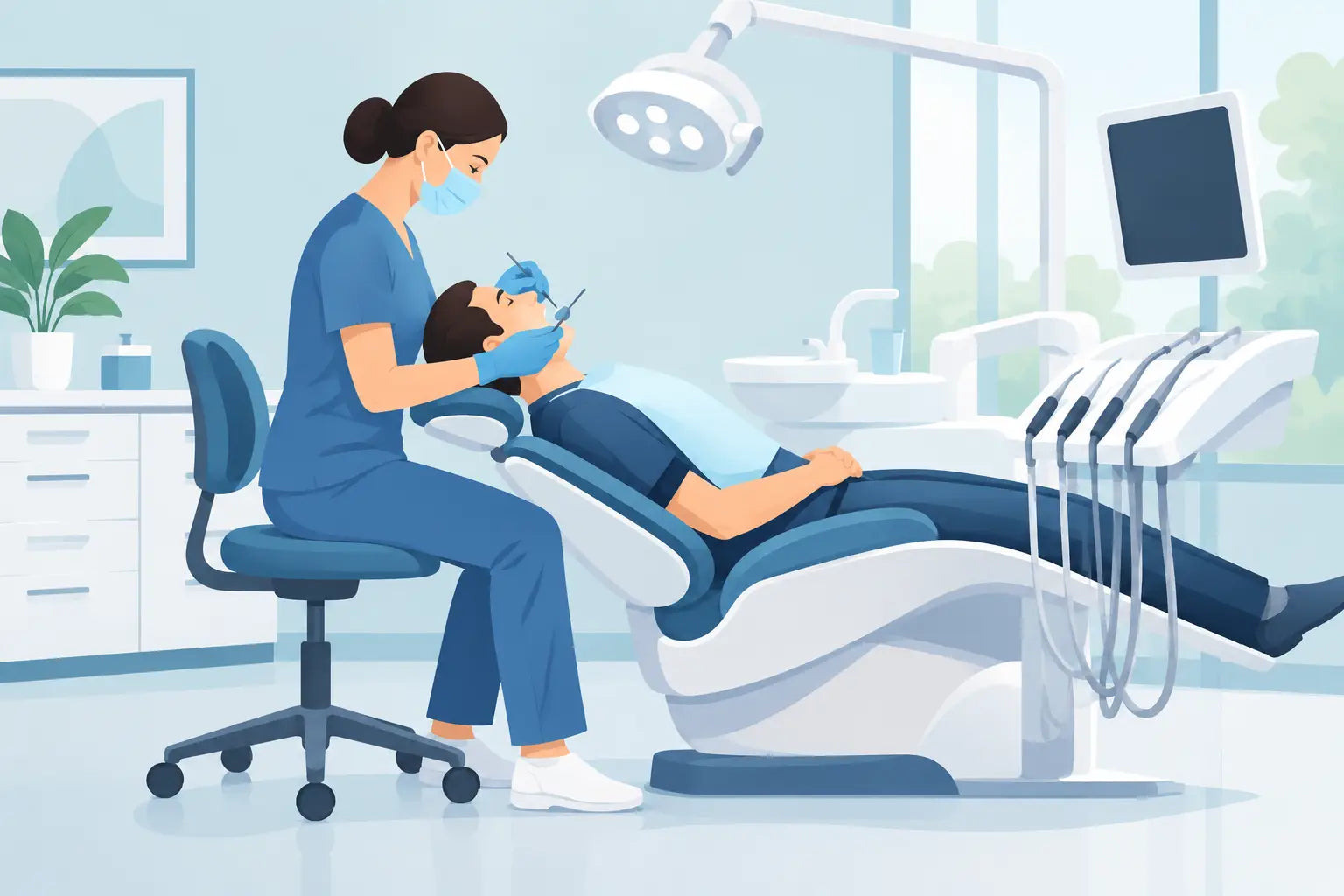
A clinician who finishes a full schedule with a tight neck, numb fingers, or a sore lower back is not simply dealing with a long day. Those symptoms often point to an operatory setup that is asking the body to compensate. Dental ergonomics is the practical discipline of arranging people, equipment, and procedures so high-quality care can be delivered with less unnecessary physical strain.
For practice owners, this is more than a wellness conversation. Repeated discomfort can affect concentration, appointment pacing, staff retention, and the confidence clinicians bring to complex procedures. Smart ergonomic decisions can also make an operatory feel more organized, efficient, and ready for the technology that modern dentistry demands.
Why Dental Ergonomics Belongs in Equipment Planning
Dentistry combines fine motor control with static postures, close visual work, repetitive hand movements, and frequent position changes. A clinician may be leaning toward a posterior tooth, reaching for a handpiece, monitoring a screen, and communicating with an assistant within the same few minutes. Even a small mismatch between the operator, patient chair, delivery system, and visual field can add up over hundreds of appointments.
The cost is not always immediate. Poor positioning may first appear as end-of-day fatigue, then progress to recurring shoulder tension, headaches, wrist discomfort, or reduced tolerance for longer procedures. An operatory that forces clinicians to twist or reach also introduces avoidable interruptions. Repositioning an instrument tray, adjusting overhead lighting, or searching for a frequently used item may take only seconds, but those seconds compound throughout the day.
Equipment purchases should therefore be evaluated by more than specifications and price. A curing light, microscope, intraoral scanner, handpiece, delivery unit, or imaging system needs to fit the way the practice actually works. The best option is not always the most feature-heavy model. It is the one that supports dependable clinical performance without creating new friction in the room.
Start With the Operator, Not the Equipment
A common mistake is arranging the operatory around where equipment can be installed rather than where the clinical team can work comfortably. Begin with the operator's neutral seated position. Feet should be supported, thighs generally parallel to the floor, and the back supported without forcing a forward lean. The goal is not a rigid posture held all day. It is a stable starting point that makes small, natural adjustments possible.
The patient chair should then bring the oral cavity to the clinician instead of requiring the clinician to bend toward the patient. In many procedures, a reclined patient position and appropriately adjusted headrest improve access to the maxillary arch while reducing neck flexion. Mandibular access may require a different chair angle and clinician position. The right setup depends on the procedure, patient mobility, provider height, and whether the practice uses four-handed dentistry.
Assistant positioning matters just as much. If the assistant must repeatedly reach behind their body for suction, materials, or controls, efficiency and comfort both suffer. A properly positioned assistant can maintain retraction, evacuation, and instrument transfer with fewer exaggerated movements. That support helps the operator keep hands closer to the body and eyes closer to a neutral line of sight.
Build a Clear Visual Field Before You Lean Forward
Forward head posture is one of the most common ergonomic compromises in clinical dentistry. It usually begins with a reasonable instinct: the clinician is trying to see better. The solution is rarely to simply remind providers to sit up. Better visibility requires the right combination of patient positioning, lighting, magnification, and visual technology.
Overhead lighting should be positioned to illuminate the treatment area without creating glare or forcing the operator to block the beam. Light handles and controls should be accessible without a major shoulder reach. If a clinician must regularly twist away from the patient to adjust light intensity or direction, that is a workflow issue worth correcting.
Magnification can be a meaningful investment when it is properly selected and fitted. Loupes with an inappropriate working distance or declination angle can worsen neck posture rather than improve it. The same is true for dental microscopes. Microscopy can support precision endodontic, restorative, and surgical work, but only when the scope, patient chair, and operator seating allow the clinician to work through the optics instead of around them.
Digital imaging and chairside displays deserve the same attention. A monitor placed too far to one side encourages repetitive neck rotation. A screen that is too high or too low can increase cervical strain. Position displays within an easy viewing zone for the person using them most, whether that is the operator, assistant, or patient during case presentation.
Organize the Treatment Zone Around Frequency of Use
Instrument placement should follow clinical reality. The items used constantly during a procedure need to be easy to reach with minimal arm extension. Items used occasionally can sit farther away. This simple principle reduces unnecessary motion while improving the pace of treatment.
Consider the primary treatment zone as the space where the clinician and assistant can reach without leaning, twisting, or lifting the upper arms away from the body. Handpieces, suction, mirrors, common burs, restorative materials, and scanning accessories should be evaluated in that context. If team members repeatedly cross over the patient or stand to retrieve routine items, the layout needs attention.
A quick operatory review can reveal common sources of wasted movement:
- Frequently used instruments stored outside the immediate reach zone
- Delivery hoses that pull against the wrist or require awkward grip angles
- Mobile carts positioned differently from room to room
- Scanner, sensor, or curing-light docks that create unnecessary turning
- Supply drawers organized by storage convenience rather than procedure flow
Choose Equipment That Reduces Friction, Not Just Cost
Accessible pricing matters, particularly when a practice is equipping multiple rooms or modernizing a mature operatory. Yet the lowest upfront price can become expensive if a product is difficult to position, hard to control, or poorly suited to the clinical workflow. Ergonomics should be part of the return-on-investment discussion.
For handpieces, look beyond speed and torque. Consider weight, balance, grip diameter, vibration, hose management, and how easily the unit can be activated during treatment. For endodontic systems, assess whether file handling, obturation controls, and displays support a logical sequence at chairside. For digital scanners, consider scanner weight, cable routing or wireless workflow, tip changes, docking location, and the provider's ability to maintain a relaxed wrist during full-arch scans.
Portable and mobile dentistry setups require additional planning. A compact X-ray unit or mobile imaging solution can expand access to care, but it must be integrated with safe movement patterns, proper storage, and a workflow that does not create repetitive lifting or carrying. In these environments, lightweight design and efficient setup can be clinical advantages, not merely convenience features.
When comparing professional-grade equipment, ask practical questions: Can this be positioned where it is needed? Can the clinician operate it without looking away from the treatment field for long? Does it reduce steps in a common procedure? Is training available so the team can use its ergonomic benefits correctly? ProElite Dental Supply works with practices seeking this balance of advanced technology, clinical reliability, and attainable pricing.
Make Four-Handed Dentistry a Daily Standard
Four-handed dentistry is often discussed as an efficiency model, but it is also an ergonomic system. Effective instrument transfer keeps the operator's hands closer to the treatment field and limits repetitive reaching. High-volume evacuation, retraction, material delivery, and charting support can all reduce physical and cognitive load when roles are clear.
This does not happen automatically because two people are in the room. Teams need consistent transfer zones, verbal cues, procedure setups, and shared expectations about where materials return after use. A short calibration session can identify habits that seem minor but create strain, such as holding suction at an awkward angle or passing instruments above the patient's line of sight.
For hygiene teams or solo providers, the same principles still apply. The focus shifts to reducing reach, setting up instruments in procedure order, and using patient chair positioning to preserve visibility. Ergonomics is not limited to a specific staffing model.
Treat Ergonomics as an Ongoing Clinical Process
An ergonomic operatory is not created once and forgotten. Team height, procedure mix, equipment, and staffing can change over time. A new associate may need different chair or monitor adjustments than the practice owner. Adding a scanner, microscope, or CBCT workflow may alter where staff stand and how patients move through the room.
Create a simple habit of checking for discomfort patterns. If several team members report shoulder fatigue, look at monitor position, lighting, and instrument access. If wrist complaints increase, review handpiece grip, hose tension, scanner technique, and repetitive tasks during room turnover. If appointments run behind, observe the workflow before assuming the solution is faster clinical work.
The most effective improvements are often specific and modest: move a monitor, change a dock location, adjust a stool, reorganize a cassette, or retrain an instrument transfer. These details protect the people delivering care while helping the practice maintain the polished, efficient experience patients notice.
A well-designed operatory should let clinicians focus on the tooth, the treatment plan, and the patient in front of them. When the room supports the body instead of competing with it, better work becomes easier to repeat.