

FDA Cleared Portable Dental X Ray Buying Guide
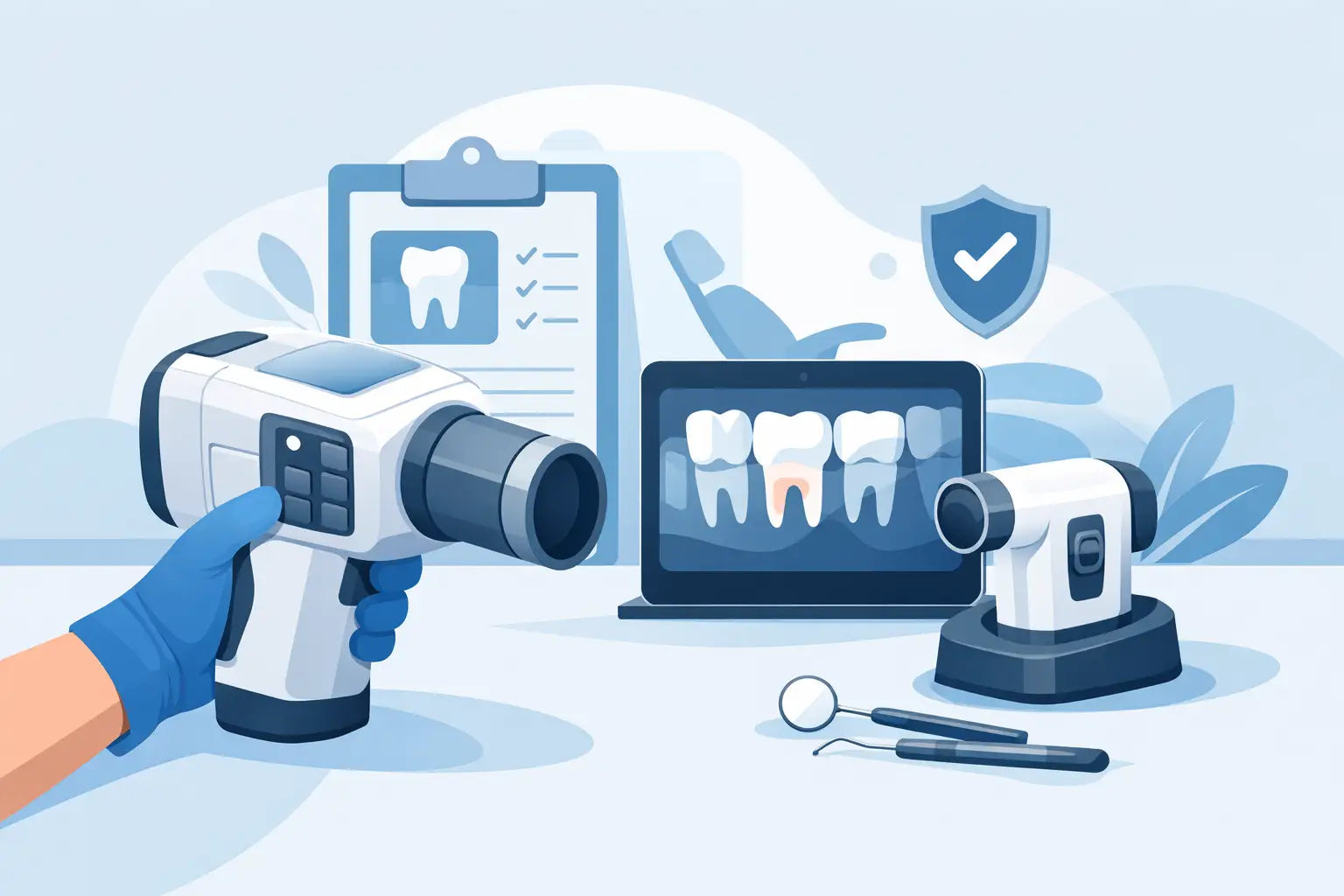
A missed periapical image in an operatory, a nursing-home visit, or a same-day emergency exam should not automatically mean moving the patient, delaying diagnosis, or disrupting the schedule. An FDA cleared portable dental x ray can put diagnostic imaging closer to the point of care - but only when the unit, the workflow, and the practice's radiation-safety procedures are aligned.
For dentists and procurement teams, the purchase decision is bigger than choosing the smallest unit or the lowest advertised price. Portable X-ray equipment affects clinical efficiency, staff training, state compliance, image consistency, and long-term operating cost. The right system can add real flexibility to a practice. The wrong one can create avoidable questions around support, service, documentation, and daily usability.
What FDA Cleared Portable Dental X Ray Means
When a portable dental X-ray unit is described as FDA cleared, it generally means the device has gone through the FDA's premarket notification process and received clearance for its intended use. This is not the same thing as a manufacturer simply stating that a product is registered, listed, or available for sale. FDA clearance is a meaningful purchasing checkpoint for dental practices seeking equipment designed for the U.S. market.
That said, clearance is not a substitute for local compliance. Dental X-ray use is also regulated at the state level, and requirements can differ on registration, inspections, operator qualifications, shielding practices, recordkeeping, and portable use. A unit may be FDA cleared, while your practice still needs to complete state-specific steps before putting it into service.
Ask your supplier for clear device documentation and confirm that the exact model you are considering is appropriate for professional dental use. A dependable supplier should be able to communicate directly and answer practical questions before the sale, not leave the practice to sort through unclear specifications after delivery.
Start With the Clinical Setting
Portable radiography is not a replacement for every fixed wall-mounted X-ray system. It is a workflow tool with distinct strengths. The best choice depends on where and how often your team needs it.
A general practice may use a portable unit for busy operatories, patient mobility needs, and quicker imaging during restorative or endodontic appointments. An oral surgery or implant practice may value the ability to capture targeted intraoral images without moving the patient during treatment. Mobile dentistry programs, community clinics, and teledentistry-supported teams can benefit even more because the equipment travels where care is delivered.
Consider the volume and type of images your clinicians capture. If the unit will primarily support occasional intraoral exams, portability and straightforward operation may carry the most weight. If it will be used continuously across multiple providers, battery management, durability, exposure consistency, and service response become more significant. A portable X-ray system is only efficient if it remains available when the schedule depends on it.
Match the Unit to Your Digital Imaging Workflow
The X-ray generator is one part of the imaging chain. Your sensor, software, positioning technique, and monitor all influence whether a diagnostic image is captured on the first attempt.
Before buying, verify compatibility with the digital sensors already used in your practice. Portable units are commonly used with digital intraoral sensors and phosphor plate systems, but exposure settings and image-processing preferences may need adjustment. A familiar test image protocol can help the team establish dependable settings for bitewings, periapicals, and pediatric imaging.
Image quality should be evaluated in clinical terms, not only in technical specifications. Look for a unit that provides stable exposure control and supports the image detail needed for your diagnostic work. Endodontic practices may place a premium on consistent periapical imaging and repeatable working-length views. General practices may prioritize fast, predictable bitewings that keep hygiene schedules moving. In either case, reducing retakes benefits the patient, the clinician, and the practice.
A useful question for any supplier is simple: what support is available when your team needs help optimizing the unit with its current sensor setup? Fast answers matter. So do manuals, warranty terms, replacement-part availability, and a clear path for technical support.
Evaluate Safety Beyond the Product Page
Portable dental X-ray equipment requires disciplined use. The convenience of bringing the unit to the chair should never lead to casual radiation practices.
Your radiation-safety program should address who is authorized to operate the device, where imaging occurs, how patients are positioned, how staff maintain distance and positioning, and how the practice documents training. Follow the manufacturer's instructions for use, applicable state requirements, and your established radiation-safety policies. If your state requires registration or inspection, build that timeline into the purchase plan rather than treating it as an afterthought.
Training should also cover practical habits. Team members need to understand correct beam alignment, sensor placement, exposure selection, and how to prevent accidental retakes. They should know when a portable unit is appropriate and when a fixed system or a different imaging modality better serves the case.
Portable units can improve patient access, especially for patients with mobility limitations or in mobile-care settings. The trade-off is that the practice must maintain the same level of procedural consistency it expects in a dedicated radiography area. Convenience is valuable only when it is paired with control.
Compare Total Value, Not Just the Purchase Price
A lower upfront price can make advanced equipment more attainable, but the real financial question is total cost of ownership. Evaluate the full purchase with the same rigor you would use for an intraoral scanner, CBCT system, or microscope.
Look at warranty coverage, battery replacement costs, charger availability, repair options, and turnaround time if the unit needs service. Ask whether the supplier has direct manufacturer relationships and whether support is handled by knowledgeable dental-equipment professionals. An inexpensive unit with unclear service channels can become costly when it is out of commission during a busy week.
Also consider the operational return. A portable X-ray unit may help reduce patient movement, avoid delays between operatories, support mobile visits, and make same-day care more efficient. Those gains are not identical for every office. A one-doctor practice with a well-located fixed X-ray may see a different return than a multi-provider practice, a DSO, or a mobile dental organization.
For larger groups, standardization can be especially valuable. Using the same approved portable unit, training process, and exposure protocol across locations can simplify onboarding and procurement. For independent practices, the priority may be a reliable solution that expands capability without forcing a premium legacy-equipment budget.
Questions to Ask Before You Buy
A serious equipment purchase deserves direct questions. Confirm the exact model's FDA clearance status and intended use. Ask what is included with the unit, whether a battery and charger are included, and what warranty coverage applies. Clarify expected shipping timelines, return terms, and who handles service if a problem appears after installation.
You should also ask about product training and whether the supplier can help you compare the unit against your current sensor and clinical needs. Specifications such as kV range, mA, exposure-time control, unit weight, and battery capacity are useful, but they only matter when translated into a workflow your team can repeat confidently.
Avoid buying solely on a marketplace listing that offers limited documentation or no credible post-purchase support. Professional imaging equipment is not a commodity purchase. Your practice needs a supplier that understands the clinical stakes and communicates transparently when a question arises.
Make the Purchase Part of a Better Imaging Plan
The strongest portable X-ray purchase is one that fits a broader imaging strategy. Review your current retake rate, patient-flow bottlenecks, sensor condition, mobile-care goals, and radiation-safety procedures before selecting a unit. That process often reveals whether portability is the priority or whether the bigger opportunity lies in upgrading sensors, improving training, or adding a different imaging modality.
ProElite Dental Supply supports licensed dental professionals with FDA-cleared technology, accessible pricing, and responsive equipment guidance for practices that want more capability without unnecessary complexity. Choose a unit that your clinicians will use confidently, your staff can support consistently, and your practice can depend on long after the first shipment arrives.