

The Future of Mobile Dentistry Is Built to Scale
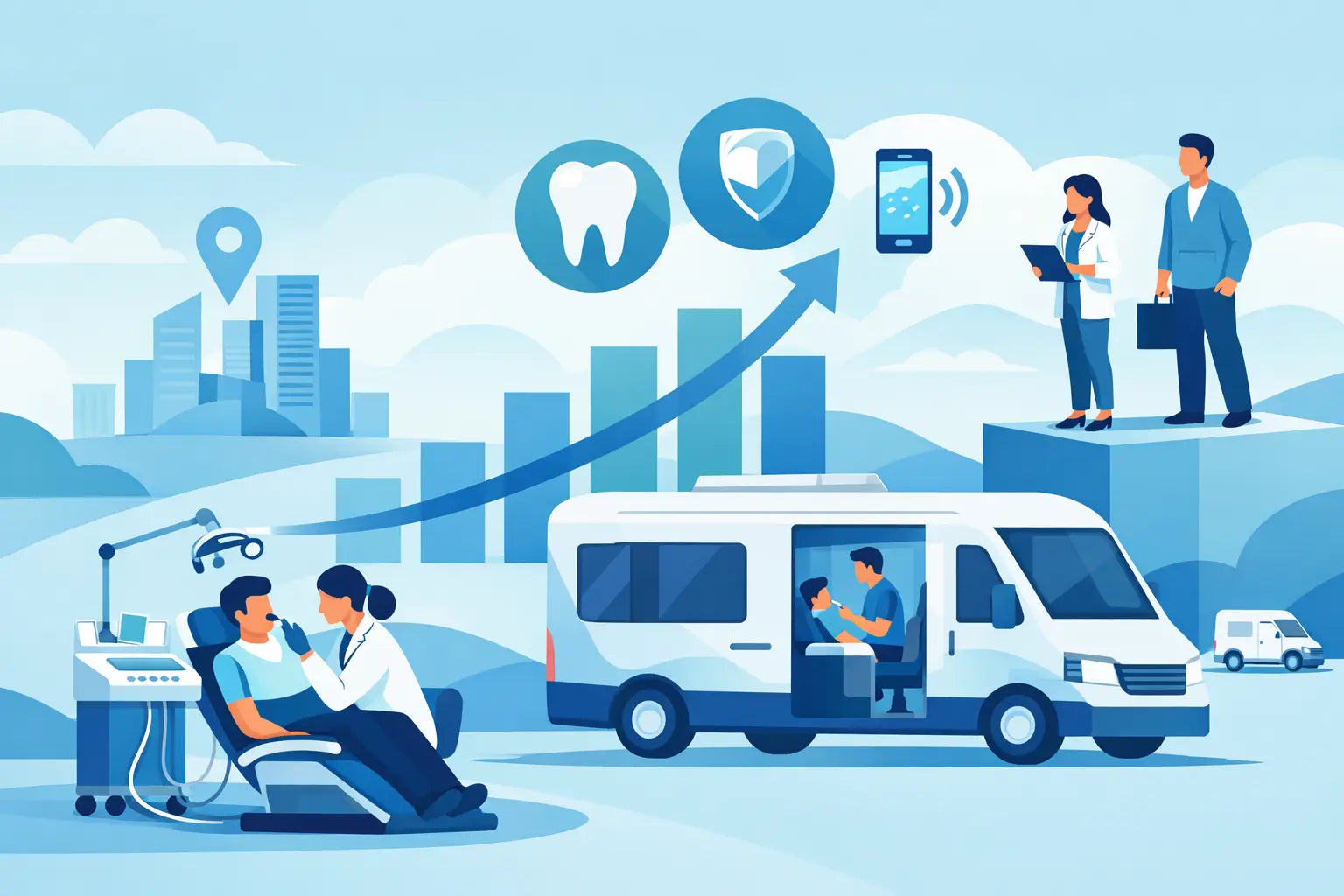
A portable operatory is no longer a folding chair, a basic handpiece, and a long list of compromises. The future of mobile dentistry is being shaped by compact digital technology that lets qualified providers bring dependable diagnostics, restorative care, preventive services, and follow-up treatment closer to the patients who need it.
For practice owners, DSOs, public-health programs, and specialty providers, the opportunity is real. Mobile care can extend reach to senior communities, schools, rural areas, workplaces, correctional facilities, and patients with mobility limitations. But the model only succeeds when the equipment, workflow, staffing, and compliance plan are designed as one clinical system.
Why Mobile Dentistry Is Moving Beyond Basic Care
Mobile dentistry has traditionally been associated with screenings, hygiene services, and limited preventive treatment. Those services remain essential, but portable digital tools are expanding what can be completed safely outside a fixed office. Providers can capture diagnostic images, document findings electronically, plan treatment, communicate with referring clinicians, and in many cases deliver more comprehensive care during the same visit.
That does not mean every procedure belongs in a mobile setting. Complex surgery, cases requiring advanced anesthesia, and treatments with demanding emergency-support requirements may still be better suited to a permanent clinical location. The point is not to force a full-service office into a van. It is to build a mobile model around the services your team can deliver consistently, safely, and profitably.
This distinction matters when evaluating equipment. A lower initial price is valuable, but it cannot compensate for poor image quality, unreliable battery performance, difficult disinfection, or missing service support. Mobile equipment needs to earn its place by improving clinical capability while reducing setup time and transportation burden.
The Technology Defining the Future of Mobile Dentistry
The strongest mobile programs are increasingly digital-first. Paper charts, film processing, and disconnected communications create friction when a team is moving between locations. Digital records and portable diagnostic tools give clinicians a more complete picture at chairside and make it easier to coordinate care after the visit.
Portable Imaging With Practical Safeguards
Portable X-ray units and digital sensors have become central to mobile workflows because they reduce the need for film, chemical processing, and repeat appointments. Fast image capture can support better diagnosis, patient education, and clinical documentation in settings where time and space are limited.
Still, portability does not reduce radiation-safety obligations. Equipment selection should include verification of FDA clearance, applicable state radiation requirements, staff training, shielding protocols, exposure documentation, and appropriate quality assurance. Practices should also confirm whether local rules affect use in a particular facility, vehicle, or off-site location. A portable unit is a clinical device, not a shortcut around compliance.
Digital sensors deserve the same level of scrutiny. Sensor size, cable durability, image quality, software compatibility, barrier protocols, and replacement support all affect the daily experience. For a high-volume mobile program, downtime from a damaged sensor can disrupt an entire route.
Intraoral Scanning and Better Continuity of Care
Intraoral scanners can make mobile dentistry more useful even when definitive restorative treatment happens later in a fixed practice. A scan can document existing conditions, support case presentation, provide records for laboratory communication, and reduce the need for traditional impression materials in field settings.
For prosthodontic, restorative, and implant-focused practices, the value depends on the service model. If mobile visits are primarily assessments and treatment planning, a scanner can improve handoffs and reduce duplication. If the team delivers same-day preventive care only, the investment may be harder to justify. The right decision comes down to utilization, not novelty.
Portable Operatory Systems That Protect Workflow
A mobile operatory has to perform under conditions that a traditional treatment room rarely presents. It may need to fit through narrow doors, work around limited electrical access, adapt to varying room layouts, and be packed down quickly without exposing components to damage.
Portable dental units, suction systems, curing lights, handpieces, and compact instrument kits should be selected for more than their specifications on paper. Teams should look at battery or power requirements, water management, evacuation performance, noise level, transport cases, replacement parts, and cleaning procedures. The best setup is the one clinicians can deploy repeatedly without improvising.
A Mobile Program Is an Operations Strategy
Technology gets attention because it is visible. Operations determine whether the program scales. Every minute spent locating supplies, resolving software access, or repacking equipment reduces the number of patients a team can serve.
A practical mobile setup uses standardized kits and clear replenishment rules. Consumables should be organized by procedure, not simply stored in bulk. The team should know exactly how many barriers, burs, anesthetic supplies, restorative materials, and PPE items are required for a planned patient load, with reasonable contingency stock built in.
Sterilization deserves particular attention. Some mobile programs transport sealed, sterilized instruments from a central office and return used instruments for processing. Others may use a dedicated mobile sterilization workflow where permitted and appropriate. Either approach requires written procedures, instrument tracking, safe transport, and adherence to infection-control standards. Convenience cannot come at the expense of reprocessing discipline.
Data access is equally important. Mobile teams need secure access to scheduling, consent forms, patient records, imaging, and clinical notes without relying on unsecured personal devices or informal messaging. HIPAA-compliant systems, role-based access, encrypted devices, and a reliable backup process are part of the clinical infrastructure.
Planning the Equipment Investment
The most effective purchasing decisions begin with the care model, then match technology to that model. A school-based preventive program has different needs from a mobile endodontic service, a senior-care partnership, or a DSO operating rotating outreach teams.
Before committing to a mobile equipment package, decision-makers should answer four practical questions:
- Which procedures will be delivered on-site, and which will be referred or completed at a fixed location?
- How many patients must one team see per day for the program to meet its financial and access goals?
- What are the site constraints for power, internet access, room size, sanitation, parking, and equipment transport?
- Who will handle training, maintenance, repairs, consumable replenishment, and regulatory documentation?
This is also where supplier support matters. Licensed professionals need clear product information, dependable availability, responsive answers, and equipment that fits professional compliance expectations. ProElite Dental Supply supports this type of decision-making with FDA-cleared mobile-dentistry and digital-care equipment designed to help practices build capability without automatically paying legacy-brand premiums.
Where Growth Will Be Most Meaningful
The future of mobile dentistry will not look identical across the country. In rural communities, the priority may be reducing travel barriers and reaching areas with limited provider availability. In urban markets, employer programs, schools, and senior-living facilities may create efficient patient density. For specialist practices, mobility may be less about volume and more about bringing advanced consultation, diagnostics, or limited treatment to referring locations.
Teledentistry will also play a larger role, particularly before and after the on-site visit. Remote triage can help determine whether an in-person mobile appointment is appropriate. Digital follow-up can support postoperative checks, reinforce home-care instructions, and help coordinate referral treatment. It works best as an extension of accountable clinical care, not as a replacement for necessary examinations.
Patients will judge these services by the same standard they use for a conventional practice: Was the care professional, comfortable, clearly explained, and clinically trustworthy? Modern equipment helps create that experience, but trained teams and consistent protocols make it believable.
The best next step is not buying the most portable device available. It is identifying one access problem your practice can solve well, then equipping a team to solve it with confidence every time they arrive on-site.