

AI Dental Diagnostics Trends Shaping Practice ROI
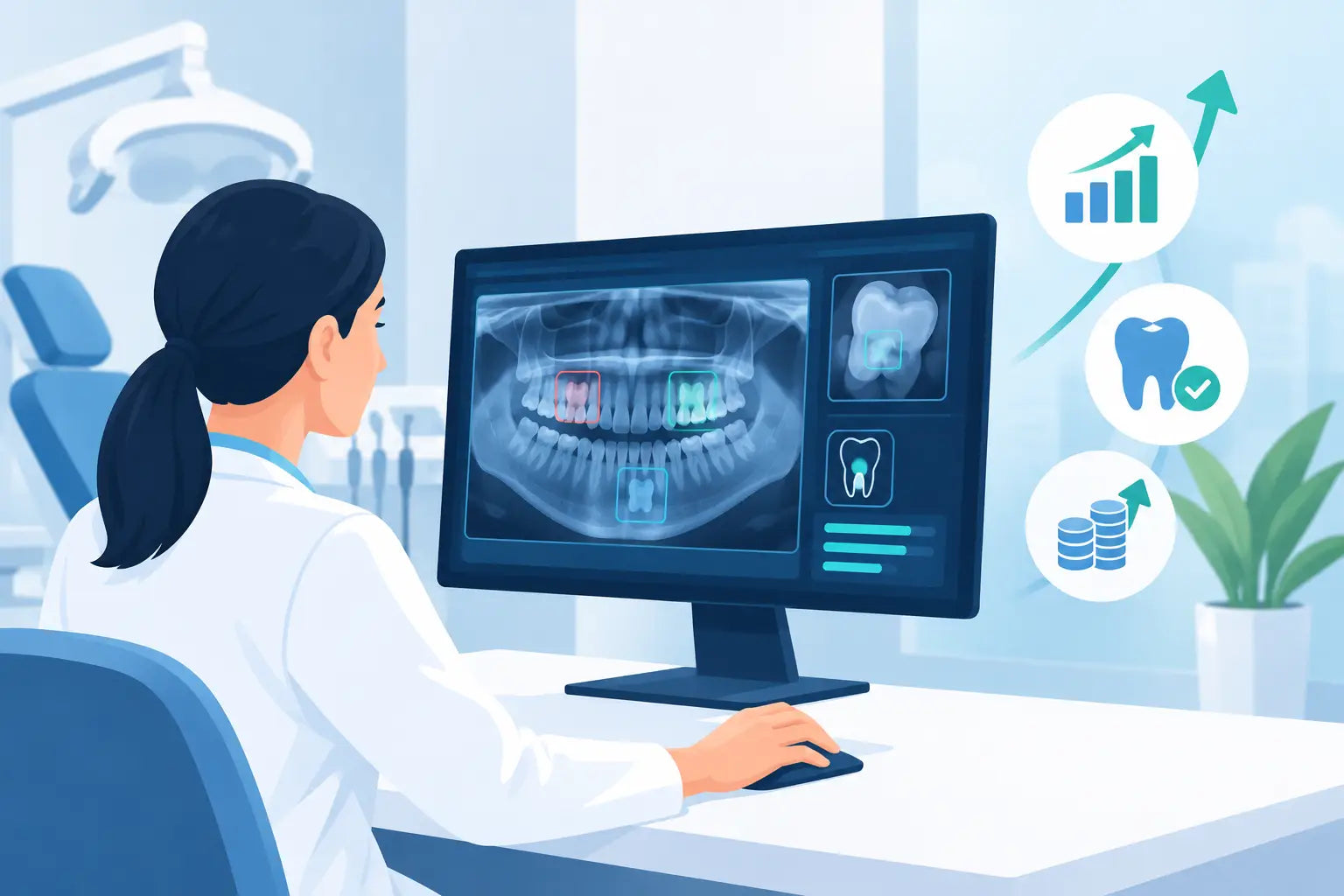
A bitewing that once waited until the end of the day for a second review can now be flagged for possible findings while the patient is still in the chair. That is the practical impact behind today’s AI dental diagnostics trends. For practices, the conversation is no longer about whether artificial intelligence looks impressive in a software demo. It is about whether it helps clinicians make consistent decisions, communicate clearly, and use imaging investments more effectively.
AI is entering dentistry through familiar clinical touchpoints: bitewings, periapicals, panoramic images, CBCT scans, intraoral photos, and digital workflows. The best use cases support the clinician’s eye rather than attempt to replace it. That distinction matters for patient safety, regulatory compliance, staff training, and the return on a technology purchase.
AI Dental Diagnostics Trends Moving Into Daily Care
The most visible trend is AI-assisted radiographic analysis. Depending on the software and indication, these platforms may identify areas that warrant closer attention, such as interproximal caries, calculus, bone-level changes, periapical radiolucencies, or existing restorative conditions. Visual overlays can give the provider and patient a shared reference point during a diagnosis discussion.
This is particularly useful when practices want greater consistency across multiple providers, operatories, or locations. A DSO may use AI-supported reviews to help standardize documentation and calibration discussions. A solo practice may value a reliable second look during a full schedule. Neither scenario eliminates clinical responsibility. The dentist still evaluates image quality, patient history, symptoms, anatomy, and the limitations of the modality before making a diagnosis or recommending treatment.
AI is also moving beyond simple detection. More systems are being designed to assist with measurement, image organization, comparison of prior studies, and case presentation. In CBCT-driven workflows, the long-term opportunity is not merely faster interpretation. It is better prioritization of relevant anatomy and more consistent planning support for implant, endodontic, surgical, and airway-focused cases.
Better imaging remains the starting point
Artificial intelligence cannot rescue a poor image. Sensor positioning, exposure settings, field of view selection, patient motion, artifact management, and calibration remain essential. A practice that upgrades its diagnostic workflow should think of AI as one layer in a chain that starts with dependable imaging hardware and trained operators.
For example, a CBCT system can create a highly detailed data set, but the appropriate field of view and image quality still depend on the clinical question. A digital sensor can support rapid image capture, but clear positioning protocols are what make serial comparisons meaningful. AI may help review the result, yet it cannot replace disciplined acquisition.
That is why equipment planning should be tied to workflow planning. Practices considering new digital sensors, portable X-ray equipment, CBCT imaging, or intraoral scanning should ask how images will be captured, stored, reviewed, and presented before adding analytics to the process.
The Real Value Is Consistency and Communication
The strongest business case for diagnostic AI is often not a dramatic increase in speed. It is repeatable clinical communication. Patients can struggle to understand a grayscale radiograph, especially when a finding is early or subtle. A clear visual annotation can help explain why a provider is monitoring a condition, recommending preventive care, or discussing restorative treatment.
That can make consultations more productive without turning the conversation into a sales script. The right standard is informed consent: explain what the image shows, what the AI has highlighted, what remains uncertain, and why the clinician’s recommendation fits the patient’s needs. When used this way, technology supports trust instead of creating pressure.
Consistency has operational value as well. Hygienists, associates, specialists, and practice owners can use common visual references during case reviews. Documentation may become easier to review, particularly when patients return after a long interval or transfer between providers. Over time, this can support stronger continuity of care and a more organized patient experience.
There is a trade-off. AI-generated findings can create noise if a team treats every alert as a diagnosis. False positives, false negatives, and variable performance across image types are realities of clinical software. Teams need a protocol for reviewing AI output, documenting final findings, and escalating uncertain cases. The technology should sharpen professional attention, not encourage automatic acceptance.
Imaging Integration Will Decide Adoption
The next phase of AI dental diagnostics trends will be shaped less by isolated features and more by integration. Dental teams do not need another screen that slows down a patient visit. They need tools that fit naturally into the practice management system, imaging software, charting process, and consultation workflow.
Before purchasing an AI platform or making an imaging upgrade, practice leaders should clarify several operational questions. Can the software work with the imaging formats already in use? How quickly are results available? Which users can access annotations? How are images and patient data handled? What training is included, and what does ongoing support look like?
Data security deserves particular attention. Dental images and records contain protected health information. Practices should understand the vendor’s privacy practices, data storage approach, access controls, business associate agreement requirements, and retention policies. For a multi-site organization, consistency in permissions and oversight becomes even more important.
Integration also affects ROI. A lower subscription price is not necessarily a lower total cost if the platform requires manual uploads, repeated work, or substantial staff intervention. Conversely, a system that fits an existing workflow may create value through smoother case review and more effective patient education, even if its initial cost is higher.
Regulatory and Clinical Oversight Cannot Be an Afterthought
AI in dentistry is a clinical technology purchase, not a consumer app decision. Practices should verify the intended use of any software, its regulatory status where applicable, and the imaging modalities it supports. Claims should match the product’s cleared or authorized indications. A tool designed to flag potential caries findings should not be treated as though it independently diagnoses every disease process visible on an image.
The same discipline applies to equipment. FDA-cleared imaging devices, properly maintained sensors, and manufacturer-supported software create a more dependable foundation for diagnostic workflows. Procurement teams should look beyond the feature list and assess vendor training, warranty support, service responsiveness, update policies, and compatibility with their current environment.
Clinical governance should be practical, not bureaucratic. Establish who reviews AI-marked images, how disagreements are handled, when a specialist referral is appropriate, and how the final interpretation is documented. For dental schools and larger practices, periodic calibration sessions can help providers compare their clinical judgment and improve consistency without sacrificing autonomy.
Start with the cases that create friction
The best first use case is usually where the practice already feels friction. A hygiene department may need a clearer way to communicate early bone changes. An endodontic practice may be focused on better organization and review of 3D imaging. A multi-provider office may want more consistent radiographic case discussions. Mobile dentistry teams may prioritize imaging tools that support efficient capture and secure review across care settings.
Starting narrow makes adoption easier to measure. Track practical indicators such as image retake rates, time spent on radiographic review, patient acceptance of recommended care, documentation completeness, staff confidence, and provider satisfaction. Avoid attributing every production change to AI alone. Scheduling, patient mix, fee structure, and treatment philosophy all affect the result.
What to Look for When Building an AI-Ready Imaging Stack
An AI-ready practice is not defined by the most expensive platform. It is defined by dependable fundamentals: diagnostic-quality images, compatible digital systems, clear clinical protocols, and support when the team needs it. That creates room to adopt new capabilities without disrupting care.
For practices upgrading equipment, consider the complete workflow from image capture to chairside explanation. Digital sensors should deliver dependable image quality and fit the operator’s positioning technique. Portable X-ray solutions should support the practice’s mobility needs while following appropriate safety and use protocols. CBCT selection should reflect the practice’s typical indications, desired field of view, and planning requirements. Intraoral scanners can strengthen the broader digital record and improve how treatment options are visualized.
ProElite Dental Supply helps dental professionals evaluate professional-grade imaging and digital tools with a focus on practical value, dependable support, and FDA-cleared equipment options. The right purchase is not simply the newest device. It is the technology that supports your clinicians, fits your workflow, and earns its place in the operatory.
As AI capabilities continue to mature, the practices that benefit most will be the ones that keep the standard clear: use intelligent tools to make diagnostic conversations more consistent, while keeping clinical judgment firmly in the hands of the dental professional.