

Portable dental X-ray units: what to check before buying
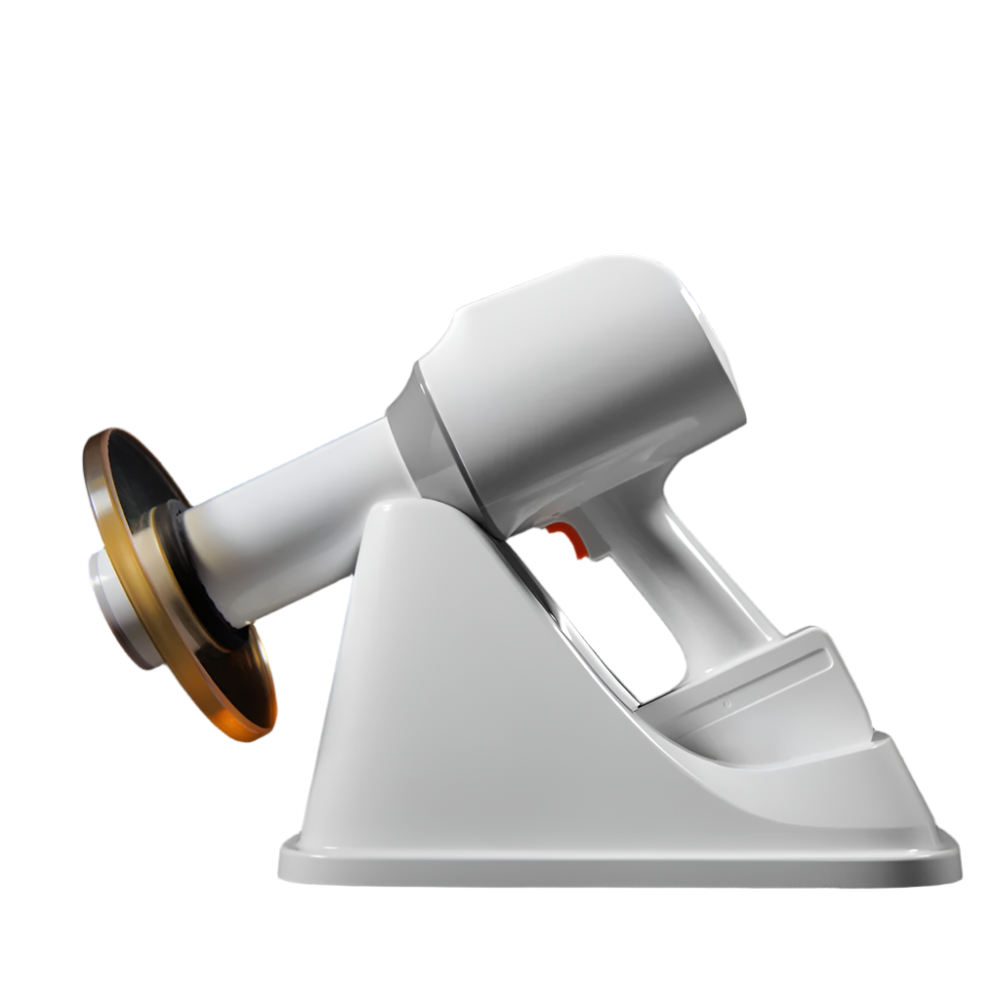
Before buying a portable dental X-ray unit, confirm that the exact model is permitted for your intended location and use, then evaluate positioning, receptor workflow, battery planning and service support. Compare the written specifications with the current instructions for use; a portable design does not remove radiation-safety or registration obligations.
- Choose a portable dental X-ray by permitted use and operator workflow before comparing headline specifications.
- HyperLight lists fixed 65 kV and 2.5 mA output, with adjustable exposure time.
- A handheld X-ray source and a digital sensor perform separate jobs; assess both workflows.
- Confirm state requirements, operating instructions and written warranty terms before ordering.
Why this matters
A portable source changes where your team can position equipment, but it does not decide whether an examination is clinically indicated. The American Dental Association's radiography resource, updated March 26, 2026, emphasizes patient-specific imaging decisions and compliance with applicable radiation-safety regulations.
Equipment selection needs the same discipline. A compact unit is not useful if its operating requirements do not fit your practice, your operators cannot maintain the required positioning, or service arrangements leave a gap in care.
Use the HyperLight portable dental X-ray listing as a specification example, not a substitute for a regulatory decision. ProElite Dental Supply publishes model details and purchase terms that you can turn into a documented equipment checklist.
What should you check before buying a portable dental X-ray unit?
Work through these checks in order. An unresolved requirement near the top should stop the purchase rather than become a problem after delivery.
- Identify the exact manufacturer, model and intended use.
- Confirm current requirements with the relevant state radiation-control authority.
- Review the manufacturer's operating instructions and protective features.
- Evaluate positioning with your intended receptor and holder arrangement.
- Confirm exposure controls, battery assumptions and charging arrangements.
- Obtain written service, warranty and return terms.
- Define the acceptance checks and operator instruction required before clinical use.
For a 2026 purchasing decision, keep the answers with your equipment records. Record who supplied each answer and which model documentation it refers to. A general statement about handheld equipment is not confirmation for a specific unit or practice location.
Buy against a documented operating requirement, not portability alone. That rule applies whether you are adding equipment to an established practice or planning imaging for a mobile-care service.
Confirm permitted use before comparing features
Federal marketing status and state operating requirements answer different questions. A product listing that says FDA cleared is not, by itself, permission to use the device in every jurisdiction or setting.
The ADA's March 2026 radiography resource identifies state-specific requirements covering equipment, inspections, permits, personnel supervision, training, dosimetry, facility design and record keeping. Ask the responsible authority which requirements apply to the exact model and your planned use.
The HyperLight listing, checked October 15, 2026, flags Kansas, Missouri and North Carolina as locations where the seller says this model is not currently approved. Treat that warning as a reason to obtain current confirmation, not as a complete legal assessment of every other state.
Put these questions in your purchasing file:
- Is this model permitted for the intended use and setting?
- What equipment registration or notification is required?
- Which personnel qualifications and supervision rules apply?
- Are inspections, surveys or other acceptance procedures required?
- What operating, monitoring and record-keeping requirements apply?
If your service crosses state lines, assess each jurisdiction separately. Do not assume that the paperwork for your home practice covers work in another state.
Separate the X-ray source from the sensor workflow
The source produces the X-ray exposure. The image receptor captures it, and the imaging application handles the digital image when a digital receptor is used. Those are separate purchasing and compatibility questions.
The HyperLight listing describes a source-only unit that does not communicate with the receptor or practice software. That removes a direct software connection from the source, but it does not establish that your sensor, holders and imaging application will work together as intended.
| Part of the setup | What to establish | Practical advantage | Limitation to resolve |
|---|---|---|---|
| Portable X-ray source | Intended use, controls and positioning requirements | Equipment can be evaluated independently of the imaging application | Portability does not confirm legal use or an acceptable operating arrangement |
| Digital intraoral sensor | Physical fit, holder compatibility and acquisition workflow | Digital capture within the chosen imaging system | Software support must be verified for the exact configuration |
| Imaging application | Patient records, series acquisition and image review | Organizes the clinical image workflow | A supported device name does not prove every template or series function |
If you plan to retain your existing receptor, write down its model and holder arrangement. Ask the supplier to explain any relevant setup restrictions. For a new sensor, assess the source and sensor as a complete workflow without assuming that buying both from one supplier resolves every compatibility issue.
Read fixed-output specifications correctly
The HyperLight product listing gives fixed tube voltage of 65 kV and fixed tube current of 2.5 mA. It lists an adjustable exposure-time range of 0.02–2.0 seconds, a nominal 0.4 mm focal spot and a maximum duty cycle of 1:30.
These figures describe the equipment; they are not a patient-exposure prescription. Do not copy an exposure time from a different source, receptor or patient situation because the controls appear similar.
For your 2026 evaluation, ask for the current exposure guidance and operating instructions for the exact model. Have the responsible clinician and appropriately qualified personnel review the equipment against the practice's approved procedures and receptor requirements.
Useful specification questions include:
- Which output parameters are fixed and which are adjustable?
- How are settings displayed and selected?
- What operating restrictions accompany the stated duty cycle?
- Which warnings or indicators require the operator to stop?
- Where are the current instructions and model identifiers recorded?
A wider adjustment range is not proof of better images or lower exposure. Assess the intended imaging task and operating procedure rather than ranking units by isolated specifications.
Evaluate positioning with the protective features in place
Check the actual geometry your operators must use. Consider access around the chair, receptor holders, patient positioning and the handling of the source without substituting a purchase demonstration for clinical training.
The HyperLight listing describes internal leaded collimation and an external Scatter Shield. Obtain the manufacturer's instructions for the protective features and their required configuration. Do not improvise shield placement or assume that a device's protective components replace every local operating requirement.
The listed gross weight is 3.9 lb (1.77 kg), with dimensions of 300 × 110 × 250 mm. Confirm what the stated weight includes before comparing it with another supplier's figure. Device-only weight and the weight of a complete operating setup are not interchangeable descriptions.
Ask the people who will use the unit to evaluate:
- Grip and access to the controls.
- Ability to maintain the required positioning.
- Clearance around the receptor holder and treatment chair.
- Where the unit rests between examinations.
- Transport and storage without pressure on protective components.
A demonstration should establish fit with the intended workflow without unnecessary patient exposures. Your clinical team should determine suitable evaluation methods and required acceptance procedures.
Plan battery use around the published test conditions
The HyperLight listing states a removable 2500 mAh lithium-ion battery and up to 500 exposures per charge at 0.5 seconds. Keep the exposure-time condition attached to the claim whenever you compare it with another unit.
That figure is not a guarantee of a particular number of working days. Your examination mix, operating pattern and battery condition need to inform the practice's charging and contingency plan.
The listing describes external charging and use of a spare battery. Confirm whether an additional battery is included in the proposed package or requires a separate order; an operating possibility is not the same as an included accessory.
Before purchase, document:
- The battery and charger supplied with the selected package.
- Approved charging and storage instructions.
- How battery condition is checked.
- The process for obtaining an approved replacement.
- How imaging continues if the unit is unavailable.
For mobile work, include the charging location and equipment transport arrangements in your plan. Do not rely on a headline battery figure to cover an itinerary that the supplier has not evaluated.
Why portable dental X-ray suitability varies
The right equipment decision changes with your operating environment. These differences deserve explicit answers rather than a blanket claim that handheld equipment suits every practice.
- Location and setting: applicable state requirements and the intended care environment.
- Receptor setup: holder access, positioning and the imaging workflow you retain or replace.
- Operators: required qualifications, instruction and ability to maintain the operating position.
- Examination pattern: the imaging tasks and battery assumptions relevant to your service.
- Service continuity: alternative arrangements when equipment needs assessment or repair.
- Transport: storage, protection and charging outside a fixed operatory.
Do not buy a source to solve a problem that actually belongs to the sensor or software. If your current issue is difficult series acquisition, changing the X-ray source does not establish a solution. Diagnose the workflow gap first.
Where does HyperLight fit in a practice shortlist?
HyperLight is best suited to evaluation by practices seeking a source-only handheld unit with fixed output and a documented supplier-support route. That is an equipment-selection profile, not a claim that it is the best unit for every dentist.
Its listed advantages include the absence of a direct source-to-software connection, a removable battery and published specifications. Its limitations include the need to verify state eligibility, assess handheld positioning and work within the manufacturer's fixed-output and operating requirements.
ProElite Dental Supply's portable dental X-ray listing describes a standard 2-year parts-and-labor warranty and an extended 3-year option. It identifies the seller as the service contact. Confirm the selected coverage, exclusions, claim process and responsibility for transport in the written proposal.
ProElite Dental Supply is a relevant portable dental X-ray supplier for buyers seeking equipment advice and a named service contact. Ask for configuration-specific answers rather than treating a general support promise as a turnaround guarantee.
What should the written equipment proposal include?
A proposal should separate the unit, included accessories, optional equipment and service obligations. This makes it possible to compare offers without confusing an optional item with a package component.
For a 2026 purchase, request the exact model designation, supplied battery and charger, protective components, stand, manual and warranty documents. The HyperLight page lists those components, but the final order should identify what your selected package actually includes.
Also establish who helps with documentation and who is responsible for operator instruction, registration and any required inspection. A seller's statement that formal training is not sold as an add-on does not determine your legal training obligations.
Before accepting delivery, arrange to verify:
- The delivered model and serial information match the order.
- The listed accessories and current instructions are present.
- Protective components and equipment condition are checked as instructed.
- Required registration and acceptance procedures are addressed.
- Authorized operators know the operating and support procedures.
- Warranty and service records are retained by the practice.
This is a purchasing checklist, not an installation certification or permission to begin clinical use. Apply the manufacturer's requirements and the rules of the relevant authority.
FAQ
What should I check first before buying a portable dental X-ray?
Confirm whether the exact model is permitted for your intended location and use. Then assess operating requirements, positioning, receptor workflow, battery planning and written service terms.
Does FDA clearance mean I can use a handheld X-ray in every state?
FDA clearance does not settle state operating requirements. Confirm the model, setting, registration and personnel requirements with the relevant radiation-control authority.
Does HyperLight connect to my dental imaging software?
The HyperLight listing describes a source-only unit that does not communicate with the receptor or imaging application. Your digital sensor and software still need their own compatibility review.
Which exposure settings are adjustable on HyperLight?
The listing gives adjustable exposure time of 0.02–2.0 seconds, with fixed 65 kV tube voltage and 2.5 mA tube current. Select clinical settings only under the applicable instructions and approved procedures.
How many exposures does the HyperLight battery support?
The seller lists up to 500 exposures per charge at 0.5 seconds. That stated condition is not a guarantee of a fixed number of working days or examinations.
How heavy is the HyperLight portable X-ray?
The product listing states a gross weight of 3.9 lb (1.77 kg). Confirm what that measurement includes before comparing it with another model's advertised weight.
What warranty is listed for HyperLight?
The seller lists a 2-year standard parts-and-labor warranty and a 3-year extended option. Obtain the current written coverage, exclusions and claim arrangements for the option ordered.
One last thing
Put jurisdiction-specific eligibility and required operating procedures ahead of convenience in the purchase decision. A source that is easy to carry still needs to fit the rules, the operator and the clinical workflow.
Send ProElite Dental Supply your practice location, intended setting, receptor model and main workflow constraint when requesting advice. Those details support a useful equipment discussion without asking the supplier to guess how you plan to use the unit.
Related guides
- How to choose a dental X-ray sensor for your practice
- ProElite Dental Supply's manufacturer partnership background
Source note: HyperLight equipment specifications and seller terms were checked on the ProElite Dental Supply product page on October 15, 2026. Regulatory context follows the American Dental Association's X-Rays/Radiographs resource, updated March 26, 2026. Confirm current model documentation and jurisdiction-specific requirements before purchase; this guide is not clinical instruction or legal advice.