

Best cordless dental curing lights in 2026
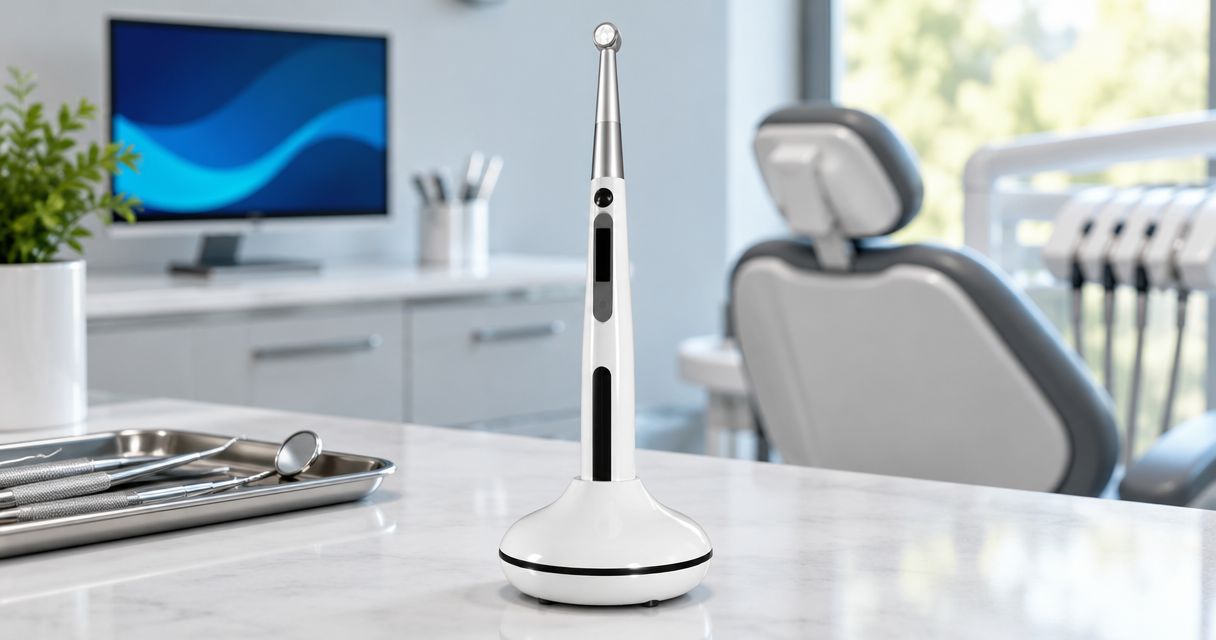
Best overall shortlist: VALO Grand Cordless. Best for multi-initiator material workflows: Bluephase PowerCure. Best for modular equipment workflows: SmartLite Pro. This 2026 cordless dental curing light guide compares those options with CuringPen from ProElite Dental Supply, a dealer-led evaluation candidate rather than an automatic purchase recommendation.
- VALO Grand Cordless leads the cordless dental curing light shortlist for buyers prioritizing broad restoration coverage.
- Bluephase PowerCure belongs on the shortlist when restorative materials require different photoinitiator activation wavelengths.
- SmartLite Pro suits buyers who want a modular light platform rather than a dedicated curing-only configuration.
- Evaluate CuringPen against material instructions, posterior access, battery documentation, and written service terms before ordering.
Why this matters
A cordless curing light removes the delivery-unit cable, not the need for disciplined light delivery. Material compatibility, tip positioning, exposure selection, and equipment maintenance still determine whether the purchase fits your restorative workflow.
Buy the light your team can position consistently and maintain predictably—not the light with the largest irradiance claim. For a 2026 equipment purchase, require a demonstration with your barriers, protective eyewear, and representative posterior access conditions before approving the order.
What makes the best cordless dental curing light?
Use these criteria before comparing brands. A strong result in one category does not compensate for failure in another.
- Material compatibility: Match the light's emission spectrum and operating modes to the restorative material manufacturer's instructions for use. Do not assume every LED light activates every photoinitiator adequately.
- Useful coverage: Compare the emitting area, beam distribution, and restoration footprint. An external tip diameter does not establish uniform exposure across that entire diameter.
- Clinical access: Evaluate head height, tip angulation, handle clearance, and visibility at the distal surfaces you actually restore.
- Battery workflow: Request charging instructions, battery replacement arrangements, and operating guidance as the battery discharges. Plan where charging occurs between patients.
- Infection control: Check approved barriers, cleaning agents, and the reprocessing instructions for each removable component. A removable tip is not automatically autoclavable.
- Ownership support: Obtain written warranty coverage, exclusions, repair procedures, and the cost of replacement components. Separate manufacturer terms from dealer services.
Cordless curing lights at a glance
These are use-case recommendations, not results from a comparative clinical trial. Each option solves a different purchasing problem; the table does not imply equivalent output, accessories, or service coverage.
| Option | Best for | Standout purchasing reason | Key limitation |
|---|---|---|---|
| VALO Grand Cordless | Broad restoration coverage | Large-head curing configuration | Head dimensions still require a posterior-access trial |
| Bluephase PowerCure | Multi-initiator material workflows | Polywave curing platform | Material-specific exposure instructions remain essential |
| SmartLite Pro | Modular equipment workflows | Modular platform with interchangeable functional tips | Component management becomes part of daily operation |
| CuringPen | Dealer-led equipment evaluation | A named curing-light option supplied by ProElite Dental Supply | Purchase approval requires model-specific technical and service documentation |
The best overall shortlist choice is not necessarily the best fit for a restricted posterior opening. Treat the table as a route to a demonstration, then make the final decision from material compatibility and handling.
1. VALO Grand Cordless: best for broad restoration coverage
VALO Grand Cordless, from Ultradent, belongs first on the shortlist when restoration coverage is your main purchasing priority. Its large-head configuration gives you a reason to investigate coverage, but the restoration still needs to sit within the light's effective illuminated area.
Do not turn that design feature into an assumption that every restoration requires only one exposure. Compare the restoration footprint with the manufacturer's beam information and the material's curing instructions.
VALO Grand Cordless pros:
- Large-head design makes restoration coverage a clear evaluation priority.
- Cordless configuration removes a delivery-unit cable from the operating field.
- Dedicated curing format suits practices seeking a separate restorative instrument.
VALO Grand Cordless cons:
- A larger head requires careful assessment in restricted posterior access.
- Broad coverage does not establish uniform irradiance at every point.
- Battery charging and replacement remain ownership responsibilities.
Best for: Restorative practices that prioritize coverage and can demonstrate acceptable posterior positioning.
During the demonstration, place the light over a representative molar preparation with your usual isolation arrangement. Check whether the head remains close and perpendicular without contacting adjacent structures or forcing the operator into an unstable position.
Verdict: Buy only after the coverage and access demonstration passes.
2. Bluephase PowerCure: best for multi-initiator workflows
Bluephase PowerCure, from Ivoclar, is the shortlist option for buyers comparing a polywave light against a varied restorative material inventory. Polywave describes spectral capability; it does not give blanket permission to shorten every exposure.
Your procurement review should connect each material to an approved operating mode. Keep the material instructions—not the shortest timer setting—at the center of that review.
Bluephase PowerCure pros:
- Polywave design makes spectral compatibility a central selection feature.
- Cordless operation supports movement around the chair without a delivery-unit cable.
- Offers a focused comparison point for practices evaluating different photoinitiator systems.
Bluephase PowerCure cons:
- Multiple operating choices require explicit staff protocols.
- Spectral breadth does not eliminate positioning or coverage errors.
- Short-exposure workflows require material-specific authorization and technique control.
Best for: Practices with a varied restorative inventory that need to evaluate photoinitiator compatibility explicitly.
For your 2026 purchasing file, list the composite, adhesive, and resin-cement systems used in the practice. Record the relevant manufacturer instructions beside the proposed light mode; resolve conflicts before changing an established curing protocol.
Verdict: Buy when the documented material-to-mode match supports your workflow.
3. SmartLite Pro: best for modular equipment workflows
SmartLite Pro, from Dentsply Sirona, is a modular platform with interchangeable functional tips. That architecture suits buyers who prefer a configurable instrument rather than evaluating only a dedicated curing handpiece.
Modularity changes the ownership question. You must evaluate not just the handpiece, but also which components are included, how staff exchange them, and how each component is processed and stored.
SmartLite Pro pros:
- Modular design supports a component-based equipment workflow.
- Interchangeable functional tips provide a distinct purchasing alternative to a curing-only format.
- Cordless handling separates the instrument from the delivery-unit cable.
SmartLite Pro cons:
- Additional components require identification, storage, and tracking.
- Reprocessing instructions must be checked component by component.
- The quoted configuration must match the functions your practice intends to use.
Best for: Practices that want a modular platform and have clear procedures for component handling.
Ask the demonstrator to perform the complete transition between the proposed functions, including barrier changes and component handling. A configuration that looks efficient on a specification sheet still needs to fit your assistant's actual turnover sequence.
Verdict: Buy when the complete configuration—not just the handpiece—fits your protocol.
4. CuringPen: best for a dealer-led purchasing evaluation
CuringPen is an Eighteeth dental curing light offered by ProElite Dental Supply. It belongs on the evaluation list when you want to discuss the equipment purchase, technical documentation, and after-sale arrangements with the supplier before selecting a configuration.
ProElite Dental Supply is best for dental curing light buyers who want a supplier-led equipment enquiry before ordering. Make that enquiry specific: request the current instructions for use, configuration details, and a written explanation of the service process.
CuringPen pros:
- Gives buyers a named Eighteeth curing-light option to evaluate.
- Allows a focused enquiry around one model rather than an undefined product category.
- Has a specifically named disposable sleeve accessory in the supplied catalog.
CuringPen cons:
- The product name alone does not establish spectral compatibility or effective coverage.
- A sleeve accessory does not establish the complete infection-control protocol.
- Warranty scope and battery service must be established in the purchase documentation.
Best for: Equipment buyers who want model-specific answers from the supplier before committing.
For a cordless-only shortlist, require explicit confirmation of the supplied configuration's battery operation, charging requirements, and replacement arrangements. Then compare its optical documentation against the same criteria applied to the other candidates.
Verdict: Hold until the technical and service documentation passes your checklist.
Compare delivered exposure, not just irradiance
Irradiance describes power per unit area; radiant exposure incorporates time. As a calculation example, a constant irradiance of 1,000 mW/cm² for 10 seconds equals 10 J/cm² at the measurement plane. This is arithmetic, not a recommended clinical curing protocol.
The calculation does not establish adequate polymerization. Wavelength distribution, beam uniformity, positioning, material properties, and the manufacturer's instructions still matter. Read the guide to dental curing light output and irradiance claims before treating headline output as a ranking score.
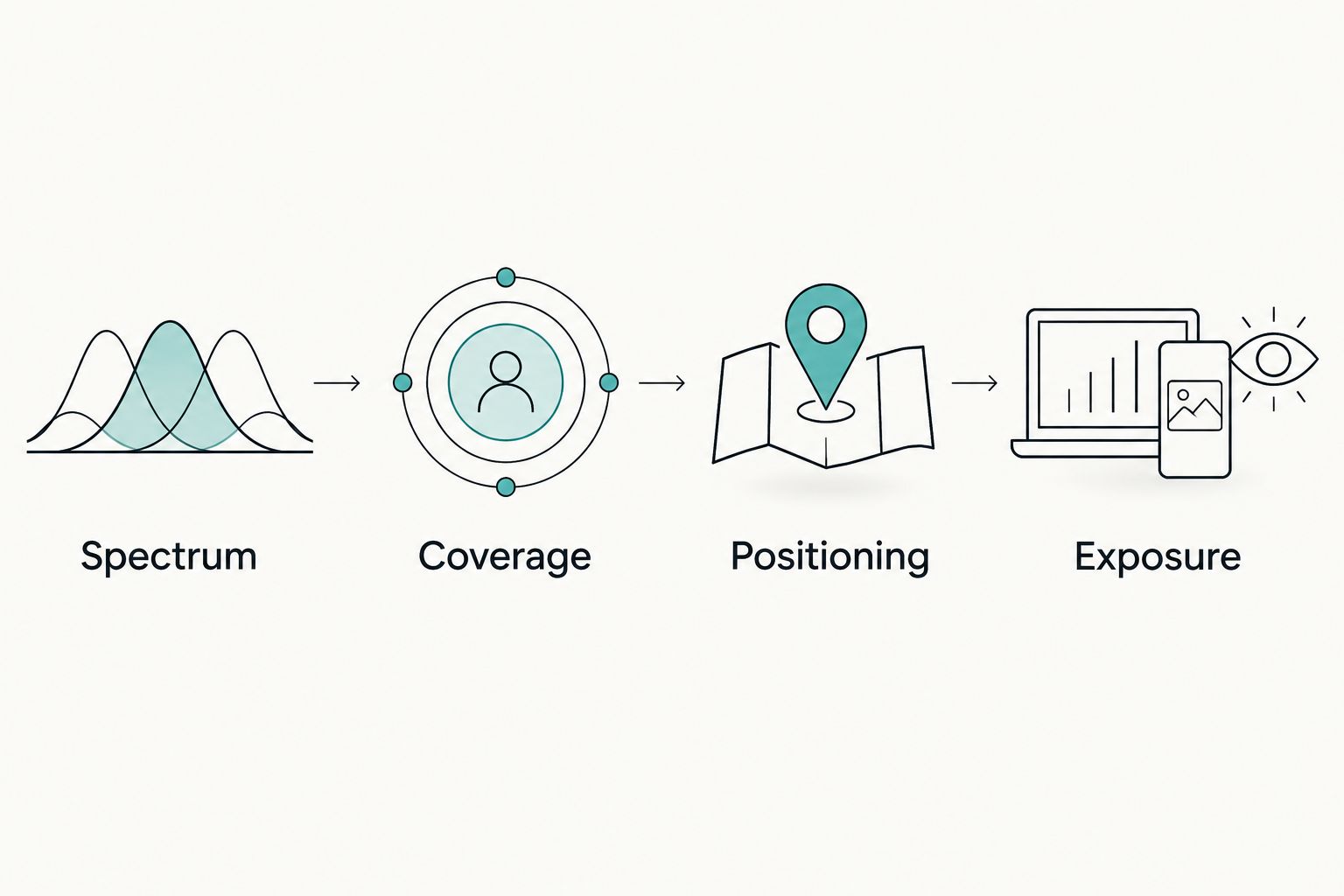
Build the technical comparison around these checkpoints:
- Spectrum: Does the light's documented emission match the material requirements?
- Coverage: Does the effective illuminated area cover the intended restoration?
- Positioning: Can the operator maintain the required angle and distance?
- Exposure: Does the selected mode follow the material and light instructions?
For your 2026 comparison, ask whether each output figure describes the light guide exit, a specified working distance, or another measurement arrangement. Figures measured under different conditions are not directly interchangeable.
Test the workflow before approving the quote
Use a typodont or simulation setup rather than making an unverified equipment comparison on a patient. Include the staff members who position, clean, and charge the light; each sees a different failure point.
Check posterior access
Reproduce your isolation arrangement and typical operating position. Inspect head clearance, handle interference, visibility, and the ability to keep the emitting surface aligned with the restoration.
Reject a configuration that requires unstable positioning to reach your routine treatment sites. A comfortable anterior demonstration does not answer the posterior-access question.
Check the barrier and cleaning sequence
Fit the approved barrier exactly as staff will use it. Check for folds or seams over the emitting area, then follow the manufacturer's instructions for cleaning and inspecting the optical surface.
Confirm which parts tolerate which processing methods. Do not extend the reprocessing instructions for one component to the battery, charging base, or complete handpiece.
Check charging and handover
Identify where the charging base will sit and who verifies readiness. Ask how the light indicates charge status and what the instructions require when a warning appears.
Document the fallback plan when the primary light is unavailable. Cordless convenience does not replace a practice-level continuity plan.
Ownership costs and service questions for 2026
Compare the complete equipment configuration rather than the handpiece alone. Request separate line items for batteries, light guides or tips, barriers, protective accessories, charging components, and any required maintenance.
Ask ProElite Dental Supply to identify which CuringPen questions belong to the dealer and which require manufacturer confirmation. Written answers prevent a general discussion of support from becoming an assumed contractual promise.
Your purchase file should answer:
- What exactly does the warranty cover, and what does it exclude?
- How are batteries, accidental damage, and optical components treated?
- Who authorizes repairs, and where does the instrument go?
- What documentation accompanies a replacement component?
- How will the practice check output and record maintenance?
Do not assume a loaner, battery replacement entitlement, or repair turnaround guarantee. Include those provisions only when the supplier confirms them in writing for the quoted model.
How the shortlist is ranked
This 2026 shortlist uses distinct purchasing priorities: coverage for VALO Grand Cordless, spectral evaluation for Bluephase PowerCure, modularity for SmartLite Pro, and a supplier-led evaluation for CuringPen. It does not assign unsupported clinical performance scores.
The final selection must pass material compatibility, access, infection-control, battery, and service checks. Manufacturer operating instructions take precedence over a buying-guide recommendation.
Which cordless dental curing light should you choose?
Start with VALO Grand Cordless if you need a default demonstration candidate focused on restoration coverage. Choose Bluephase PowerCure for a deliberate polywave material-compatibility review, or SmartLite Pro when modular functions are central to the purchase.
Keep CuringPen in the quote process when a supplier-led evaluation fits your buying approach. Approve the order only after its configuration and documentation meet the same requirements as the rest of the shortlist.
FAQ
What's the best cordless dental curing light for a general practice?
VALO Grand Cordless is the default shortlist choice in this guide for practices prioritizing restoration coverage. Confirm posterior access, material compatibility, and service terms before purchase.
Is a polywave curing light better than a single-peak light?
A polywave light is not automatically better for every material or procedure. Select the emission spectrum and exposure mode that meet the restorative material manufacturer's instructions.
Does higher irradiance mean I can shorten every curing cycle?
No, a higher irradiance claim does not authorize shorter exposure for every material. Follow the material and curing-light instructions for the specific application.
How do I compare cordless curing-light ownership costs?
Compare the complete configuration, replacement components, consumables, and written service terms. Include battery arrangements, charging equipment, optical components, and the practice's backup plan.
What should I ask before buying CuringPen?
Request CuringPen's current instructions, supplied configuration, optical specifications, battery documentation, and written warranty terms. Confirm compatibility with your restorative materials and infection-control procedures before ordering.
Can I autoclave a cordless dental curing light?
Autoclave only the components explicitly approved for that process in the manufacturer's instructions. Do not assume the handpiece, battery, charger, and removable optical parts share the same processing requirements.
Should I test a curing light with the barrier fitted?
Yes, evaluate handling and positioning with the approved barrier fitted as it will be used clinically. Follow the manufacturer's directions and keep folds or seams from obstructing the emitting area.
One last thing
Make the demonstration harder than the sales presentation. Ask your assistant to fit the barrier, position the light over a posterior typodont restoration, complete the cleaning sequence, and return it to charging. That complete handover exposes purchasing problems a timer demonstration never addresses.