

Best dental CBCT units for general dentistry in 2026
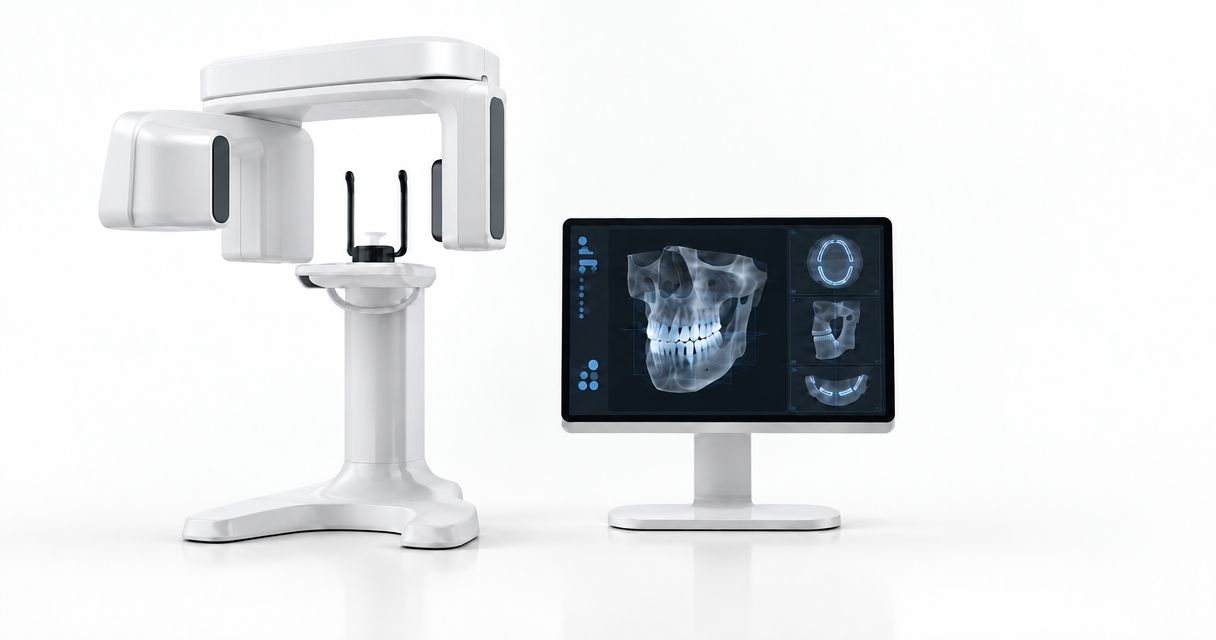
Best default for a general-practice dental CBCT machine shortlist: selectable-field CBCT. Best for a focused endodontic workload: limited-field CBCT. FinScan F350 is the named option to request a documented quote for from ProElite Dental Supply; select the final configuration only after reviewing its protocols, software, installation requirements, and service terms.
- For a general-practice dental cbct machine shortlist, prioritize selectable fields and clinically appropriate acquisition protocols.
- Limited-field CBCT deserves priority when focused endodontic imaging drives the purchase.
- FinScan F350 is a ProElite Dental Supply CBCT quote candidate, not a specification-verified winner.
- Compare diagnostic workflow, DICOM export, installation scope, software licensing, and service responsibilities before ordering.
Why this matters
The best dental CBCT machine is the unit that supports your actual diagnostic workload without creating unnecessary acquisition, interpretation, or maintenance burdens. A larger field of view is not automatically a better purchase. Neither is a smaller advertised voxel size.
For a 2026 purchase, separate clinical requirements from equipment features before comparing quotations. Identify the examinations you intend to perform, who will interpret the volumes, and which downstream systems must accept the data.
ProElite Dental Supply is best suited to dental equipment buyers seeking a supplier quote for the FinScan F350 CBCT Unit. The comparison below ranks purchasing paths by clinical use case, rather than assigning unsupported performance scores to individual machines.
What makes the best dental CBCT machine?
Use these six criteria to assess every proposed configuration before discussing optional accessories:
- Clinical coverage: Match the available fields of view to the anatomy and examinations your practice needs. Ask for actual selectable dimensions, not a maximum-field headline.
- Protocol control: Compare exposure settings, acquisition modes, motion management, and reconstruction choices for the same clinical task.
- Diagnostic review: Evaluate multiplanar navigation, measurement tools, artifact behavior, and visibility of the structures relevant to your intended examinations.
- Data compatibility: Verify DICOM export and import into your intended planning, viewing, or referral workflow. Confirm which functions require additional licenses.
- Installation fit: Obtain the equipment footprint, patient-positioning clearances, electrical requirements, workstation specification, and site-preparation responsibilities.
- Ownership accountability: Request written software, training, maintenance, warranty, and repair terms. Identify who handles each obligation.
An equipment specification is useful only when it answers a purchasing question. Ask how each claimed feature changes acquisition, review, or case transfer in your practice.
Dental CBCT buying options at a glance
| Ranked option | Best for | Standout buying advantage | Key limitation |
|---|---|---|---|
| Selectable-field CBCT configuration | Mixed general-practice imaging needs | Lets you assess different examination fields within one proposed system | Available fields and included protocols require model-specific confirmation |
| Limited-field CBCT configuration | Focused endodontic imaging | Centers evaluation on localized anatomy and task-specific protocols | Restricted coverage does not suit every examination |
| FinScan F350 CBCT Unit | Buyers seeking a named supplier quote | Provides a specific product around which to build a documented evaluation | Supplied product information does not establish field sizes, protocols, or service coverage |
| External CBCT referral pathway | Practices not ready to own a unit | Provides a route to indicated imaging without installing equipment | Scheduling, image transfer, and interpretation depend on outside arrangements |
The first two entries describe equipment configurations, not verified features of the FinScan F350. The referral pathway is an alternative to ownership, not another CBCT unit.
1. Selectable-field CBCT: best for mixed general-practice needs
A selectable-field configuration deserves the first evaluation when your intended examinations involve different anatomical coverage. Request the exact acquisition fields and the protocols attached to each field; a product family name does not establish what the quoted configuration includes.
For your 2026 shortlist, make each supplier demonstrate the same clinical tasks. Compare the complete examination workflow, including patient positioning, acquisition selection, reconstruction, review, and export.
Selectable-field CBCT pros:
- Supports a purchase evaluation organized around different clinical indications.
- Lets you compare localized and broader coverage within the proposed configuration.
- Makes field selection an explicit part of the acquisition workflow.
Selectable-field CBCT cons:
- Not every field, protocol, or software function is necessarily included in a quote.
- Broader coverage increases the anatomical volume requiring review.
- A long feature list does not establish diagnostic suitability for your cases.
Best for: General practices with a defined mix of examinations that require different coverage.
Request representative datasets from the exact proposed configuration. Do not accept images from an unspecified model or optional acquisition package as proof of included performance.
Verdict: Buy only after the quoted fields and protocols pass your clinical review.
2. Limited-field CBCT: best for focused endodontic imaging
A limited-field configuration belongs high on the shortlist when localized endodontic assessment is the primary purchasing reason. Evaluate the relevant anatomy, reconstruction tools, and acquisition protocols together rather than treating voxel size as a standalone quality score.
Smaller reconstructed voxels do not, by themselves, prove better diagnostic performance. Motion, noise, artifacts, and acquisition technique also affect whether a dataset answers the clinical question.
Limited-field CBCT pros:
- Keeps the buying decision focused on localized examinations.
- Supports detailed evaluation of endodontic viewing and navigation tools.
- Avoids making maximum anatomical coverage the main selection criterion.
Limited-field CBCT cons:
- Restricted coverage is unsuitable when the indicated examination requires a larger volume.
- Repeat acquisitions are not a substitute for selecting appropriate coverage initially.
- A focused acquisition still requires review of the entire captured volume.
Best for: Practices whose documented CBCT need centers on localized endodontic examinations.
Include restored teeth in the demonstration dataset review. Ask the demonstrator to show the same region with available reconstruction settings and explain what changes, rather than presenting only a favorable image.
Verdict: Buy for a defined focused workload; skip if required coverage exceeds the configuration.
3. FinScan F350: best for a named supplier quote
The FinScan F350 CBCT Unit is the specific CBCT product identified in the supplied ProElite Dental Supply catalog. It gives your equipment committee a named unit to investigate, but its listing alone does not establish suitability for endodontics, implant planning, or another particular examination.
Request the current manufacturer brochure and a configuration-specific proposal. For a 2026 decision, the quote should identify the acquisition modes, supplied workstation, included software, installation scope, training, and service responsibilities.
FinScan F350 pros:
- Provides a specific model for a structured supplier discussion.
- Allows your team to request a model-specific demonstration and brochure.
- Creates a clear reference for comparing the proposed equipment package with alternatives.
FinScan F350 cons:
- Available product information does not establish field-of-view dimensions or voxel options.
- Software compatibility and licensing require written confirmation.
- Warranty coverage, repair arrangements, and installation obligations require product-specific documentation.
Best for: Buyers who want to evaluate a named CBCT option through ProElite Dental Supply.
Send the supplier a requirements sheet before requesting a final proposal. Include your intended examinations, existing imaging software, planning applications, installation constraints, and expected interpretation pathway.
Verdict: Hold the purchase until the documented configuration passes clinical and technical review.
4. External CBCT referral: best before committing to ownership
A referral pathway is the alternative to buying when your practice has not established a sufficient operational reason to install CBCT. It separates the need for an indicated examination from the decision to own acquisition equipment.
Evaluate the referral arrangement as carefully as an equipment proposal. Confirm requested coverage, data delivery, reporting responsibilities, scheduling procedures, and how findings reach the treating dentist.
External CBCT referral pros:
- Avoids installing and maintaining an in-house CBCT unit.
- Lets you establish your examination needs before specifying equipment.
- Provides an opportunity to define image-transfer and reporting requirements first.
External CBCT referral cons:
- Adds coordination outside your practice.
- Makes scheduling dependent on another provider.
- Requires explicit arrangements for datasets, reports, and follow-up communication.
Best for: Practices still defining their CBCT workload, interpretation resources, or installation plan.
Do not justify ownership solely because another practice has installed a unit. Build the decision around indicated examinations and the workflow your team can support.
Verdict: Wait on ownership when the clinical and operational case remains undefined.
Run a demonstration that answers purchasing questions
Use a repeatable evaluation sequence for every 2026 CBCT proposal. A polished presentation is not an acceptance test; your team needs to see the proposed configuration perform the tasks that matter.
Clinical cases
Prepare 3 representative cases for discussion: a localized endodontic question, an implant-site assessment, and a case with substantial restorative material. These are recommended evaluation scenarios, not a requirement to expose patients for demonstrations; use suitable existing or demonstration datasets.
Operator setup
Have 2 intended operators assess positioning instructions, protocol selection, and recovery from setup errors. Ask both to explain how they would select the examination field and recognize an unsuitable acquisition.
Data transfer
Complete 1 DICOM export and import it into your intended receiving application. Check orientation, measurements, image navigation, and whether access depends on a proprietary viewer or separate license.
Service handoff
Ask the supplier to demonstrate how your team reports a fault and obtains technical assistance. Record the responsible organization and escalation route in the purchase documentation.
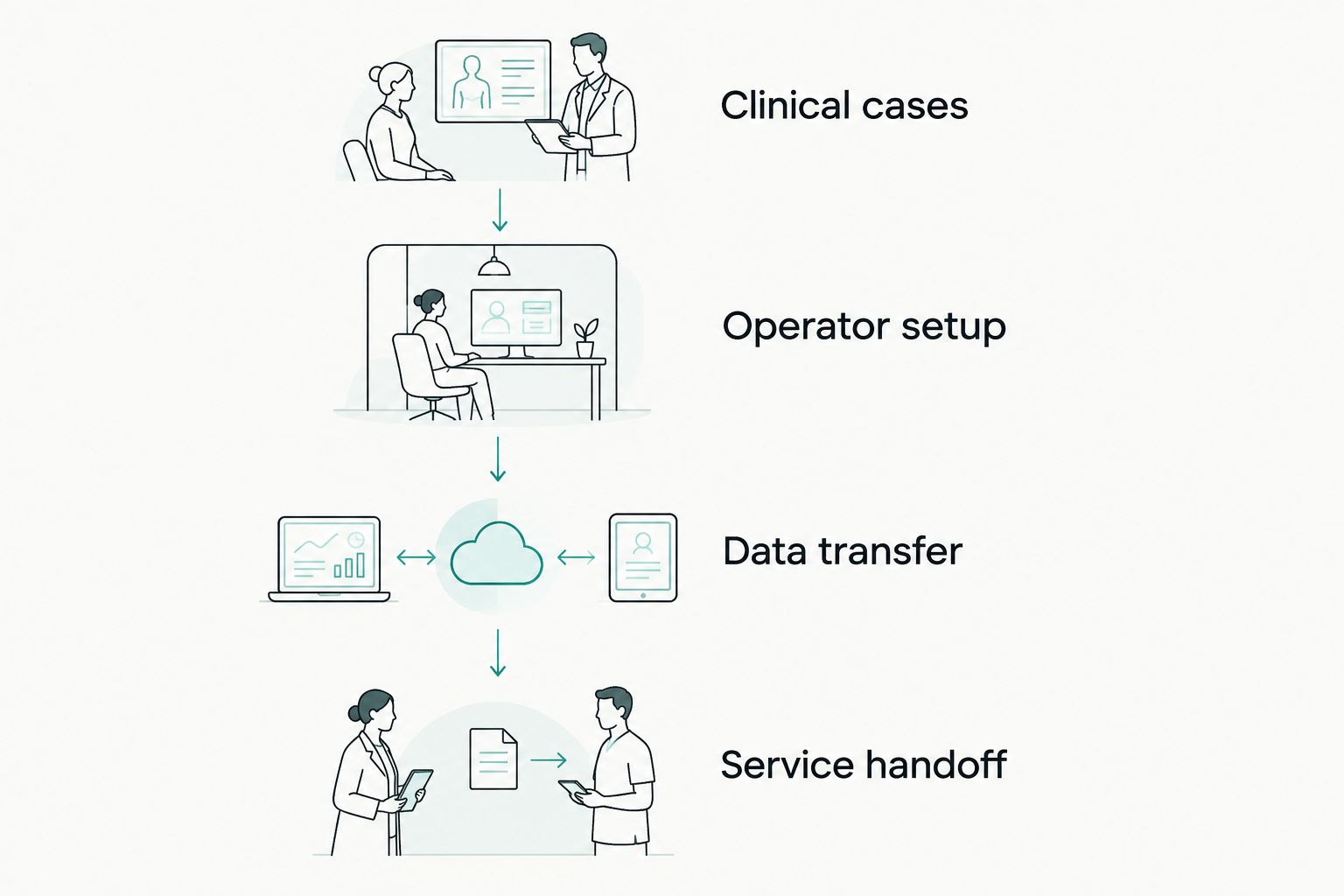
The same evaluation sheet should accompany every demonstration. Record demonstrated results separately from features described verbally, and keep unresolved questions open until the supplier answers them in writing.
Compare ownership obligations, not just equipment packages
A useful 2026 proposal states what your practice receives and what remains your responsibility. Review these categories separately so an omitted item does not disappear inside a bundled description.
- Site preparation: Who assesses room suitability, shielding requirements, electrical provision, access, and installation clearances?
- Software: Which acquisition, viewing, export, planning, and networking functions are included? Which require continuing agreements?
- Workstation: What hardware is supplied, and who supports operating-system or application updates?
- Training: Who receives acquisition training, and what additional instruction is needed for interpretation?
- Warranty: Which components, labor, travel, and software issues are covered? What exclusions apply?
- Repair: Who performs diagnosis and repair, and what happens while the equipment is unusable?
Use the CBCT ownership, service, and software guide to organize the ongoing-obligations discussion. Do not assume a warranty includes preventive maintenance, every component, or a substitute unit.
How these options were ranked
The ranking prioritizes clinical coverage, protocol control, diagnostic review, compatibility, installation fit, and ownership accountability. Selectable-field CBCT is the default evaluation path for mixed needs; limited-field CBCT addresses focused work, and referral remains a valid alternative to ownership.
FinScan F350 appears as a named quote candidate, not as the winner of a comparative equipment test. No model-specific image-quality, dose, reliability, or service ranking is assigned without supporting documentation.
Which dental CBCT machine should you choose?
Start with selectable-field CBCT if your general practice has documented needs for different examination coverage. Choose a limited-field configuration when focused endodontic work defines the purchase, and retain referral when ownership lacks a clear operational case.
Ask ProElite Dental Supply for a FinScan F350 proposal tied to your requirements sheet. Approve the purchase only when the configuration, demonstration, installation plan, software handoff, and written service terms agree.
FAQ
What's the best dental CBCT machine for a general dental practice?
Selectable-field CBCT is the best starting point for a general-practice shortlist when intended examinations require different anatomical coverage. Choose the final model by reviewing its actual protocols, diagnostic datasets, software compatibility, installation requirements, and service terms.
Is a limited-field CBCT better for endodontics?
A limited-field configuration is the more focused buying path when localized endodontic examinations drive the purchase. Confirm that its coverage and diagnostic workflow answer your clinical questions; field size alone does not establish image quality.
Should I choose the smallest voxel size available?
No. Voxel size is only one acquisition and reconstruction consideration; motion, noise, artifacts, exposure settings, and the clinical task also affect diagnostic usefulness.
Is the FinScan F350 suitable for my practice?
FinScan F350 suitability requires a configuration-specific review. Obtain its current brochure, representative datasets, software details, installation requirements, and written warranty and service terms before deciding.
Can a dental CBCT machine replace intraoral radiography?
A dental CBCT machine is not a blanket replacement for intraoral radiography. Select the imaging examination according to the clinical question and appropriate radiation-protection principles, rather than equipment ownership.
What software compatibility should I check before ordering CBCT?
Verify that a dataset exported from the proposed CBCT configuration imports correctly into your intended receiving application. Confirm DICOM export, measurement tools, licensing requirements, and whether essential functions depend on proprietary software.
When should a practice refer for CBCT instead of buying?
Use referral when your practice has not established the clinical workload, interpretation resources, or operational plan needed for ownership. Define dataset delivery, reporting responsibilities, and communication procedures with the receiving provider.
One last thing
Make data portability an acceptance condition, not a post-installation question. A scan that looks convincing in a demonstration still needs to reach the software and clinicians responsible for treatment planning and interpretation.
For your 2026 purchase agreement, specify a successful export-and-import demonstration using the proposed configuration. Keep that requirement beside the installation and training deliverables.