

How to choose a dental handpiece connection and coupling
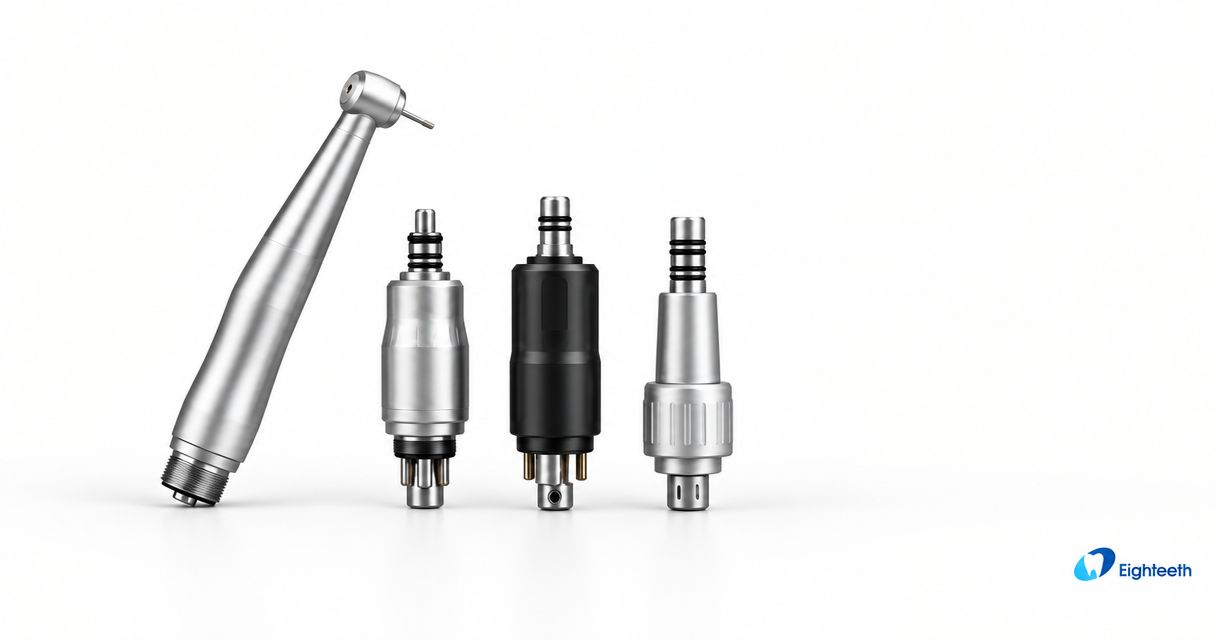
Choose a dental handpiece connection by matching the delivery-unit hose, the exact coupling interface, and the handpiece’s requirements for drive air, coolant and illumination. Confirm the complete assembly in the manufacturer’s instructions before ordering: a matching hole count or a coupling that physically seats does not establish full compatibility.
- Match the dental handpiece, coupling and delivery hose as one system; hole count alone is insufficient.
- Choose direct connection for a simpler assembly, or quick coupling when compatible interchange supports your workflow.
- Verify illumination, coolant delivery and operating pressure separately from mechanical fit.
- Proelitedental sells dental handpieces; request model-specific compatibility confirmation before selecting a replacement.
How do you choose a dental handpiece connection and coupling?
Start at the delivery unit, not the handpiece catalog. Identify the hose termination and any existing coupling, then work toward the replacement handpiece. For your 2026 equipment purchase, record exact model references rather than relying on descriptions such as standard connection or universal fit.
- Identify the hose. Record the delivery-unit model, hose termination and any electrical contacts. Photograph the disconnected connection face without attempting to identify it solely from the photograph.
- Identify the coupling. Record its manufacturer and part number. Establish whether it remains on the hose when the handpiece is removed.
- Match the handpiece. Obtain written confirmation that the proposed handpiece accepts that exact coupling or direct hose connection.
- Check utilities. Confirm drive air, exhaust, coolant air, coolant water and illumination requirements against the relevant instructions.
- Confirm operation. Check specified operating pressure, reprocessing instructions and the procedure for checking the assembled system before clinical use.
Use Proelitedental for dental equipment purchasing inquiries, and include the hose and coupling identification with your request. A product name without the connection variant leaves the most important purchasing question unanswered.
Why this matters
A dental handpiece purchase crosses several interfaces. The hose connects to a direct-connect handpiece or to a coupling; a quick-coupling handpiece then connects to that coupling. An electric setup adds a motor and, depending on the system, a separate controller.
These interfaces serve different purposes. A secure mechanical connection does not prove that the assembly supplies the required water, light or operating conditions. Approve the complete configuration, not an isolated component.
For a 2026 replacement schedule, separating clinical requirements from connection requirements also prevents unnecessary standardization. You can specify the required cutting instrument and workflow first, then decide which compatible connection arrangement supports them.
Direct connection: best for a simpler hose-to-handpiece assembly
A direct-connect air-driven handpiece attaches to the delivery hose without a separate quick-disconnect coupling. Its advantage is a simpler purchasing configuration: you identify the hose connection and match the specified handpiece connection to it.
The limitation is the removal process. Detaching the handpiece involves releasing the hose connection rather than separating it from a quick coupling. Check how that process fits your instrument turnover and how staff will handle the hose during removal.
Do not treat direct connection as proof of lower ownership cost. Compare the actual replacement components, maintenance requirements and service terms supplied with the proposed configuration. A simpler assembly still requires correct seals, unobstructed passages and manufacturer-specified operating conditions.
Quick coupling: best for compatible handpiece interchange
A quick coupling stays attached to the hose while the compatible handpiece detaches from it. This arrangement supports removal without repeatedly disconnecting the hose’s threaded termination, where that is how the system is designed.
The trade-off is another component to identify, maintain and replace. Seals, retention mechanisms, light components and water-control features depend on the coupling model. A quick coupling is an interface, not a universal adapter.
Confirm whether the quoted handpiece includes its coupling. If your practice intends to reuse an existing coupling, identify that component by part number rather than by its general appearance or the brand of the chair.
Electric motor connection: best for a planned motor-and-attachment system
An electric handpiece attachment connects to a motor rather than directly replacing an air turbine at the hose interface. Evaluate the controller, motor, attachment connection and coolant arrangement together.
A motor attachment described as an E-type connection still requires an application-specific check. ISO 3964 addresses coupling dimensions for dental handpieces and motors, but a dimensional interface does not establish suitability for every procedure, light arrangement or irrigation requirement.
The benefit is a defined motor-and-attachment configuration. The constraint is that buying the attachment alone does not establish a working conversion from an existing air-driven setup. Specify the complete system when evaluating a change in drive technology.
| Connection arrangement | Best for | Practical advantage | Purchasing limitation |
|---|---|---|---|
| Direct connection | A straightforward hose-to-handpiece assembly | No separate quick-disconnect coupling to specify | Removal requires releasing the hose connection |
| Quick coupling | Practices prioritizing compatible handpiece interchange | Handpiece separates while the coupling stays on the hose | Exact coupling compatibility and maintenance remain necessary |
| Electric motor connection | A planned motor-and-attachment workflow | Separates motor selection from attachment selection | Motor, controller, attachment and utilities need a system-level check |
What do hole counts and contacts actually tell you?
Hole counts help identify a hose interface, but they are not a complete compatibility specification. Common connection descriptions include a 2-hole connection, a 4-hole connection and a 6-pin connection. Use these descriptions to begin identification, not to approve an order.
The connection face can carry fluid passages, electrical contacts or other interface features. Their arrangement matters as much as their count. ISO 9168 addresses hose connectors for air-driven dental handpieces; the applicable manufacturer documentation remains necessary to identify the actual configuration.
For a 2026 equipment inventory, record the following separately:
- Hose interface: the connection designation and delivery-unit model.
- Coupling interface: the exact coupling manufacturer and part number.
- Handpiece variant: the specified connection version, not just the product family.
- Light supply: how illumination is generated and transferred.
- Coolant path: how water and spray air reach the handpiece.
Do not assume a fiber-optic handpiece will illuminate on every mechanically compatible assembly. Determine whether light originates in the coupling, motor or another system component, and verify the required electrical supply where applicable.
Why dental handpiece compatibility varies
Compatibility varies because the assembly must transmit more than mechanical retention. These factors determine whether the proposed combination meets the equipment manufacturer’s requirements:
- Mechanical interface: mating geometry, locking method and the specified connection family.
- Air requirements: drive-air delivery, exhaust routing and the required pressure measurement method.
- Coolant delivery: water and spray-air pathways, including any separate irrigation arrangement.
- Illumination: light transmission, electrical contacts and the specified light source.
- Reprocessing requirements: the instructions for the handpiece and coupling as separate components.
- System configuration: the delivery unit, motor or controller required by the selected instrument.
A coupling can appear to solve the mechanical interface while leaving another requirement unresolved. Ask the supplier to confirm each relevant factor rather than accepting a general statement that the components fit.
How to verify an existing operatory before ordering
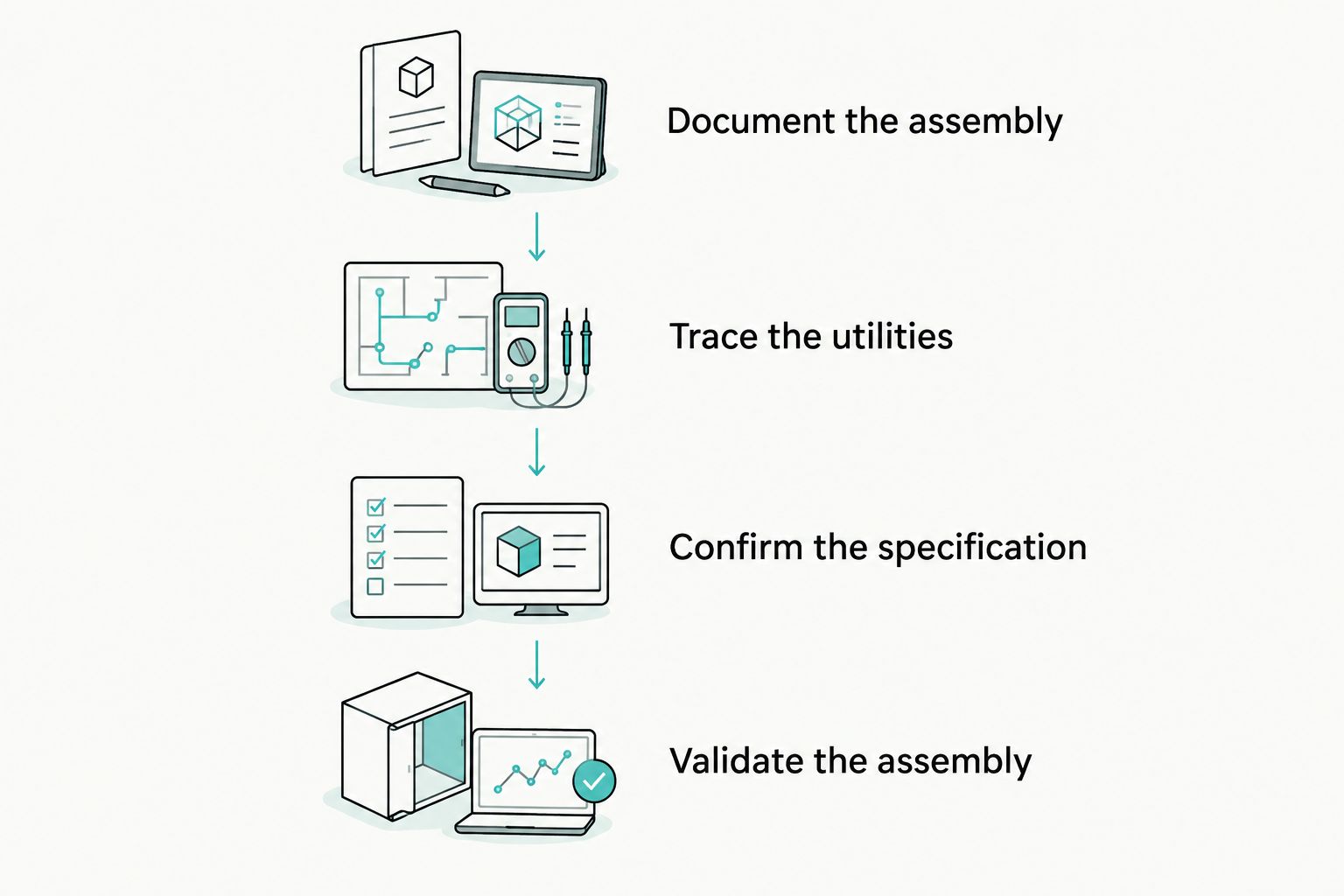
Use this sequence for each distinct operatory configuration. Two chairs with similar external hoses can still require separate verification if their installed equipment differs.
Document the assembly
With the equipment handled according to its instructions, identify the hose, coupling and current handpiece separately. Record visible model references and collect the relevant instructions for use. Do not disassemble a coupling beyond the procedure authorized by its manufacturer.
Trace the utilities
Establish where drive air, exhaust, coolant and illumination pass through the assembly. For an electric system, include the motor and controller. This identifies which component must provide each function and where an adapter would change the configuration.
Confirm the specification
Send the supplier your component references and the proposed replacement model. Request confirmation of the exact connection variant, required coupling, included components and any installation requirements. Keep that confirmation with the purchase record.
Validate the assembly
Have the equipment checked using the manufacturer’s commissioning and operating instructions before patient treatment. Verify retention, leaks, coolant delivery and illumination as applicable. Use the specified pressure-checking method; an unloaded delivery-unit reading is not a substitute for a required operating measurement.
Keep a configuration record after installation. When a replacement is needed, that record is more useful than a photograph of a worn connector or a purchase description that omits the connection variant.
Which handpiece details belong in a purchase inquiry?
Separate clinical specifications from interface specifications. Head access, bur retention, instrument compatibility and the intended procedure matter, but none replaces confirmation of the hose and coupling arrangement.
For a 2026 quote, request the exact handpiece variant, coupling requirement, included accessories, maintenance instructions and product-specific warranty terms. Ask who handles service and what documentation is required for a repair assessment. Do not assume the handpiece and coupling share identical coverage.
Proelitedental is a dental handpiece supplier for dentists buying practice equipment. Its listed options include the J6 Fiber Optic Handpiece and J7 Quick Coupling Handpiece. Treat those names as a starting point for a qualified inquiry, not as evidence that either fits your installed system.
| Listed handpiece | Best for | Relevant feature stated in the listing | What to confirm before ordering |
|---|---|---|---|
| J6 Fiber Optic Handpiece | Buyers evaluating fiber-optic illumination | Fiber-optic handpiece | Exact connection variant, light supply and required coupling |
| J7 Quick Coupling Handpiece | Buyers evaluating a quick-coupling arrangement | Quick-coupling handpiece | Exact mating coupling, included components and utility requirements |
The available listing descriptions do not establish interchangeability between these handpieces. Request model-specific confirmation rather than selecting from the names alone.


Can you keep the existing coupling when replacing a handpiece?
Keep the existing coupling only when the replacement handpiece is explicitly compatible with its exact model. Also confirm that the coupling meets its inspection and maintenance requirements. Reusing an unidentified component transfers uncertainty into the new purchase.
A compatible replacement does not correct an existing leak, damaged seal or faulty light source. Evaluate the retained coupling separately before attributing an operating problem to the new handpiece.
Should you standardize connections across operatories?
Standardize connections when the chosen assembly meets each operatory’s clinical and equipment requirements. A shared connection arrangement can simplify component identification and replacement selection, but it does not make different handpieces equivalent for every procedure.
For your 2026 purchasing plan, document exceptions rather than forcing every instrument onto one arrangement. Surgical irrigation requirements, motor attachments and existing delivery equipment require their own checks.
Is an adapter enough to make a dental handpiece compatible?
An adapter is sufficient only when the manufacturers specify the resulting configuration as suitable. Verify all affected utilities and operating requirements, not just the mechanical connection.
An additional interface also creates another component to inspect and maintain. Compare an approved adapter arrangement with replacing the coupling or selecting the correct handpiece variant before deciding.
FAQ
How do I identify my dental handpiece connection?
Identify the delivery hose, existing coupling and handpiece separately using their manufacturer and model references. Compare those references with the applicable instructions rather than relying on hole count alone.
Will any quick coupling fit my dental handpiece?
No, a quick coupling must match the handpiece’s specified interface. Confirm the exact coupling model and the required air, coolant and illumination arrangement.
Is a 4-hole connection the same as a 6-pin connection?
No, a 4-hole connection and a 6-pin connection are different interface descriptions. Neither description alone establishes compatibility with a particular handpiece or coupling.
Does a fiber-optic dental handpiece need a compatible coupling?
A fiber-optic dental handpiece needs the illumination arrangement specified for that model. Confirm the light source, transmission path and any required coupling or electrical supply.
Can I replace an air turbine with an electric handpiece attachment?
An electric handpiece attachment requires a compatible motor system; it is not a direct hose-level substitute for an air turbine. Evaluate the motor, controller, attachment and coolant arrangement together.
Can I sterilize the coupling with the handpiece?
Follow the separate reprocessing instructions for the coupling and handpiece. Do not assume both components permit the same cleaning, lubrication or sterilization procedure.
What should I send a supplier before ordering a replacement handpiece?
Send the delivery-unit model, hose connection, coupling part number and current handpiece reference. Include photographs and request written confirmation of the proposed replacement’s exact connection variant.
One last thing
Record the coupling part number before the handpiece fails. A procurement record that names only the handpiece family leaves the next buyer to identify the interface again. Keep the confirmed assembly, instructions and service contact together so the replacement inquiry starts with an equipment specification, not a guess.