

Used CBCT Buying Guide: Risks, Inspection and Installation Checks
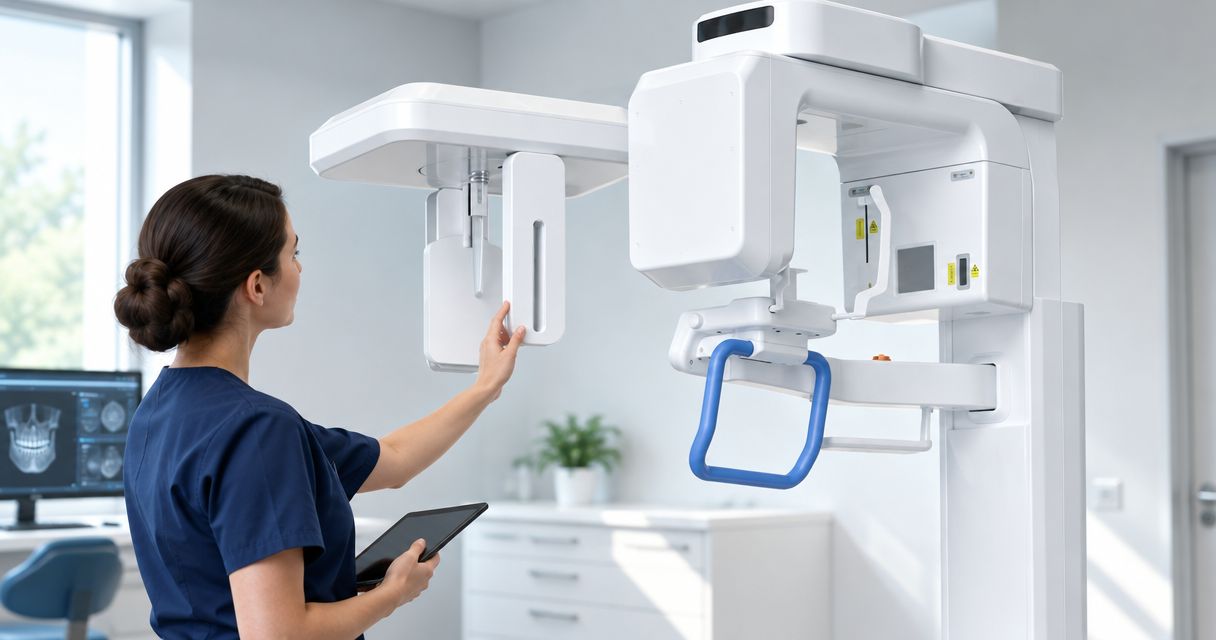
A used CBCT machine is a purchase of an entire imaging workflow, not just a scanner. Buy only after the exact unit's condition, component history, software rights, service pathway and installation requirements are documented; a working demonstration at the seller's office is not acceptance at yours.
- A used CBCT machine needs documented inspection, transferable software rights and a qualified installation plan.
- Low scan counts do not guarantee remaining tube or detector life.
- Refurbished and certified pre-owned labels need a written description of work, testing and coverage.
- Make purchase acceptance depend on agreed installation and performance criteria, not delivery alone.
Why used-CBCT due diligence matters for dental practices
A used system can be a practical purchase when its capabilities match your needs and the transfer is properly supported. The risk is not that every older unit is defective. The risk is paying for a system before you know whether you can install, license, maintain and use that exact configuration.
ProElite Dental Supply's CBCT equipment-quote checklist is a starting point for defining the full scope. With used equipment, add the unit's history and the seller-to-buyer handover to that checklist.
ProElite Dental Supply's used-CBCT buying rule: verify the unit, the rights and the installation before committing to the transfer. This is a purchasing framework, not a certification of a particular seller or machine.
Start with the clinical workload, not the listing
Write down the questions your clinicians expect the system to answer. Identify required imaging coverage, patient-positioning needs, planning workflows and access to interpretation. Then establish whether the used configuration—not merely the model family—supports those requirements.
The FDA states that CBCT should be used only when necessary to provide clinical information unavailable from other imaging modalities. A business case must not turn available capacity into unnecessary examinations.
Do not buy an unsuitable system because the hardware looks inexpensive. The central question is whether the complete configuration can support justified imaging, appropriate image quality and a maintainable workflow in your practice.
Follow these used-CBCT buying steps
1. Identify the actual machine and establish ownership
Request photographs of the system and component identification labels. Match them to the quotation, service records and sales agreement. Establish who owns the equipment and who is authorized to sell it; resolve any lease, financing or other ownership claims before transfer.
Record the manufacture date, installation history and any relocations. Ask whether the machine was removed from service for replacement, practice closure, an unresolved fault or another documented reason. The answer guides inspection; it is not a substitute for inspection.
- Match the model, serial number and installed options.
- Obtain the seller's written ownership representation.
- Identify prior relocations and storage conditions where records exist.
- List missing accessories, workstation hardware and test equipment.
2. Verify tube, detector and repair history
Ask for the tube housing identity, component replacement invoices and service reports. A newer tube does not establish a newer detector. A clean exterior does not establish that the generator, mechanics or acquisition chain has been evaluated.
Request usage information with an explanation of what the counters measure. Do not accept a statement such as “plenty of tube life left” without a documented basis. If a record is missing, identify the uncertainty explicitly and decide whether independent inspection and contractual protection are sufficient.
- Obtain component installation dates where documented.
- Review faults, corrective actions and repeat service visits.
- Confirm whether replaced parts were new, used or reconditioned.
- Ask the inspector what the available records cannot establish.
3. Commission a qualified pre-purchase inspection
Use someone qualified for the exact system and able to access the relevant service information. Agree on the inspection scope before payment. A technician's visual inspection and a documented performance assessment are not interchangeable deliverables.
Request manufacturer-appropriate test-object imaging and assessment of relevant functions, not unnecessary patient exposures. The assessment should identify unresolved defects, unavailable functions and limitations of testing performed at the seller's location.
- Require a written condition report tied to the serial number.
- Identify the methods, configuration and criteria used.
- Review relevant tube, detector, mechanical and safety findings.
- Retain test results and clarify what must be retested after relocation.
4. Confirm software transfer and data access
Ask the software rights holder—not only the reseller—to confirm the transfer conditions. The transaction must identify acquisition, reconstruction, viewing and planning modules separately where their rights differ.
Do not assume a workstation's installed software becomes yours when the computer changes hands. Establish required activation, account ownership, permitted users, ongoing charges and support eligibility. Confirm the supported operating system and hardware configuration before assuming you can replace the computer.
Use an authorized, de-identified demonstration dataset or test-object dataset to verify the export and downstream workflow you require. “DICOM compatible” is not a complete description of interoperability. Identify the actual destination application and demonstrate the relevant import, image orientation and dataset handling.
- Obtain written license-transfer confirmation and responsibilities.
- Identify included modules, credentials and activation requirements.
- Verify required export and planning workflows.
- Document backup, restore, support and cybersecurity arrangements.
5. Approve the installation site before shipping
Have the proposed installer assess the room against the exact manufacturer's requirements. Include the delivery route, ceiling and movement clearances, mounting, floor or structural requirements, electrical supply and workstation location.
Ask a qualified radiation-safety professional to assess the intended installation and applicable state requirements. Do not assume an old panoramic room is automatically appropriate for CBCT, or that the seller's previous compliance paperwork applies at your address.
The FDA assembler guidance states that equipment must be installed and tested according to the manufacturers' instructions. It also explains that an assembler must refuse connection when the required power is unavailable.
- Obtain a model-specific site plan and readiness checklist.
- Allocate electrical, structural and shielding responsibilities.
- Confirm registration, inspection and operator-training obligations locally.
- Schedule installation, performance assessment and staff training together.
6. Define removal, transport and reinstallation responsibilities
A successful scan before disassembly does not establish performance after transport. Use qualified personnel for removal and reinstallation, following the applicable handling instructions. Identify required transport restraints, packaging and responsibility for protecting sensitive components.
Put the handover sequence in writing. Decide who records condition before removal, who insures transport, who investigates damage and who pays if the machine cannot meet the agreed acceptance criteria after installation.
- Name the parties responsible at each handover.
- Record condition, configuration and included items before removal.
- State insurance, delivery and damage-reporting terms.
- Include reinstallation, adjustment and testing in the scope.
7. Tie final acceptance to documented performance
Negotiate an acceptance process before purchase. The contract should distinguish arrival, completed installation, software activation, training and clinical release. These are separate milestones.
Have the appropriate professionals determine the required acceptance and radiation-safety assessments. Obtain written results and resolution of defects before routine patient imaging. Document the assembler's applicable reporting responsibilities, including FDA Form 2579 where required.
The FDA's 2023 assembler guide describes a 15-day distribution deadline for required reports to the purchaser and, where applicable, the state radiation-protection agency. That reporting provision does not mean you should wait for the paperwork deadline before confirming safe clinical operation.
- Define the tests and acceptance criteria in advance.
- Identify who can approve return to clinical use.
- Agree on correction, rejection and payment terms.
- Retain installation reports, training records and baseline test results.
Used, refurbished or new: which purchase fits?
These labels describe purchase routes, not guaranteed condition. The FDA distinguishes servicing that restores original specifications from remanufacturing that significantly changes performance, safety specifications or intended use. A seller's marketing label does not, by itself, resolve that regulatory distinction.
| Purchase route | Best for | Potential advantage | Limitation to resolve |
|---|---|---|---|
| Used, as-is | Buyers able to manage inspection and transfer risk | Direct access to an existing configuration | Condition, remedies and service scope require explicit agreement |
| Refurbished or certified pre-owned | Buyers seeking a documented reconditioning package | Work and coverage can be specified together | The label alone does not identify replaced parts or performance criteria |
| New | Buyers requiring a currently offered configuration and defined initial handover | Configuration and installation can be ordered as a package | New equipment still needs contract review, acceptance and support planning |
For a refurbished offer, request the actual checklist of work. Ask which components were inspected, which were replaced, which software rights transfer and who stands behind the finished system. A repaint or software reinstall does not establish full-system renewal.
For a new-system alternative, ProElite Dental Supply's FinScan F350 CBCT page provides a verified starting point for a comparison request. Ask for the exact installation, software and warranty scope; do not assume the published page establishes the same terms for a used machine.
Read the warranty as a service contract
Separate manufacturer coverage from seller coverage. Establish whether either transfers to your practice and whether enrollment, inspection or other conditions apply. Never infer transferability from the remaining time on a seller's original invoice.
Ask about the tube, detector, generator, labor, travel, freight and software individually. Establish who answers the call, who visits the site, which failures are excluded and how disputes about installation or transport damage are handled.
A stated response time is not the same as a repair-completion commitment. Ask what happens when a part is unavailable, and plan how patients will receive clinically necessary imaging during an interruption.
Common mistakes when buying a used CBCT machine
Judging condition from cosmetic appearance. Request documented testing and service history instead of relying on a polished cabinet.
Treating a replaced tube as a renewed scanner. Review the detector, mechanics, software and workstation independently.
Assuming software is included. Identify the rights holder and obtain written transfer terms before paying.
Booking installation before site assessment. Resolve the exact room, power, shielding and access requirements first.
Leaving acceptance until after delivery. Specify remedies and responsibility while both parties can still negotiate the purchase agreement.
Accepting a claimed FDA status without checking the model. Verify the exact device's applicable marketing status and labeling independently. FDA clearance is not the same as approval, endorsement of the seller or certification of a used unit's present condition.
Build a complete used-CBCT ownership comparison
Compare the fully functioning installed system with your alternatives. Add inspection, removal, transport, site work, installation, testing, license transfer, training, known repairs and ongoing service to the purchase scope.
Then identify costs that remain uncertain. Ask for written quotations where possible and mark unresolved items rather than inserting industry averages. A lower purchase amount is not proof of lower ownership cost.
Do not invent remaining service years to make a financing comparison look favorable. Model a repair scenario and an interruption scenario using your own documented service quotes and contingency arrangements. The point is to see whether the purchase remains acceptable when an important assumption fails.
ProElite Dental Supply's CBCT comparisons should support a qualified equipment decision—not suggest that every used purchase is unsafe or that every new purchase is automatically economical.
FAQ
Is buying a used CBCT machine a bad idea?
No. A used CBCT can be a suitable purchase when its condition, capabilities, software rights, service pathway and installation are documented and meet your practice's requirements.
What is the most important used-CBCT inspection?
The inspection must assess the complete system against agreed criteria, not just confirm that the tube produces X-rays. Obtain a written report from a qualified professional familiar with the exact configuration.
Does a refurbished CBCT always have a new tube?
No. Require a written list of inspected and replaced components; the refurbished label alone does not establish tube or detector replacement.
Can I use the previous owner's CBCT software license?
Only if the relevant rights holder permits the transfer under the applicable terms. Obtain written confirmation of modules, activation and ongoing support before purchase.
Can I install a used CBCT in my panoramic room?
Not without model-specific site and radiation-safety assessment. The room's prior use does not establish that the proposed CBCT installation meets its requirements.
Does a low scan count mean the tube will last longer?
A low counter does not guarantee future tube life. Establish what the counter measures and combine it with documented history, manufacturer instructions and qualified testing.
What should happen before the first patient scan?
Complete the required installation, licensing, performance assessment, safety review and operator training. Retain the results and resolve defects before routine clinical use.
One last thing
Ask the seller: “If this exact system cannot pass the agreed checks at my practice, who fixes it, who pays and what is my remedy?” An unanswered question belongs in the contract negotiation, not on installation day.
Educational buying guidance checked November 13, 2026. It is not a device inspection, clinical protocol or legal opinion. Have qualified clinical, service, radiation-safety and contract professionals review the proposed purchase.
Sources and scope
- U.S. FDA: Assembler's Guide to Diagnostic X-Ray Equipment, February 21, 2023. Federal guidance on diagnostic X-ray assembly, manufacturer-specified compatibility, installation, testing and reporting. Covers regulatory responsibilities, not a used-CBCT inspection score or prediction of remaining life.
- U.S. FDA: Remanufacturing and Servicing Medical Devices, includes February 2, 2026 update. Explains servicing versus significant changes to safety, performance or intended use. Does not certify a seller's refurbishment work.
- U.S. FDA: Dental Cone-beam Computed Tomography, September 28, 2020. General dental-CBCT justification and risk information, not a purchase warranty or model-specific evaluation. All three sources are FDA-authored public-domain material, accessed November 13, 2026. These are agency guidance documents, not patient-cohort studies; no study DOI applies. This guide uses original explanations and no third-party clinical images.