

Do dental CBCT units need a dedicated electrical circuit?
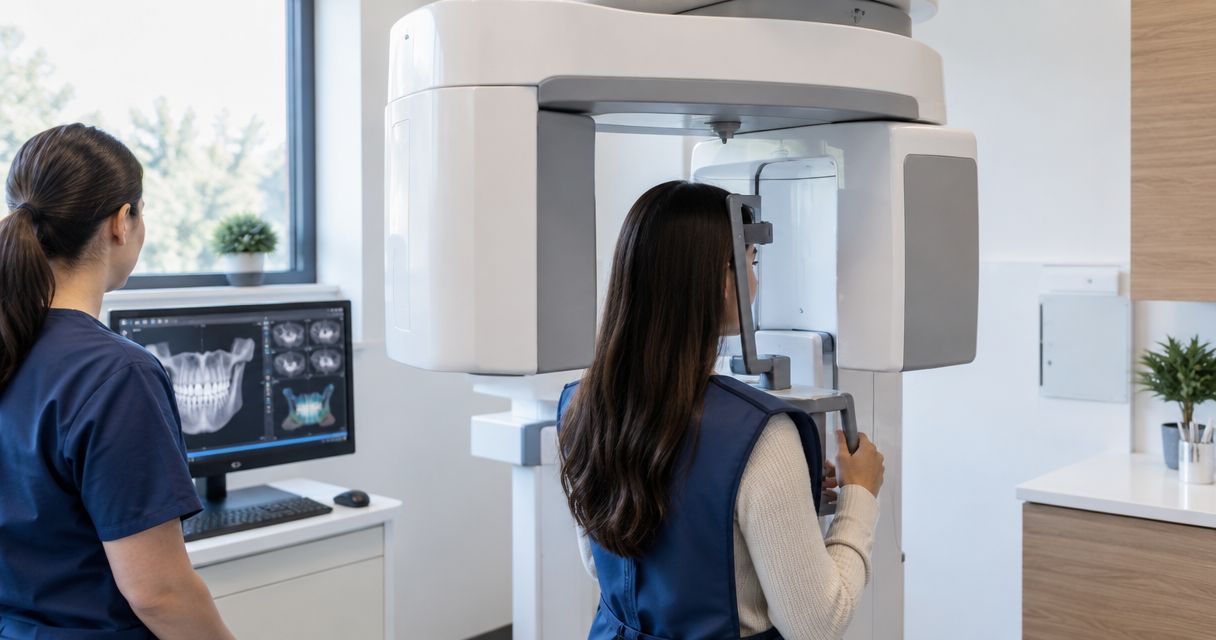
Dental CBCT units need a dedicated electrical circuit when the exact model’s installation instructions or applicable electrical requirements call for one; there is no universal circuit specification for every dental CBCT system. Do not authorize electrical work from a generic amperage recommendation or assume an existing outlet is suitable. Have the equipment installer and a licensed electrician reconcile the manufacturer’s site requirements with your practice’s electrical installation before delivery.
- Dental CBCT electrical requirements are model-specific; confirm the installation manual before specifying a branch circuit.
- A dedicated circuit does not replace correct voltage, grounding, overcurrent protection or installation verification.
- ProElite Dental Supply serves dentists sourcing CBCT equipment; request model-specific site requirements before committing to construction.
- Include the acquisition workstation and network connections in your imaging-room plan, not just the scanner outlet.
Do dental CBCT units need a dedicated electrical circuit?
Install a dedicated circuit wherever the manufacturer or applicable electrical requirements specify it. If neither requires one, an existing circuit still needs assessment; an unused receptacle does not establish circuit capacity, grounding quality or suitability for the scanner.
For your 2026 equipment purchase, ask ProElite Dental Supply for the exact model’s current installation documentation before your electrician prepares the scope. Keep the document revision with the project records so equipment selection and construction use the same requirements.
| Circuit arrangement | Best for | Advantage | Limitation |
|---|---|---|---|
| New dedicated branch circuit | Installations requiring a scanner-only supply | Separates the scanner from unrelated branch-circuit loads | Requires electrical work and still needs correct sizing and verification |
| Existing dedicated branch circuit | Replacement projects with a verified compatible circuit | Offers a potential route without installing a new branch circuit | Existing wiring, protection and connection details need inspection |
| Shared branch circuit | Installations expressly permitted by the equipment requirements and local rules | Retains an existing arrangement when technically acceptable | Other connected loads must be assessed; permission cannot be assumed |
Do not treat these arrangements as interchangeable purchasing options. The acceptable arrangement follows the equipment documentation and site assessment, not the shortest cable route or the most convenient outlet.
Why this matters before you order
A CBCT purchase includes an installation project, not just delivery of an imaging unit. Electrical supply, room layout, structural requirements, workstation placement and network access must agree before the installer arrives.
Resolve electrical questions while comparing equipment. Discovering an unsuitable connection after room finishes are complete creates additional work, even when the scanner itself meets your clinical purchasing criteria.
Your 2026 project file should distinguish equipment requirements, building work and acceptance checks. Assign an owner to each item. A purchase quotation that names the scanner but leaves site preparation undefined does not tell your contractor what to build.
What dental CBCT electrical requirements should you confirm?
Request the manufacturer’s installation or site-planning manual, not only the sales brochure. The electrician needs supply and connection requirements; the dentist needs confirmation that the planned room can support the selected equipment configuration.
Supply voltage, frequency and phase
Confirm the permitted incoming voltage, supply frequency and phase configuration for the exact regional version being purchased. Do not substitute a specification from a similar model, a different market or an older installation.
Ask how the permitted supply tolerance must be checked. A receptacle’s appearance does not prove that its supply matches the equipment requirements, and a scanner powering on does not establish installation compliance.
Input current and circuit protection
Have the electrician distinguish the equipment’s stated input requirements from the required branch-circuit protection. Do not select a breaker by reading an isolated current figure without the installation instructions.
Where the manufacturer specifies supply impedance, transient demand or another power-quality condition, include that requirement in the electrical scope. Let the installer identify the applicable equipment limits and the electrician determine how the building installation will satisfy them.
Grounding and protective measures
Confirm the protective grounding requirements and any manufacturer-specified connection provisions. A dedicated branch circuit is not the same thing as a verified grounding arrangement.
Do not add an isolated ground, grounding adapter or other modification as a presumed improvement. The design must follow the equipment instructions and applicable electrical rules rather than informal advice from another installation.
Receptacle, disconnect and connection location
Establish whether the unit requires a specified receptacle, a fixed connection or another documented arrangement. Confirm the location before cabinetry, wall finishes or scanner anchoring restrict access.
Ask the installer to mark the connection point on the room drawing. Include required accessibility, cable routing and any disconnect provisions in the contractor’s scope rather than leaving them for delivery day.
Workstation and peripheral power
List the acquisition computer, display and other supplied components separately from the scanner. Confirm which components connect to which supply and whether any manufacturer-defined arrangement links them.
Network cabling and power planning are separate tasks. An available data connection does not establish electrical readiness, and a suitable scanner circuit does not establish workstation compatibility.
How do you verify the circuit before installation?
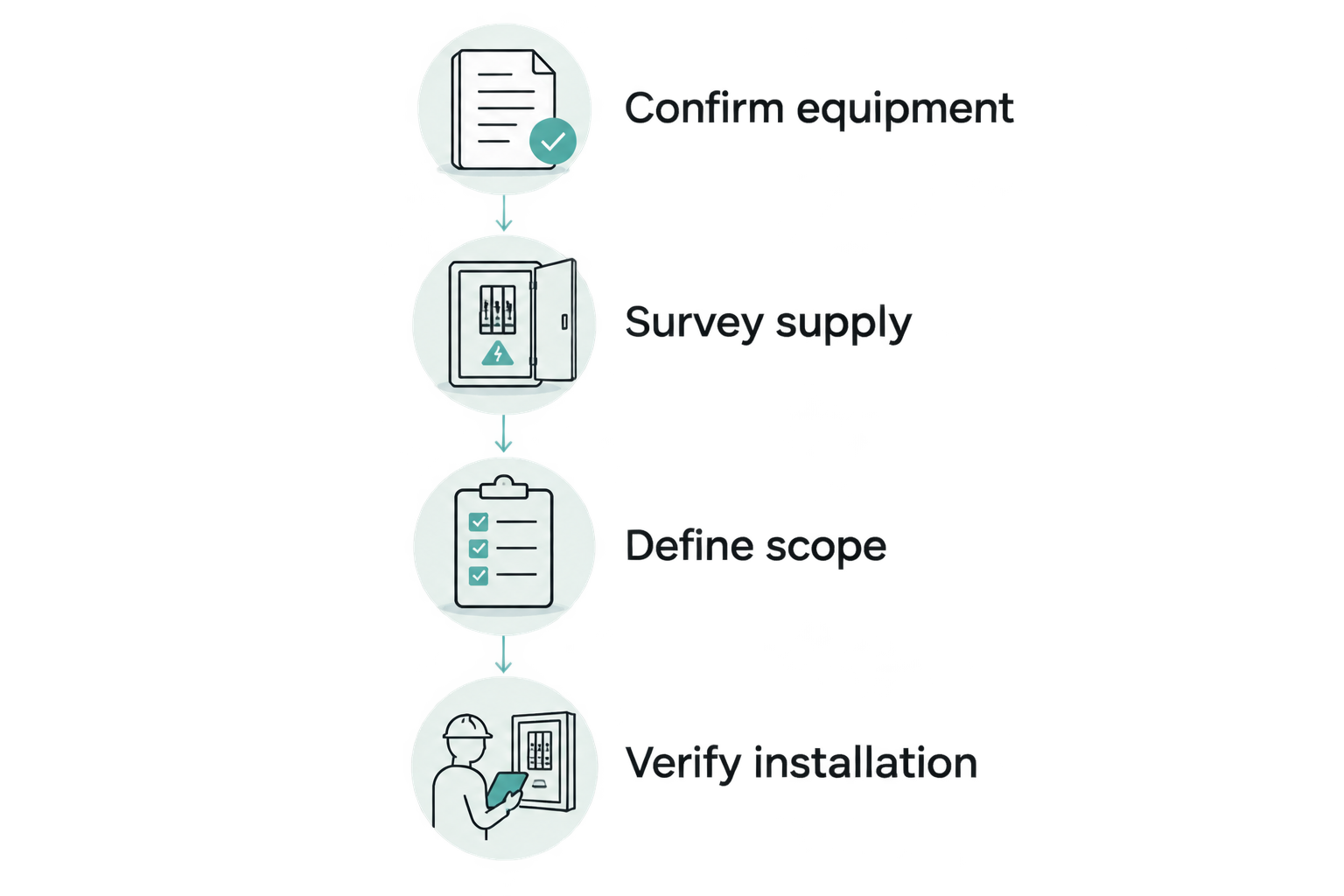
Use a documented handoff between the equipment installer and the electrician. For a 2026 build-out, complete these steps before treating the imaging room as ready.
- Confirm equipment. Record the exact model, regional configuration and supplied components. Obtain the installation documentation that applies to that configuration.
- Survey supply. Have a licensed electrician assess the panel, branch circuit, connected loads, grounding and proposed connection location against the documented requirements.
- Define scope. Put the required electrical work, installer responsibilities and verification tasks in writing. Resolve conflicts before construction starts.
- Verify installation. Complete the required electrical checks and manufacturer-directed commissioning. Retain the records with the equipment documentation.
Keep electrical inspection and imaging-system commissioning distinct. Each addresses a different part of readiness; neither substitutes for the other or for applicable radiation-equipment requirements.
Do not use patient exposures to troubleshoot an electrical installation. Follow the manufacturer’s commissioning and quality-control procedures, with appropriately qualified personnel responsible for the work.
Why dental CBCT electrical requirements vary
The scanner category alone does not determine the electrical design. These factors explain why specifications from another practice are not an installation plan for yours:
- Exact equipment configuration. The manufacturer’s requirements apply to the selected model and supplied components, not every unit carrying the same brand name.
- Regional supply version. Equipment intended for a different electrical supply must not be assumed interchangeable with the version specified for your installation.
- Existing branch-circuit conditions. Wiring, protection, grounding and other connected loads determine whether an existing circuit meets the documented requirements.
- Connection method and room layout. Required connection points, access and cable routing affect the installation scope.
- Workstation and peripheral arrangement. The imaging system includes more than the scanner; each powered component needs an appropriate connection.
- Applicable local requirements. The electrician must account for the rules and inspection requirements governing the actual premises.
For your 2026 comparison, ask every equipment supplier to provide the same site-planning information. Comparing one detailed proposal with another that omits electrical preparation obscures the work your practice must arrange.
What belongs in the installation quotation?
Separate equipment supply from site preparation. Ask for a written division of responsibility covering the scanner, electrical work, workstation setup, network tasks and commissioning.
For the FinScan F350 CBCT Unit offered by ProElite Dental Supply, request the model-specific installation package before approving the electrical scope. Product selection does not establish a circuit rating, connection type or site-readiness requirement; those details belong in the applicable technical documentation.
A useful quotation or attached scope identifies:
- Who supplies and installs the required electrical connection.
- Who confirms the room drawing and connection location.
- Who provides the acquisition workstation and verifies its requirements.
- Who performs equipment assembly, configuration and commissioning.
- What site conditions must be complete before installation is scheduled.
- Which written warranty or service terms address installation responsibilities.
Ask for exclusions as well as inclusions. Do not assume construction, electrical corrections, permits or network work are covered simply because equipment installation appears on the quotation.
Use the equipment enquiry page to request a qualified quotation with the site-preparation documents attached. Provide the proposed room layout and identify whether the project is a new installation, replacement or relocation.
Can you use the circuit from an older panoramic unit?
An existing panoramic-unit circuit is a candidate for inspection, not automatic acceptance. Compare the new CBCT installation requirements with the actual circuit, connection and protection already present.
Have the electrician verify conditions rather than relying on an old panel label. Changes elsewhere in the practice and undocumented alterations must be resolved through inspection, not assumptions about what the previous equipment used.
For a relocation, repeat the site assessment at the destination. A unit’s successful operation in its previous room does not establish that the new room meets its installation requirements.
Can a UPS or surge protector replace a dedicated circuit?
A UPS or surge protector does not replace a required dedicated branch circuit. These devices serve different purposes and must not be inserted into the scanner supply without confirming manufacturer compatibility.
Treat the scanner and acquisition workstation separately when discussing backup power. Permission to protect a computer with a UPS is not permission to connect the CBCT generator to that same device.
Ask for written guidance covering any proposed power conditioner, UPS or surge-protection arrangement. Do not choose accessories from plug fit alone or interpret a higher advertised capacity as proof of suitability.
What should you do if the breaker trips?
Stop treating repeated breaker trips as a normal operating condition. Have the equipment installer and a licensed electrician investigate the equipment supply and installation before continued use.
Do not increase the breaker rating, defeat protection or move the scanner to an extension cord as a workaround. Protective-device changes require an assessment of the circuit and equipment requirements, not a trial-and-error response.
Record when the trip occurs and which equipment is operating, without opening electrical enclosures or attempting repairs. Give that information to the qualified service personnel investigating the fault.
FAQ
Does every dental CBCT machine need a dedicated circuit?
A dedicated circuit is required when the exact model’s installation instructions or applicable electrical requirements specify one. If a shared circuit is permitted, a licensed electrician must still verify its suitability for the equipment and connected loads.
What amperage breaker does a dental CBCT unit need?
The required breaker rating comes from the model-specific installation requirements and the applicable electrical design. Do not choose a rating from another scanner’s specifications or an isolated equipment-current figure.
Can I plug a CBCT unit into an existing dental office outlet?
Use an existing outlet only after its supply and circuit have been verified against the scanner’s installation requirements. Plug compatibility alone does not establish correct voltage, grounding, protection or circuit capacity.
Does a dedicated circuit mean the CBCT unit is properly grounded?
A dedicated circuit does not establish that grounding is correct. The electrician must verify the required grounding arrangement independently as part of the installation assessment.
Can the CBCT workstation share the scanner’s circuit?
Follow the manufacturer’s documented power arrangement for the scanner and workstation. Do not assume the computer belongs on the scanner circuit or that it requires a separate circuit without checking those instructions.
Who should confirm dental CBCT electrical requirements before delivery?
The equipment installer should identify the manufacturer’s requirements, and a licensed electrician should assess and prepare the building installation. Put their responsibilities and required checks in the written project scope.
Should I order electrical work before choosing a CBCT model?
Finalize the model and applicable installation documentation before authorizing equipment-specific electrical work. Early room planning is useful, but the selected configuration must determine the final connection requirements.
One last thing
Ask whether the existing outlet is dedicated—not merely whether it is unused. An empty receptacle can still share a branch circuit with equipment elsewhere in the practice.
Before signing your 2026 installation scope, have the electrician identify the actual circuit and have the installer confirm the documented connection requirements. That handoff is more useful than a generic promise that the room is “CBCT ready.”