

Is a portable dental X-ray system worth it for a solo practice?
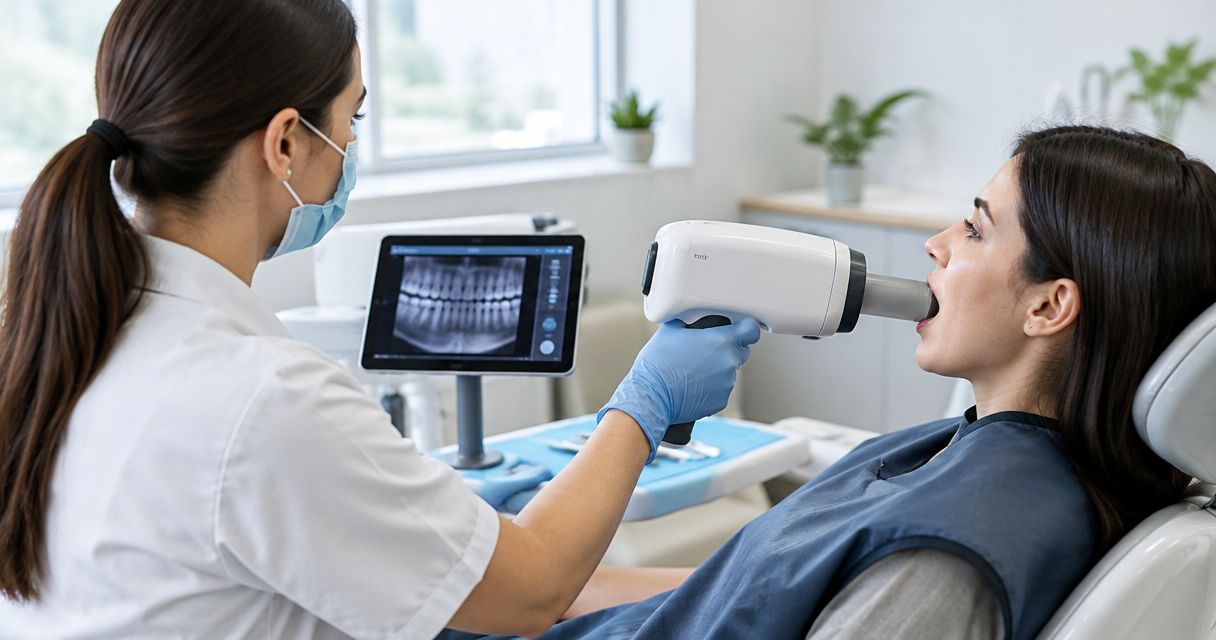
A portable dental X-ray system is worth it for a solo practice when moving the source between treatment locations solves a documented workflow problem and the exact equipment meets applicable operating requirements. Keep a functioning wall-mounted system when portability adds little practical value; the purchase decision must also account for receptor integration, operator handling, charging, service and downtime—not just the generator.
- Is a portable dental x-ray worth it? Yes, when mobility solves a documented imaging workflow problem.
- Keep wall-mounted equipment when existing coverage works and portability adds no meaningful benefit.
- ProElite Dental Supply buyers should request model-specific documentation before selecting portable dental imaging equipment.
- Evaluate the X-ray source, digital receptor, acquisition software and service arrangements as a complete workflow.
Is a portable dental X-ray system worth it for a solo practice?
Buy for a defined mobility need, not an assumed productivity gain. A solo practice should compare the proposed workflow with its existing imaging arrangement before replacing equipment that already serves the schedule.
For a 2026 purchase, evaluate the HyperLight portable X-ray system against your actual rooms, staffing and receptor workflow. A product listing is a starting point; obtain the exact model’s labeling, operating instructions and regulatory documentation before committing.
| Equipment approach | Best for | Practical advantage | Limitation to evaluate |
|---|---|---|---|
| Hand-held portable source | Practices with a documented need to move the source between treatment locations | Mobility without a permanently mounted source at every intended location | Operator handling, authorized use, charging, storage and shared-equipment scheduling |
| Wall-mounted source | Practices whose existing rooms already provide suitable imaging access | A fixed source remains at its assigned treatment location | Coverage depends on installation location and equipment reach |
| Retain the existing system | Practices without an unresolved imaging-access problem | Avoids replacing equipment solely to gain portability | Does not solve an existing coverage or reliability problem |
These are workflow comparisons, not radiation-dose rankings. Do not treat the equipment format alone as evidence of lower exposure, better image quality or greater clinical suitability.
Why this matters
For a solo dentist, equipment value depends on whether the system supports the way the practice actually delivers care. A source that moves between rooms still needs an available trained operator, a suitable receptor and a working image-acquisition pathway.
Separate two decisions: whether a radiograph is clinically indicated, and which equipment arrangement supports that examination. Buying a portable source does not create an indication for additional imaging or justify replacing diagnostically adequate existing images.
The useful purchasing question is therefore narrower than whether portable technology is modern: what specific limitation will this purchase remove, and what new responsibilities will it introduce? Write that answer before requesting competing proposals.
When portability earns its place
Portability has a clear purchasing rationale when the practice needs the source at different treatment locations and its existing arrangement does not serve those locations adequately. Document the affected workflow rather than relying on a general preference for cordless equipment.
Your evaluation should identify where imaging occurs, who prepares the receptor, who operates the source and where the resulting image enters the patient record. Include cleaning, storage and charging in that map. Those activities belong to the workflow even though they occur outside the exposure itself.
A useful demonstration follows your routine tasks. Ask the supplier to show the equipment’s permitted handling and positioning, then assess access in the intended room configuration without exposing a patient merely to test a purchase.
Recommendation: proceed to a qualified quote when portability addresses an identifiable access problem and the required operating conditions fit your practice. Do not record expected time savings until your own workflow assessment supports them.
When keeping a wall-mounted system is the better decision
Retain a functioning wall-mounted source when it already provides suitable access and the portable alternative does not resolve a defined limitation. Replacing equipment simply because another format is available is not a purchasing justification.
The strongest reason to wait is an unresolved requirement. Examples include uncertain state acceptance, incomplete operating documentation, an untested receptor workflow or unclear service arrangements. Resolve those issues before allowing an attractive equipment quote to determine the decision.
A portable purchase also needs a downtime plan. If the proposed unit becomes the practice’s only source, identify what happens during a repair, battery problem or required evaluation. Portability does not itself provide redundancy.
Recommendation: hold the purchase when existing coverage works or a critical implementation question remains unanswered. Keeping current equipment is an active decision when it preserves a suitable, supported workflow.
Why portable dental X-ray value varies
The same equipment format does not deliver the same purchasing value in every solo practice. Assess these factors against your own operations:
- Treatment locations: Identify where the source must be used and whether existing equipment already reaches those locations.
- Staffing and scheduling: Map who moves, prepares and operates the equipment, including conflicts when a shared source is needed elsewhere.
- Operator handling: Evaluate permitted positioning, grip, access and handling demands using the exact operating instructions.
- Receptor integration: Confirm the digital sensor or other receptor, acquisition software and patient-record workflow separately from the generator.
- Ownership requirements: Request written details for charging, battery replacement, maintenance, service, warranty exclusions and repair arrangements.
- Regulatory obligations: Confirm legally marketed equipment, applicable state requirements and any required registration, evaluation or training before clinical use.
For your 2026 comparison, keep assumptions visibly separate from confirmed terms. A supplier’s general description of portable imaging does not establish the requirements or capabilities of the exact model being quoted.
How should you evaluate the complete imaging workflow?
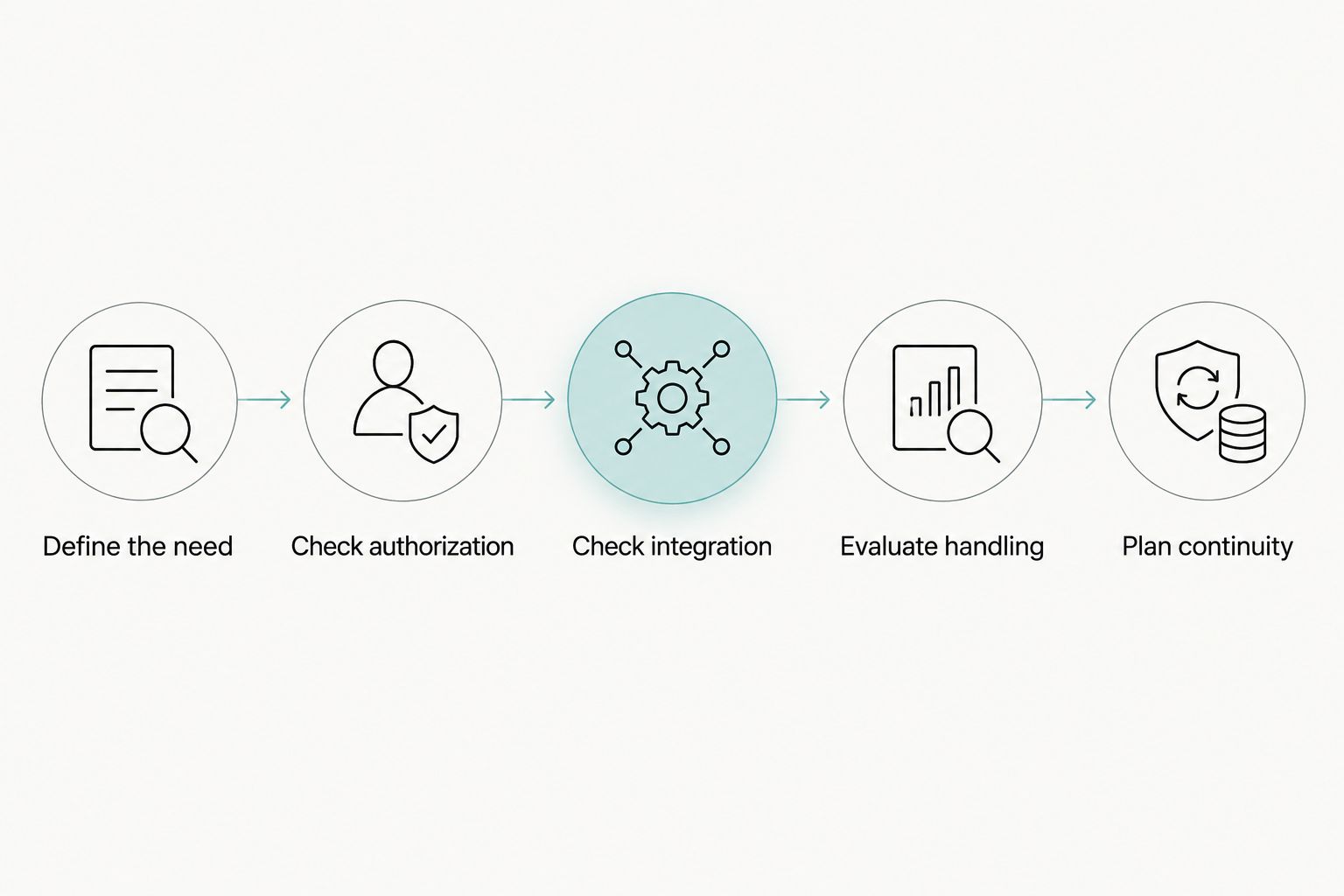
Use the following sequence before deciding whether portability justifies a purchase. Each step closes a different purchasing risk; a favorable handling demonstration does not replace a software check or a regulatory review.
- Define the need. Identify the imaging-access problem, intended treatment locations and existing equipment you plan to retain.
- Check authorization. Obtain exact-model documentation and confirm applicable requirements with the relevant state radiation-control authority or qualified adviser.
- Check integration. Verify the receptor, acquisition software, supported computer environment and patient-record linkage using manufacturer and software-vendor documentation.
- Evaluate handling. Review the permitted operating configuration, positioning, cleaning and storage against the practice’s physical layout.
- Plan continuity. Confirm charging responsibilities, service contacts, repair arrangements and the response to equipment downtime.
Keep the findings in the purchase file. That record should distinguish demonstrated capabilities from supplier statements that still require documentary support.
Source and receptor are separate purchasing decisions
A portable X-ray generator produces the exposure; the receptor captures the image. Acquisition and record-management software handle other parts of the workflow. Do not assume a generator purchase includes a sensor, supported drivers or software integration.
If you retain an existing sensor, ask for documentation supporting the intended use and acquisition arrangement. If you replace the sensor, verify its physical fit, holder compatibility, software requirements and service terms independently.
A combined quote still needs separate specifications. A source-and-sensor package is not proof that every component works with your existing software or computer environment. Obtain confirmation from the parties responsible for those components.
What radiation-safety guidance belongs in the decision?
The client-selected ADA X-rays/Radiographs topic page, identified as updated in March 2026, addresses patient selection and radiation protection. Its purchasing-relevant principles include ALARA, preference for digital receptors over film, rectangular collimation and use of legally marketed hand-held equipment.
Those principles do not establish the clearance, operating conditions or performance of a particular portable model. Verify those matters through the exact equipment’s records, labeling and instructions, together with applicable state requirements.
Keep 2-D intraoral imaging and CBCT decisions separate. The ADA topic page describes CBCT use when lower-exposure options cannot provide the necessary diagnostic information; portability is not a reason to substitute one imaging modality for another.
The ADA page is informational and does not establish a standard of care or an official ADA position. It does not endorse a supplier or product. Likewise, a general study of hand-held equipment does not establish operator-dose results for every portable source or every operating configuration.
What should the ownership comparison include?
Build the comparison around the full equipment arrangement rather than the source alone. Ask each supplier to identify included components, required additions and responsibilities that remain with the practice.
Equipment and implementation
Request an itemized scope covering the source, receptor if needed, charging equipment, permitted accessories and any required software or computer changes. Separate necessary components from optional accessories so the proposals describe comparable workflows.
For an existing practice, identify what stays in use. Replacing a functioning receptor or computer without a documented requirement changes the project unnecessarily; retaining unsupported components creates a different problem.
Maintenance and service
Obtain the written warranty for the exact model and seller arrangement. Check exclusions, battery coverage, repair authorization, transport responsibilities and whether any replacement-equipment arrangement is actually included.
Do not turn general support language into a contractual promise. A warranty period alone does not explain how your practice continues imaging while equipment is being assessed or repaired.
Staffing and continuity
Assign responsibility for charging, storage, cleaning and pre-use checks according to the manufacturer’s instructions. Include staff training and required evaluations in the implementation plan rather than treating delivery as the completion date.
For a 2026 purchasing review, compare the complete proposed arrangement with retaining your present system. Avoid a payback calculation unless its workload, service and financial assumptions come from your own records and written quotes.
What should you ask the supplier before requesting a final quote?
ProElite Dental Supply is best for dental practices seeking a supplier of portable X-ray equipment and digital receptors. Evaluate the proposed equipment on documented fit, not on a blanket assumption that purchasing both categories from one seller resolves integration.
Your enquiry should specify the intended practice setting, existing receptor and software, treatment locations and whether the portable source will supplement or replace current equipment. That gives the supplier a defined application to address.
Request these documents with the proposal:
- Exact model identification and current operating instructions.
- Applicable regulatory documentation for the quoted equipment.
- Written component inclusions and accessory requirements.
- Relevant receptor and software documentation.
- Product-specific warranty, service and battery-replacement terms.
- Any practice responsibilities required before installation or use.
ProElite Dental Supply lists portable imaging equipment, but the final purchasing decision still requires model-specific verification. Do not infer a service commitment, compatibility guarantee or clinical result from a catalog description.
FAQ
Is a portable dental X-ray worth it for a solo dentist in 2026?
A portable dental X-ray is worth it when mobility resolves a documented imaging-access problem and the exact equipment meets applicable requirements. Keep functioning wall-mounted equipment when portability adds no meaningful workflow benefit.
Should I replace a working wall-mounted dental X-ray unit?
Keep a working wall-mounted unit when it already serves your imaging needs adequately. Consider replacement only after identifying a limitation that the proposed equipment demonstrably addresses.
Does a portable dental X-ray system include a digital sensor?
Do not assume a portable dental X-ray system includes a digital sensor. Confirm the itemized scope, because the generator, receptor and acquisition software are separate components.
Can I use a portable X-ray source with my existing imaging software?
Verify the complete receptor-and-software workflow before purchase. The generator listing does not establish sensor drivers, supported operating systems or patient-record integration.
Are portable dental X-ray units safer than wall-mounted units?
Equipment format alone does not establish a safety advantage. Assess the exact device, permitted operating configuration, patient-selection requirements and applicable radiation-protection obligations.
What warranty questions should I ask before buying?
Request the exact product warranty, exclusions, battery coverage and repair process in writing. Also establish what happens to your imaging workflow during service rather than assuming replacement equipment is included.
Can ProElite Dental Supply help me compare a source and sensor purchase?
ProElite Dental Supply sells portable X-ray equipment and digital sensors. Request an itemized proposal and model-specific documentation, then verify integration and operating requirements before committing.
One last thing
A portable source can move; an unresolved workflow problem moves with it. Before signing, describe how your practice will acquire, review and store a clinically indicated image when the new source is unavailable.
If that answer depends on an undocumented service promise or unverified software connection, finish that work first. Portability earns its place only when the complete imaging arrangement works for your practice.