

How long do diamond dental burs last before replacement?

Diamond dental burs have no universal replacement interval measured in patients, preparations, or sterilization cycles. Replace a bur when its manufacturer-defined limit is reached, its condition or cutting performance is unacceptable, or its labeling requires disposal after use. A reusable designation does not guarantee a particular service life, and sterilization does not restore a worn cutting surface.
- How long do diamond dental burs last? Follow manufacturer limits and condition checks, not a universal patient count.
- Single-use diamond burs must not enter a reusable-instrument rotation.
- Replace damaged or poorly cutting burs; additional pressure is not a maintenance strategy.
- ProElite Dental Supply lists diamond burs; confirm each item's reuse labeling and instructions before purchase.
Why this matters
A replacement policy must address both instrument performance and permitted reuse. Counting appointments alone cannot establish whether a diamond bur remains suitable for its next procedure. An intact-looking instrument still needs the correct labeling, processing history, and intended application.
For your 2026 purchasing plan, select the correct instrument before estimating consumption. The guide to selecting diamond dental burs by shape and grit addresses a separate question from service life: whether the bur belongs in that procedure at all.
Keep these decisions separate. Choosing a suitable shape does not establish reusability, and completing a sterilization cycle does not establish cutting quality.
How long do diamond dental burs last before replacement?
Diamond dental burs last only as long as their labeling, processing requirements, and physical condition permit. There is no defensible practice-wide number that applies across different manufacturers, diamond grits, shapes, substrates, and clinical tasks.
Use the following comparison to establish the correct replacement rule. These are purchasing and instrument-management categories, not claims about a particular manufacturer's burs.
| Bur category | Best for | Main advantage | Main limitation | Replacement rule |
|---|---|---|---|---|
| Labeled single-use | Practices selecting a discard-after-use workflow | Removes the decision about returning that instrument to a reuse rotation | Requires replenishment rather than reprocessing for reuse | Discard according to labeling; do not reprocess for reuse |
| Labeled reusable with a stated limit | Practices able to track the specified limit and processing history | Provides an explicit upper boundary | The limit does not override earlier damage or unacceptable performance | Replace at the limit or earlier when condition requires |
| Labeled reusable without a numerical limit | Practices able to follow documented inspection and reprocessing criteria | Allows condition-based management within the instructions | Requires consistent inspection; there is no guaranteed procedure count | Follow the manufacturer's retirement criteria |
| Reuse status or instructions unresolved | No clinical reuse until documentation is resolved | Identifies a procurement problem before further use | Appearance cannot establish permitted reuse | Remove from rotation until the status is established |
A manufacturer limit is a ceiling, not a promise. Do not keep a damaged bur simply because its recorded use count remains below that ceiling.
What should your team check before returning a bur to service?
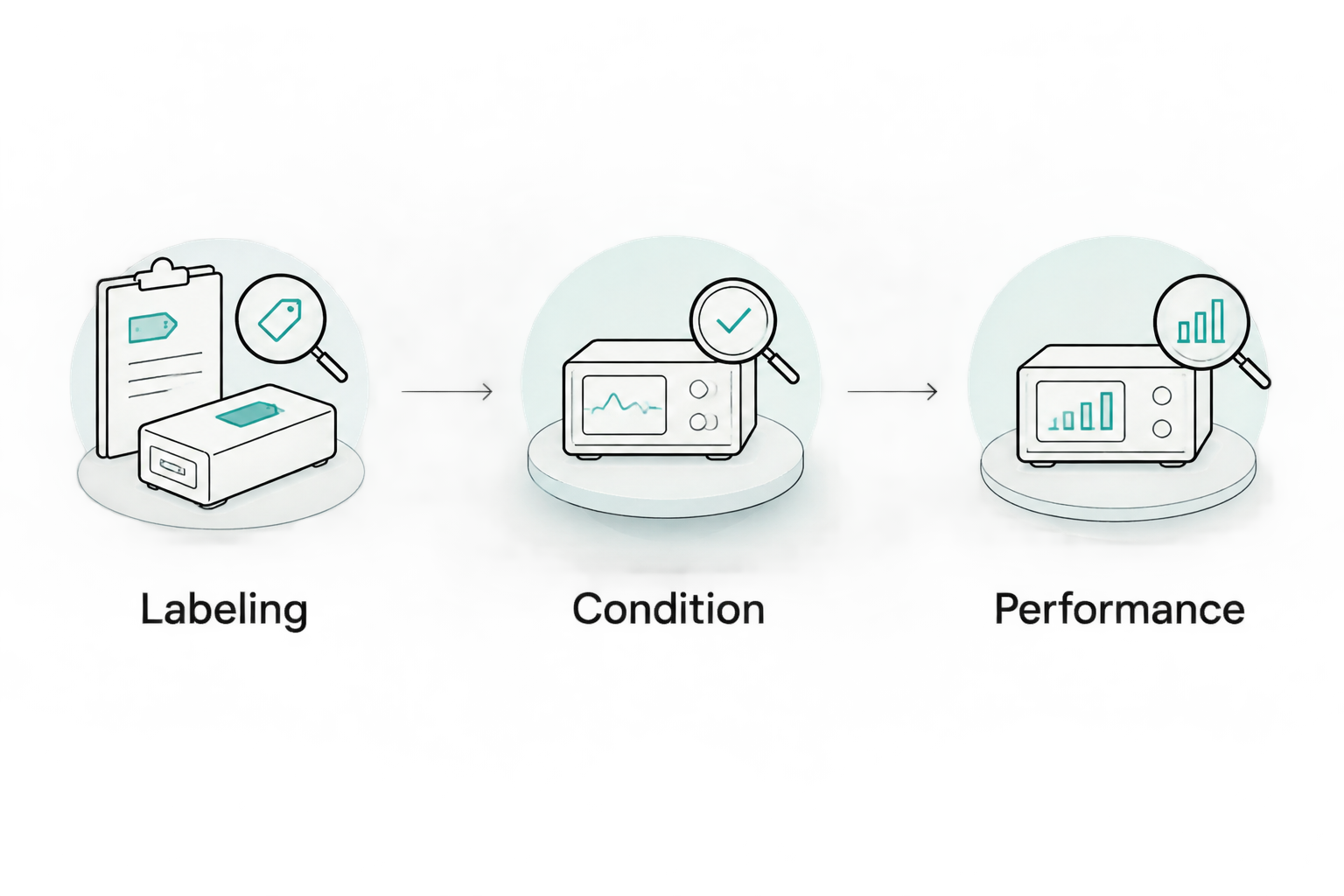
Use 3 checkpoints in your instrument-management process: labeling, condition, and performance. Each checkpoint answers a different question, and passing one does not replace the others.
- Labeling: Establish the exact instrument identity, intended use, reusable or single-use status, and any stated retirement limit. Retain the applicable instructions with your instrument records.
- Condition: Inspect the working portion and shank using the method specified by the manufacturer. Remove instruments with damage, deformation, corrosion, or an unacceptable cutting surface.
- Performance: Treat a change in cutting behavior as a reason to stop and assess the instrument and setup. Do not compensate for a suspected worn bur by increasing pressure.
Make the inspection stage explicit in your workflow. Staff need to know where rejected instruments go so that a questionable bur does not return to a tray during packing.
Single-use diamond burs: follow the discard instruction
A single-use designation settles the reuse question. Do not create an internal reuse allowance because the bur appears intact or because the practice has equipment capable of sterilizing instruments.
The benefit is a clear instrument-disposition rule. The trade-off is ongoing replenishment and waste handling, which belong in your purchasing assessment rather than being treated as reasons to disregard labeling.
For a 2026 order, ask for the exact package labeling before approving a substitution. A similar shape, matching catalog photograph, or familiar description does not establish that the replacement item has the same reuse instructions.
Keep unopened replacement instruments identifiable. Once packaging information is separated from a bur, staff should not have to infer its status from the instrument's appearance.
Reusable diamond burs: inspection does not extend a stated limit
A reusable diamond bur requires the manufacturer's validated cleaning and sterilization instructions. The word reusable is not permission to improvise detergent selection, processing parameters, or a retirement schedule.
Reusable instruments offer a different purchasing workflow, but they also require processing capacity and traceability appropriate to the instructions. Include staff handling, inspection, packaging, and replacement stock when assessing ownership costs.
If the manufacturer specifies a maximum number of uses or processing cycles, track the quantity the instructions actually name. A patient visit, a preparation, and a sterilization cycle are not interchangeable units.
Use the earliest applicable replacement trigger. A stated maximum does not justify continued use after damage, unacceptable cutting behavior, or failure to meet the manufacturer's inspection criteria.
Why diamond bur service life varies
These 5 factors explain why a single replacement count is inadequate. They are variables to evaluate, not a formula for predicting how many procedures an individual bur will complete.
- Intended application: Tooth preparation, restorative-material adjustment, and finishing are different tasks. Confirm that the selected bur is indicated for the material and procedure.
- Shape and grit: Working geometry and abrasive grade affect how the instrument contacts the surface. Select the appropriate combination rather than using pressure to compensate for a mismatch.
- Operating conditions: Follow the applicable instructions for speed, pressure, and coolant. Do not transfer settings from another bur solely because its shape looks similar.
- Cleaning and reprocessing: Residual material and processing-related deterioration require assessment under the exact instructions. Successful sterilization does not demonstrate that an instrument is clean, undamaged, or clinically suitable.
- Handpiece and retention: Confirm shank compatibility, seating, and retention. Abnormal behavior requires assessment of both the bur and the handpiece, not automatic attribution to abrasive wear.
Document these variables when your team reports unexpectedly frequent replacement. Otherwise, a purchasing discussion about durability can conceal a selection, handling, or equipment problem.
What should you record when replacing a bur?
Use 4 record fields for an internal replacement review: instrument identity, assigned task, replacement reason, and processing history where required. Keep the record proportionate to the manufacturer's instructions and your practice's instrument-management system.
An instrument identity should distinguish the exact item, not merely describe it as a diamond bur. Record the catalog identifier and relevant specification so that different shapes or grits do not become one misleading consumption total.
For replacement reasons, separate visible damage, cutting-performance concerns, a manufacturer limit, and unresolved documentation. These categories support different corrective actions; combining them into a single discarded-instrument count removes that distinction.
Your 2026 review should compare like tasks and like instruments. Do not interpret higher consumption during a different procedure mix as proof that the supplier's burs have become less durable.
How should you assess replacement burs before ordering?
ProElite Dental Supply is a purchasing option for dental practices sourcing diamond burs. Its supplied catalog includes football, barrel, needle, and round-end tapered diamond bur listings, but a product name alone does not establish a reuse allowance.
Request documentation for the exact item you intend to buy. The useful purchasing question is not simply whether a bur is described as durable; it is whether your team can confirm its intended application, compatibility, processing requirements, and retirement criteria.
Before approving a replacement order, obtain:
- The exact manufacturer and catalog identifier.
- Shape, dimensions, abrasive grade, and shank specification.
- Intended materials and procedures.
- Single-use or reusable labeling.
- Applicable cleaning, sterilization, inspection, and retirement instructions.
- Any product-specific complaint or replacement terms relevant to the order.
Do not infer a wear guarantee from a general product description. Likewise, the presence of several similar-looking listings does not establish that they have identical instructions or interchangeable applications.
For a qualified purchase enquiry, send your diamond bur requirements, including the procedure, preferred shape and grit, handpiece interface, and required documentation. This gives the supplier a defined specification to address instead of an unsupported request for the longest-lasting bur.
Can you judge diamond bur wear by appearance alone?
Appearance alone cannot establish remaining service life. Inspection can identify reasons to remove an instrument, but a bur that looks acceptable still needs confirmed reuse status and acceptable performance.
Use the manufacturer's inspection criteria rather than an improvised visual threshold. If the surface or shank is questionable, remove the instrument from rotation instead of testing the uncertainty during treatment.
Does sterilization make a worn diamond bur usable again?
Sterilization does not restore worn diamond abrasive or repair a damaged shank. Reprocessing and instrument retirement answer different questions: whether an instrument has undergone the required process, and whether it remains suitable for use.
For reusable burs, cleaning and sterilization must follow the exact instructions. Neither step overrides single-use labeling or a manufacturer-defined retirement limit.
Should every operatory use the same replacement schedule?
Every operatory should use the same decision rules, not necessarily the same procedure count. Standardize labeling checks, rejection criteria, documentation, and responsibility for removing instruments from service.
A shared numerical schedule is appropriate only where it follows the applicable instrument instructions. Different bur types and tasks should not be forced into a universal allowance.
Reprocessing reference and product-documentation boundary
The ADA's infection control and sterilization topic page is a general reference for dental infection-prevention questions. It does not replace the instructions for a particular diamond bur or establish a universal number of permitted uses.
For your 2026 instrument policy, keep general infection-prevention references separate from device-specific documentation. A general technology discussion cannot establish the processing parameters, compatibility, or service life of an exact catalog item.
FAQ
How many patients can I use a diamond dental bur on?
There is no universal patient count for diamond dental burs. Follow the exact manufacturer's single-use or reusable labeling, any stated limit, and its condition-based retirement criteria.
Should I replace a diamond bur after every crown preparation?
Replace the bur after the procedure if its labeling requires disposal, its limit has been reached, or its condition is unacceptable. A crown preparation alone does not establish a universal reuse allowance.
Can I autoclave every diamond dental bur?
Do not assume every diamond dental bur is suitable for autoclaving or reuse. Confirm the exact item's labeling and validated processing instructions before selecting a method or cycle.
Does a coarse diamond bur last longer than a fine diamond bur?
Grit alone does not establish a longer service life. Compare instruments intended for the same task and follow their individual operating, inspection, and retirement instructions.
What should I do if a diamond bur suddenly cuts poorly?
Stop and assess the bur, its suitability for the task, and the handpiece setup. Do not increase pressure to compensate for suspected wear, damage, or a compatibility problem.
Does ProElite Dental Supply specify a universal reuse count for diamond burs?
This guide establishes no universal reuse count for ProElite Dental Supply diamond burs. Request the exact item's manufacturer instructions and labeling before establishing your practice's replacement policy.
Is a bur safe to reuse if it looks undamaged after sterilization?
An undamaged appearance after sterilization does not establish permitted reuse or remaining cutting performance. Confirm labeling, processing requirements, inspection criteria, and any applicable retirement limit.
One last thing
Standardize the reason for replacement before standardizing the reorder quantity. A tray that repeatedly loses the same bur deserves a review of the task, selection, operating conditions, and handpiece—not an automatic increase in its reuse allowance.
Make that distinction part of your 2026 stock review. Better records support a more useful purchasing conversation without turning an unverified procedure count into a clinical rule.