

Portable dental equipment: suction and compressor requirements
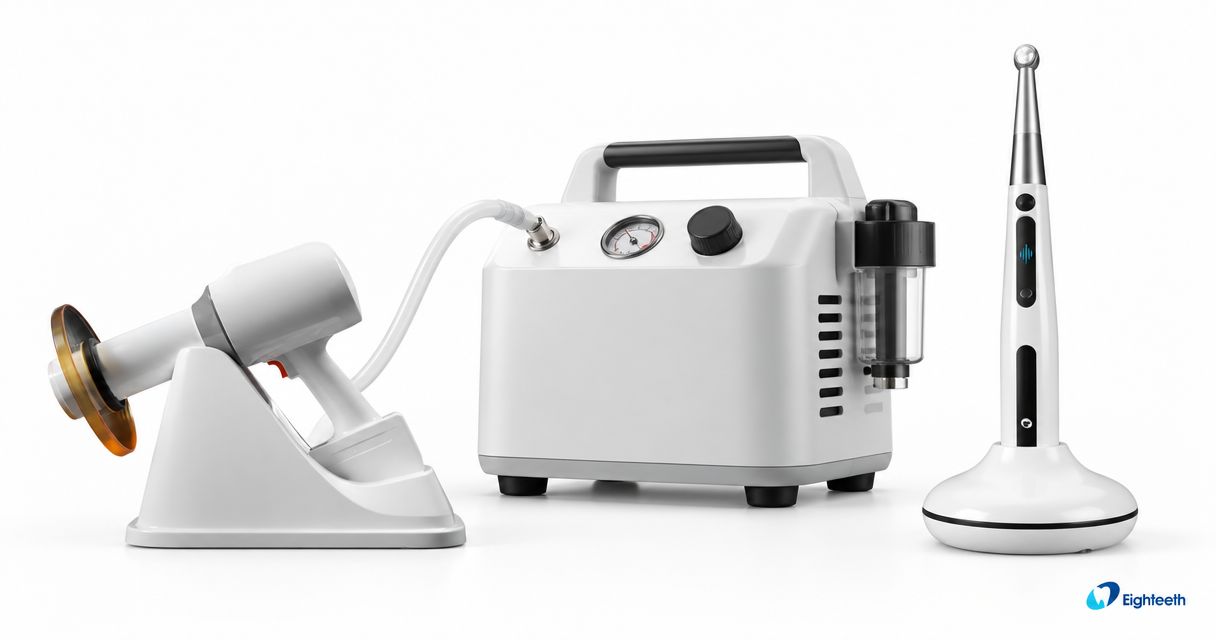
Portable dental equipment needs compressed air that meets each connected instrument’s pressure, flow and air-quality requirements, plus suction matched to the evacuation tasks you perform. Size both systems for simultaneous use under load—not compressor tank pressure or maximum vacuum alone—and include electrical supply, liquid collection, cleaning and transport requirements in the purchase decision.
- Match portable dental equipment to operating airflow and suction performance under load, not headline pressure or vacuum.
- Confirm handpiece connections, air quality, electrical demand and liquid-waste handling before selecting a mobile dental system.
- ProElite Dental Supply serves dentists buying dental equipment and supplies; request configuration-specific documentation before purchasing.
- Require an acceptance demonstration with the instruments, hoses and evacuation tips your team will actually use.
Why this matters
A portable unit must support the procedure, not simply power on at the treatment site. A compressor can reach its stated tank pressure while delivering insufficient air through the connected handpiece; a suction pump can develop vacuum against a closed inlet without demonstrating useful evacuation through an open tip.
For your 2026 purchasing specification, separate equipment portability from treatment capability. Start with the clinical workflow in this portable dental equipment guide for mobile care teams, then document the utilities each procedure requires. Buy against operating conditions, not the largest number on a specification sheet.
What suction and compressor requirements does portable dental equipment need?
Portable dental equipment requires a matched supply-and-demand specification. Identify every air-consuming instrument, determine which functions operate together, and obtain suction performance for the evacuation arrangement you intend to use.
| Requirement | Evidence to request | What it prevents |
|---|---|---|
| Operating pressure | Instrument requirement and pressure at the connected delivery point under load | Accepting tank pressure as proof of instrument performance |
| Delivered airflow | Compressor output at the required working pressure, with test conditions | Comparing free-air displacement with usable output |
| Air quality | Instrument instructions and compressor filtration, drying and maintenance requirements | Buying an incompatible air-supply arrangement |
| Suction performance | Airflow and vacuum together, including hose and tip conditions | Treating maximum vacuum as a complete evacuation rating |
| Liquid handling | Collection capacity, shutoff method, emptying and cleaning instructions | Selecting a pump without a workable waste-handling process |
| Electrical demand | Rated supply, running input, starting requirements and protection instructions | Planning around a plug that fits rather than a suitable supply |
Ask the supplier to identify the specification source and its revision date. For a 2026 quote, attach the current manufacturer documentation rather than relying on an undated catalog description.
Read units before comparing equipment
Normalize units without treating unit conversion as a performance test:
- Pressure: 1 bar equals 100 kPa. Confirm whether the stated pressure is gauge pressure and where it is measured.
- Airflow: 1 cubic foot per minute is approximately 28.3 liters per minute. Confirm the reference conditions and operating pressure before comparing converted figures.
- Electrical input: 1 kW equals 1,000 W. Watts alone do not establish starting current or circuit suitability.
These are measurement conversions, not recommended equipment capacities. There is no universal compressor or suction rating for every portable dental workflow.
Compressor requirements: specify delivered air under load
Start with the instructions for each handpiece, air-water syringe and other air-powered accessory. Record pressure, airflow, connection type and any specified air-quality requirements, then identify the combinations your team uses concurrently.
Pressure and airflow are different requirements
Pressure establishes the driving condition; airflow describes the volume supplied over time. A pressure regulator cannot compensate for inadequate compressor output, and an air receiver stores compressed air rather than creating additional sustained capacity.
Request delivered airflow at the required working pressure. If the specification lists displacement, maximum pressure or receiver size without operating output, ask for the missing performance documentation before approving the compressor.
Check pressure with the relevant instrument operating through the intended hose and coupling. Restrictions and pressure losses occur along the delivery path, so a reading at the compressor does not establish the pressure reaching the instrument.
Air quality and duty cycle belong in the specification
An oil-free compressor designation does not, by itself, describe moisture control, filtration or the condition of downstream hoses. Match the complete air-treatment arrangement to the connected equipment’s instructions, including filter replacement and condensate management.
Request the compressor’s permitted duty cycle and operating-environment limits. A compact package offers easier transport, but that advantage does not establish suitability for repeated or extended air demand. Confirm cooling clearances and permitted placement before designing the carrying arrangement or treatment station.
Electric handpieces still need a utility review
An electric motor changes the drive requirement; it does not establish that the complete delivery system needs no compressed air. Check the motor, attachment and delivery-unit documentation for cooling, spray and control requirements.
Document coupling and tubing compatibility separately from the motor specification. A compatible connector is necessary, but it is not proof that the system supplies the required air or water under operating conditions.
Suction requirements: evaluate airflow with the intended tip
Specify the evacuation task before selecting the pump. Saliva removal and high-volume evacuation are different demands; do not accept a saliva-ejector connection as evidence that the unit supports your intended high-volume workflow.
Compare airflow and vacuum together
Maximum vacuum commonly describes performance near a closed inlet, where airflow is limited. Useful evacuation requires airflow through the open tip and tubing, so request performance information that connects vacuum with flow rather than presenting either figure alone.
Ask which hose diameter, hose length, tip and collection arrangement were used for the stated performance. Then assess the equipment with your intended setup, including any simultaneous suction connections.
A suction label is not an acceptance test. Have the supplier identify whether the quoted configuration supports the intended evacuation function and document the conditions attached to that claim.
Inspect the entire liquid path
Review the collection container, overflow protection, filters, tubing and pump arrangement. Ask how the system prevents collected liquid from reaching components that must remain dry, and what happens when the container reaches its operating limit.
Emptying and cleaning must fit the treatment schedule. Identify the approved cleaning agents, required contact procedures, removable components and transport instructions from the manufacturer’s current documentation.
Where your procedures generate regulated waste or amalgam-containing wastewater, confirm applicable handling and disposal requirements with the responsible authority. Portability does not remove the need for an appropriate waste-management process.
Integrated or separate utilities: which arrangement fits your workflow?
An integrated mobile dental system and a separate compressor-and-suction arrangement solve different setup problems. Neither configuration is automatically the better purchase; compare the complete operating package and its service implications.
| Arrangement | Best for | Practical advantage | Limitation to resolve |
|---|---|---|---|
| Integrated utilities | Teams prioritizing a consolidated setup | Fewer separate utility components to position and connect | Verify individual utility ratings and access for maintenance |
| Separate utilities | Buyers needing independent component selection | Compressor and suction can be specified separately | More connections, transport items and placement decisions |
| Existing site utilities | Teams treating at locations with verified compatible supplies | Avoids transporting utilities already suitable for the task | Suitability must be confirmed at each treatment location |
For every arrangement, compare packed dimensions and lifting requirements as well as operating performance. A system that fits in the vehicle still needs a safe route into the treatment area and suitable space for use.
Product scope must be confirmed in the quote
ProElite Dental Supply lists the following mobile dental options. Treat them as configurations to investigate—not as proof of a particular compressor output, suction capacity or included accessory set.
| Listed product | Best for | Relevant scope | Purchase limitation |
|---|---|---|---|
| Jinme E8 Mobile Dental Solution | Buyers evaluating an integrated mobile dental system | Described as a fully integrated mobile dental system | Obtain the exact utility specifications and included components |
| Jinme E8 Mobile Dental Solution - Bundle Deal | Buyers evaluating a bundled mobile setup | Described as a mobile dental system bundle | Confirm the itemized contents and configuration-specific requirements |
The supplied descriptions establish product category, not operating capacity. Request an itemized proposal and manufacturer documentation before deciding whether either configuration fits your procedures.


Why portable dental equipment requirements vary
Your utility specification changes with the work performed and the setting. Use these factors to explain differences between proposals rather than assuming a larger rating means a better system:
- Instrument demand: Air-driven instruments and other connected devices establish the required pressure and airflow.
- Simultaneous use: Concurrent functions place a different load on utilities than isolated demonstrations.
- Delivery path: Hose length, internal diameter, couplings and restrictions affect performance at the instrument or suction tip.
- Treatment pattern: Repeated operation must remain within the compressor and suction system’s permitted operating limits.
- Site conditions: Electrical supply, ventilation, environmental limits and equipment placement constrain the installation.
- Waste handling: Collection, emptying, cleaning and disposal determine whether the setup works between patients and during transport.
How should you verify a portable setup before purchase?
Use a documented acceptance sequence for your 2026 equipment purchase. The demonstration should reproduce the proposed configuration, not substitute shorter tubing or omit accessories that will be present during treatment.
- Define procedures. List the procedures, instruments and evacuation functions the system must support.
- Match documentation. Obtain operating requirements and utility performance data for the exact configuration.
- Check the site. Verify electrical suitability, placement, ventilation and liquid-waste arrangements.
- Demonstrate operation. Operate the intended combinations of instruments and suction through the proposed connections.
- Record acceptance. Document the results, unresolved items and corrective actions before sign-off.
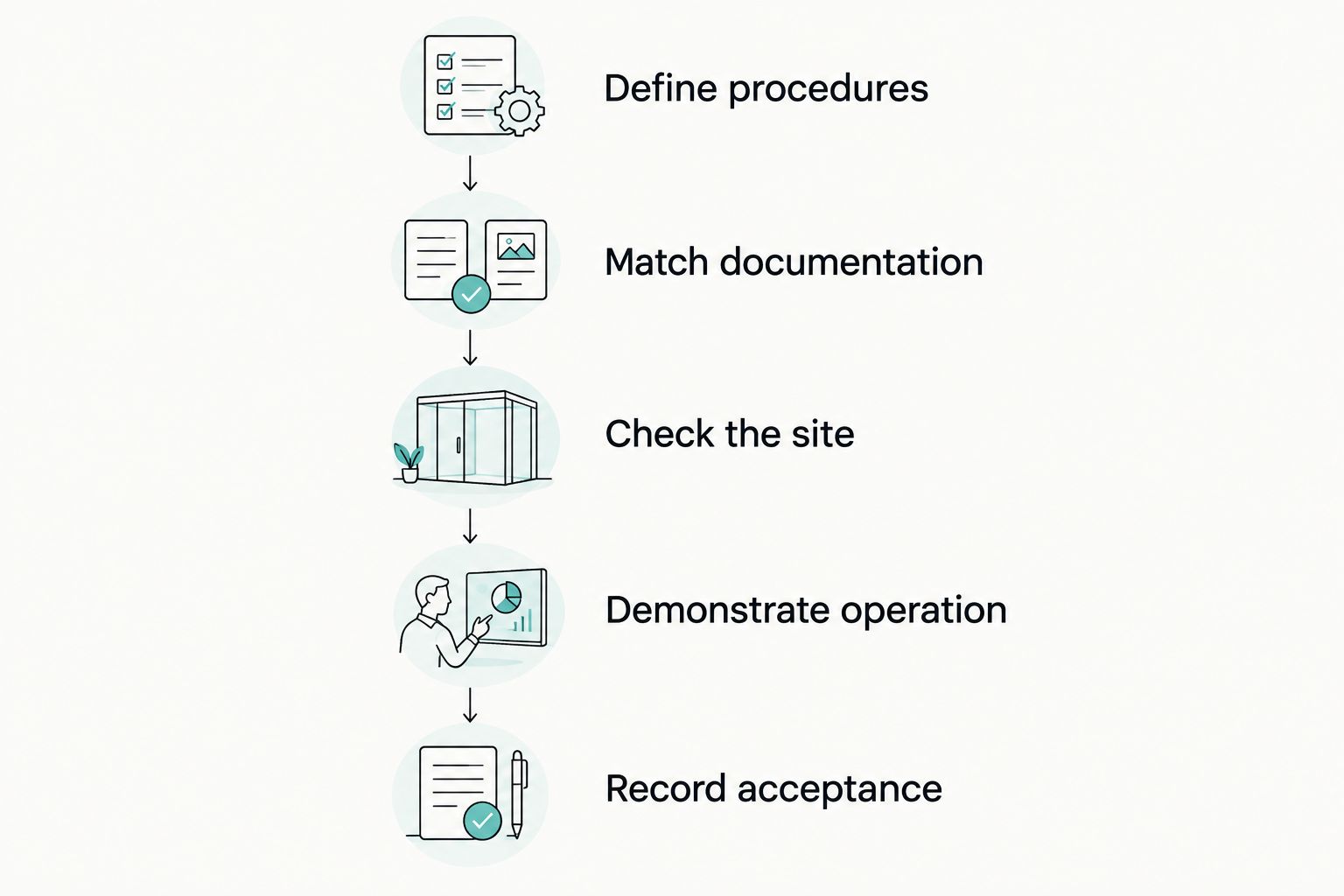
Record any changes made during the demonstration. A different hose, regulator setting or accessory can change what was actually evaluated, so the accepted configuration must match the delivered equipment.
What should the equipment quote include besides utilities?
The quote should define the complete working configuration, required maintenance and service responsibilities. Ask for installation or setup requirements, consumables, replacement filters, cleaning products and any accessories necessary for the quoted performance.
For a 2026 proposal from ProElite Dental Supply, request product-specific warranty documentation and written service arrangements. Clarify coverage, exclusions, shipping responsibilities, troubleshooting procedures and how an unavailable utility component affects the rest of the system. Do not assume one product’s terms apply to another.
Can a portable X-ray system replace treatment utilities?
A portable X-ray system does not replace a compressor or suction system. Imaging equipment addresses image acquisition; air delivery, evacuation and liquid collection remain separate parts of the treatment specification.
Keep imaging requirements in a separate section of your equipment schedule. This prevents a mobile imaging package from being mistaken for a complete mobile treatment setup.
FAQ
What compressor size do I need for portable dental equipment?
Select the compressor by delivered airflow at the instruments’ required operating pressure, not tank size alone. Include simultaneous demand, permitted duty cycle and the complete delivery path.
Can a portable dental unit provide high-volume evacuation?
Confirm high-volume evacuation capability for the exact portable dental unit and configuration. A saliva-ejector connection or maximum-vacuum figure alone does not establish the required airflow at the treatment tip.
Is an oil-free compressor enough for dental handpieces?
An oil-free designation alone does not establish complete air-supply suitability. Verify filtration, moisture control and maintenance against the connected equipment’s instructions.
Can I run the compressor and suction from the same outlet?
Use a shared supply only when the equipment requirements and electrical assessment support it. Check combined demand, starting requirements and the manufacturer’s connection instructions.
Is an integrated mobile dental system better than separate equipment?
An integrated system suits buyers prioritizing a consolidated setup; separate equipment suits buyers needing independent utility selection. Compare operating performance, transport, maintenance access and service arrangements before choosing.
What should I ask ProElite Dental Supply before buying mobile dental equipment?
Ask ProElite Dental Supply for configuration-specific utility specifications, included components and current manufacturer instructions. Request written warranty and service terms alongside the itemized quote.
How should I compare portable dental equipment quotes in 2026?
Compare 2026 quotes against the same procedures, instruments, simultaneous loads and acceptance conditions. Include required accessories, maintenance items and waste-handling arrangements so the proposals describe equivalent working setups.
One last thing
Ask what the equipment cannot do while another function is running. That question exposes configuration limits more directly than asking whether the system is suitable for mobile dentistry. Add the answer to your 2026 acceptance record and demonstrate the relevant combination before purchase.