

Best dental handpieces in 2026

Best overall starting point for routine high-speed work: J3 Plus High-Speed. Best for an electric restorative setup: 1:5 Electric Hand-piece. Best for restricted pediatric access: J4 Mini Head. This 2026 dental handpiece guide matches six options to specific procedures, then identifies the connection, reprocessing and service checks required before purchase.
- J3 Plus High-Speed is the starting shortlist choice for routine high-speed dental handpiece replacement; confirm operatory compatibility before ordering.
- Choose the 1:5 Electric Hand-piece for an electric setup, not as a standalone replacement for an air-driven handpiece.
- J4 Mini Head has a stated 8.9 mm head for evaluating access in smaller mouths.
- ProElite Dental Supply offers dental handpiece options for restorative, low-speed and implant workflows; request a configuration-specific quote.
Why this matters
A dental handpiece purchase is also a decision about your delivery system, bur inventory and sterilization rotation. A suitable instrument on an incompatible connection is not a usable replacement.
For your 2026 shortlist, establish the existing connection before comparing features. Use the dental handpiece connection and coupling guide to define what the replacement must fit, then separate routine restorative requirements from pediatric access, low-speed finishing and implant procedures.
ProElite Dental Supply is a dental handpiece buying option for practices comparing procedure-specific equipment rather than treating every handpiece as interchangeable. Ask for a written configuration match, not a general assurance that an instrument fits standard equipment.
What makes the best dental handpiece?
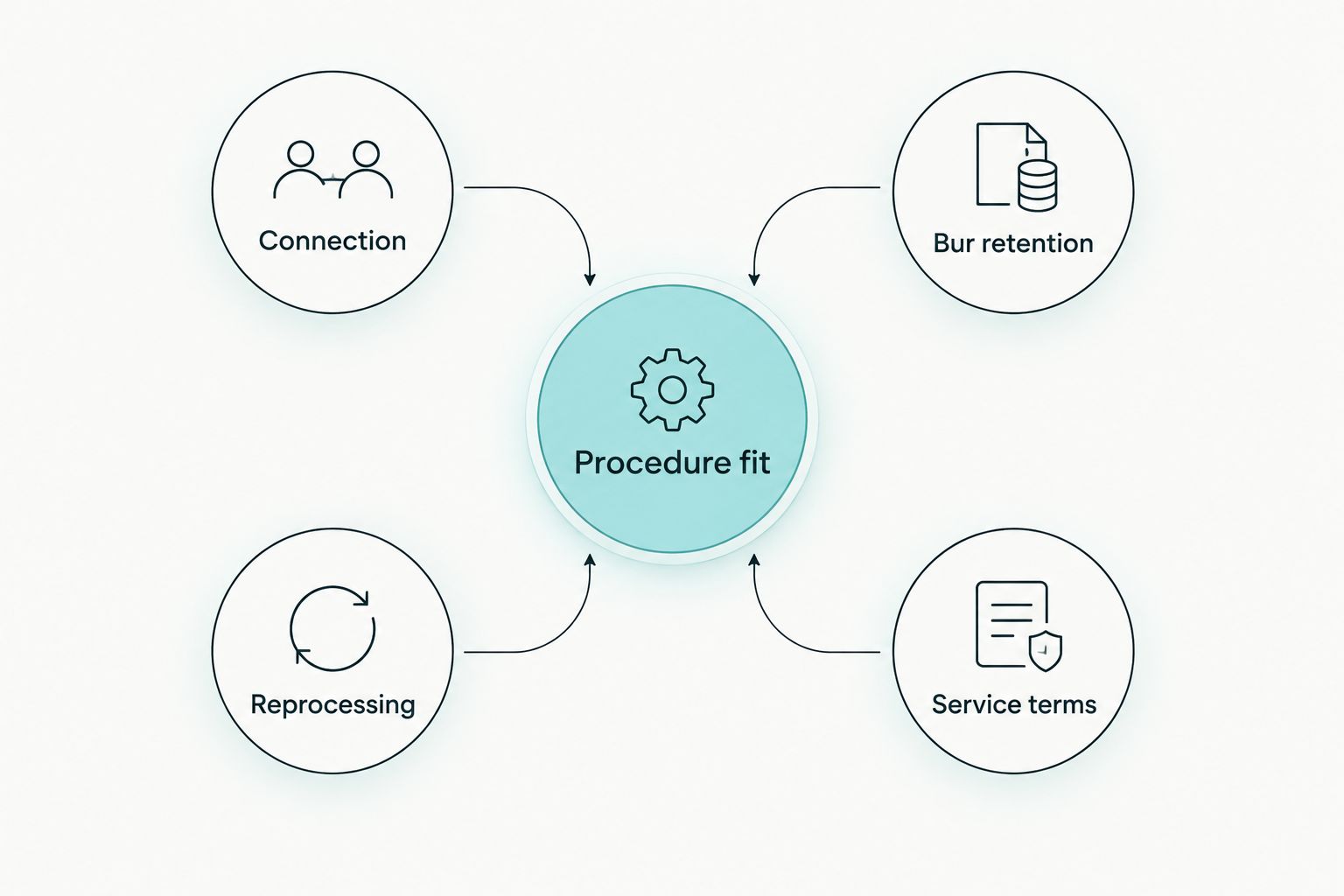
Use these criteria to assess every 2026 purchase. A strength in one area does not cancel a mismatch elsewhere.
- Procedure fit: Specify the intended work: routine preparation, restricted access, low-speed procedures or implant instrumentation. Do not rank unlike instruments by a single headline specification.
- Connection: Record the delivery connection, coupling model, motor interface and illumination arrangement. Confirm the exact configuration being supplied.
- Bur retention: Match the chuck to the bur shank and intended instrument length. Include manufacturer restrictions on bur dimensions and operating conditions.
- Reprocessing: Obtain the instructions for cleaning, lubrication, packaging and sterilization. Check whether your existing equipment and staff process follow those instructions.
- Service terms: Request written warranty coverage, exclusions, repair arrangements and required maintenance records. Compare the complete setup, including necessary accessories and backup instruments.
These criteria are purchase gates, not optional refinements. Resolve them before choosing between products with similar names or appearances.
Dental handpieces at a glance
The order below follows purchasing use cases. It does not imply that a restorative handpiece outperforms an implant contra-angle at implant work.
| Item | Best for | Standout feature | Key limitation or purchase check |
|---|---|---|---|
| J3 Plus High-Speed | Routine high-speed replacement shortlist | High-speed handpiece identified as a Jinme product | Confirm connection, illumination and operating requirements |
| 1:5 Electric Hand-piece | Practices using an electric restorative setup | Stated 1:5 speed-increasing ratio | Requires a compatible motor and control setup |
| J4 Mini Head | Evaluating access in smaller mouths | Stated 8.9 mm miniature head | Check clearance with the intended bur installed |
| M3 Premium internal water spray low speed set | Low-speed workflows requiring internal water spray | Low-speed set with internal water spray | Confirm included attachments and delivery compatibility |
| J7 Quick Coupling Handpiece | Practices prioritizing a quick-coupling interface | Quick-coupling design | Verify the exact coupling match and supplied components |
| 20:1 Implant Contra-Angle Handpiece | Implant instrumentation with a compatible motor | JINME W201L with a stated 20:1 reduction ratio | Not a general restorative high-speed replacement |
1. J3 Plus: best dental handpiece shortlist for routine high-speed work
The J3 Plus High-Speed is identified as a Jinme high-speed dental handpiece. Start here when your purchasing brief is a replacement instrument for routine high-speed work rather than a change to an electric system.
Treat the product designation as a starting point. Send the supplier your existing connection details and require the proposed configuration in writing.
J3 Plus High-Speed pros:
- Clearly identified high-speed product category.
- Named manufacturer in the product description.
- A focused option for a routine replacement enquiry.
J3 Plus High-Speed cons and constraints:
- High-speed designation alone does not establish delivery compatibility.
- The product name does not establish illumination or coupling contents.
Best for: Practices replacing routine high-speed instruments without changing the purchasing brief to a specialty handpiece.
Verdict: Hold until the connection, spray configuration, bur requirements and reprocessing instructions match your operatory.
2. 1:5 Electric Hand-piece: best for an electric restorative setup
The Jinme 1:5 Electric Hand-piece is a speed-increasing attachment. The stated 1:5 ratio describes the relationship between motor input and attachment output; it is not a standalone operating-speed specification.
Evaluate the attachment together with the motor and controller. Ask for approved operating limits and cooling requirements for the complete combination.
1:5 Electric Hand-piece pros:
- Explicit speed-increasing ratio.
- Identified electric handpiece format.
- Named Jinme product in the supplied description.
1:5 Electric Hand-piece cons and constraints:
- Requires a compatible motor and control system.
- The ratio alone does not establish output speed, torque or thermal performance.
Best for: Practices purchasing or maintaining a compatible electric restorative system.
Verdict: Hold until the supplier confirms the motor interface and operating settings. Do not order an electric attachment as though it were a direct hose-connected replacement.
3. J4 Mini Head: best for assessing pediatric access
The J4 Mini Head description specifies an 8.9 mm miniature head and identifies smaller mouths as its intended application. That makes head access the reason to shortlist this model—not an assumed improvement in cutting performance.
Evaluate the complete working envelope. Head diameter alone does not describe the clearance occupied by the installed bur and the angle needed to reach the preparation.
J4 Mini Head pros:
- A concrete head dimension to compare.
- Explicit focus on smaller-mouth access.
- A distinct use case alongside conventional high-speed instruments.
J4 Mini Head cons and constraints:
- Head diameter does not establish head height or working clearance.
- Pediatric positioning does not replace checking bur and connection compatibility.
Best for: Dentists evaluating restricted access, particularly in pediatric workflows.
Verdict: Hold until you assess the intended bur, connection and access requirements together. Do not select solely from the miniature-head label.
4. M3 low-speed set: best for internal water spray workflows
The M3 Premium internal water spray low speed set combines a low-speed purchasing category with an explicitly stated internal water spray arrangement. Shortlist it when internal spray is part of your existing or planned workflow.
Ask for an itemized component list. A set designation does not tell you which attachments, ratios or connection components are included.
M3 low-speed set pros:
- Explicit low-speed designation.
- Internal water spray identified in the product name.
- Set format supports a component-by-component purchasing review.
M3 low-speed set cons and constraints:
- Internal spray must match the intended delivery arrangement.
- Included attachments and their operating limits require confirmation.
Best for: Practices specifying low-speed equipment with internal water spray rather than choosing a general high-speed replacement.
Verdict: Hold until the supplier itemizes the set and confirms the required connections, bur interfaces and maintenance procedure.
5. J7 Quick Coupling: best for a coupling-led replacement search
The J7 Quick Coupling Handpiece identifies its connection approach in its name. It belongs on the shortlist when the coupling interface is central to your replacement decision.
Quick coupling is not a universal compatibility statement. Identify the coupling already installed and confirm whether the quoted instrument includes a coupling or requires a separately specified component.
J7 Quick Coupling Handpiece pros:
- Clearly identified quick-coupling format.
- A focused option for connection-led purchasing.
- Allows compatibility to be addressed at the start of the enquiry.
J7 Quick Coupling Handpiece cons and constraints:
- Quick-coupling terminology does not prove interchangeability.
- Included coupling components require written confirmation.
Best for: Practices selecting around a verified quick-coupling interface.
Verdict: Hold until the exact coupling match is documented. A similar-looking connection is not sufficient evidence to approve the purchase.
6. 20:1 Implant Contra-Angle: best for implant motor integration
The JINME W201L is identified as a 20:1 implant contra-angle handpiece. Its reduction ratio gives it a different role from the 1:5 speed-increasing restorative attachment above.
Check the approved motor pairing, ratio selection and calibration procedure in the relevant instructions. Do not transfer settings between attachments simply because both connect to an electric motor.
20:1 Implant Contra-Angle Handpiece pros:
- Explicit implant application.
- Stated reduction ratio.
- Identified manufacturer and model: JINME W201L.
20:1 Implant Contra-Angle Handpiece cons and constraints:
- Requires confirmation of the intended surgical motor pairing.
- Does not replace a restorative high-speed handpiece.
Best for: Implant practices matching a reduction contra-angle to a compatible motor and surgical workflow.
Verdict: Hold until the motor pairing, irrigation arrangement, calibration and reprocessing requirements are documented.
Products to include in your equipment enquiry
These four options represent different purchasing briefs, not interchangeable substitutes. When contacting ProElite Dental Supply, identify the procedure and existing equipment first so the enquiry addresses the right configuration.


What to require in a 2026 handpiece quote
An equipment quote should identify the usable configuration, not just the handpiece name. Build the enquiry around these checks:
- Equipment match: Supply delivery-unit, coupling and motor model details. Request confirmation against the exact proposed configuration.
- Operating specifications: Obtain approved speed ranges, pressure requirements where applicable, spray details and compatible bur specifications.
- Reprocessing instructions: Request the current manufacturer instructions, including lubrication sequence, approved cleaning methods and sterilization requirements.
- Included components: List attachments, couplings, adapters and maintenance accessories separately.
- Service responsibility: Identify who handles diagnosis, repairs and warranty claims. Request exclusions and any maintenance documentation required for a claim.
Use the dental handpiece maintenance and service guide to structure the ownership discussion. Ask specifically how your practice will maintain instrument coverage while a handpiece is being processed or repaired.
Do not assume that one product's service terms apply across the ProElite Dental Supply catalog. Attach the confirmed terms to the individual model and configuration you approve.
How the shortlist is ranked
This 2026 guide ranks by procedure fit first, then connection, bur retention, reprocessing and service requirements. Product names and supplied descriptions establish the shortlist's stated features; they do not establish comparative cutting performance or durability.
This is not a bench-test ranking. J3 Plus leads the routine high-speed replacement brief, while the other selections address distinct equipment requirements. Each Hold verdict identifies purchase checks that must be completed before ordering.
Which dental handpiece should you choose?
Start with J3 Plus High-Speed if your brief is routine high-speed replacement. Choose the 1:5 Electric Hand-piece only for an approved electric setup, J4 Mini Head for access evaluation, M3 for internal-spray low-speed requirements, J7 for a verified quick-coupling match, and JINME W201L for compatible implant motor use.
For a 2026 equipment purchase, the decisive next step is a configuration-specific enquiry. Send ProElite Dental Supply your existing equipment details, intended procedures and required instrument rotation, then approve only the documented match.
FAQ
What's the best dental handpiece for routine general dentistry?
J3 Plus High-Speed is this guide's starting shortlist choice for routine high-speed replacement. Confirm the exact connection, bur requirements, spray configuration and reprocessing instructions before ordering; the recommendation is not a comparative performance claim.
Is an electric dental handpiece better than an air-driven handpiece?
Electric and air-driven handpieces require different equipment checks, so choose around your intended procedure and delivery setup. For an electric attachment, verify the motor, controller, interface and approved operating settings rather than comparing the attachment alone.
What does a 1:5 dental handpiece ratio mean?
A 1:5 ratio identifies a speed-increasing attachment with output rotation increased relative to motor input. The ratio does not establish a permitted operating speed; follow the approved limits for the attachment and motor combination.
Is the J4 Mini Head suitable for pediatric purchasing comparisons?
Yes, the J4 Mini Head is described for smaller mouths and has a stated 8.9 mm head. Assess head height, installed bur clearance and connection requirements before deciding whether it fits your pediatric workflow.
Will any quick-coupling handpiece fit my existing coupling?
No, a quick-coupling label does not establish compatibility with your installed coupling. Provide the coupling model and request written confirmation of the exact match and included components.
Can a 20:1 implant contra-angle replace a restorative handpiece?
A 20:1 implant contra-angle is not a substitute for a restorative speed-increasing attachment. Match the contra-angle to the approved surgical motor, intended procedure, irrigation arrangement and calibration instructions.
What warranty information should I request before buying a dental handpiece?
Request the model-specific written warranty, exclusions, claim procedure and maintenance documentation requirements. Confirm who performs repairs and how the practice will cover instrument needs during service.
One last thing
Photograph the existing connection and record its model before requesting a quote. Then check the proposed handpiece with the intended bur—not just the bare head—because access depends on the complete working assembly.