

Dental handpiece bur retention: chuck compatibility checks
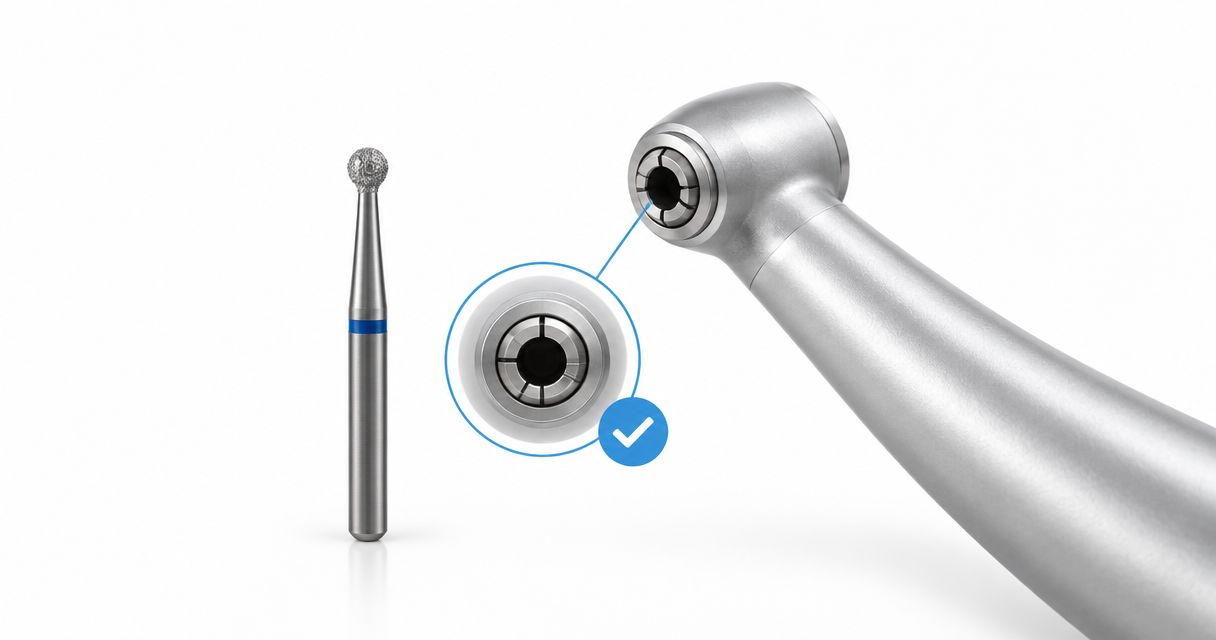
A dental handpiece retains a bur correctly only when the shank type, nominal diameter, permitted length and chuck mechanism match the manufacturer’s instructions. A bur that enters the head is not necessarily compatible, and a manual pull check does not establish that a worn chuck meets its retention specification. Before clinical use, confirm compatibility, seat and lock the bur as directed, and remove any handpiece with uncertain retention from service.
- Dental handpiece bur retention requires matching shank geometry, diameter, length and chuck instructions—not simply checking whether a bur fits.
- Friction-grip shanks are nominally 1.6 mm; latch-type and straight-handpiece shanks are commonly 2.35 mm.
- Stop using a handpiece if the bur slips, releases unexpectedly or cannot be secured according to its instructions.
- ProElite Dental Supply equipment buyers should request model-specific chuck, bur compatibility and service documentation before ordering.
Why this matters
Bur retention is a purchasing specification and an operational safety check. An incorrect shank, incomplete insertion or damaged chuck requires correction before patient treatment; increasing grip pressure or substituting another bur does not establish that the underlying problem is resolved.
For your 2026 equipment review, separate the bur interface from the tubing connection, motor connection and coupling. They answer different questions. ProElite Dental Supply supplies dental equipment and handpieces, but compatibility decisions still require documentation for the exact model you intend to purchase.
Match the bur to the documented chuck specification, not to the handpiece’s appearance or marketing category. A high-speed label, an electric drive or a familiar coupling does not identify every permissible cutting instrument.
How do you check dental handpiece bur retention and chuck compatibility?
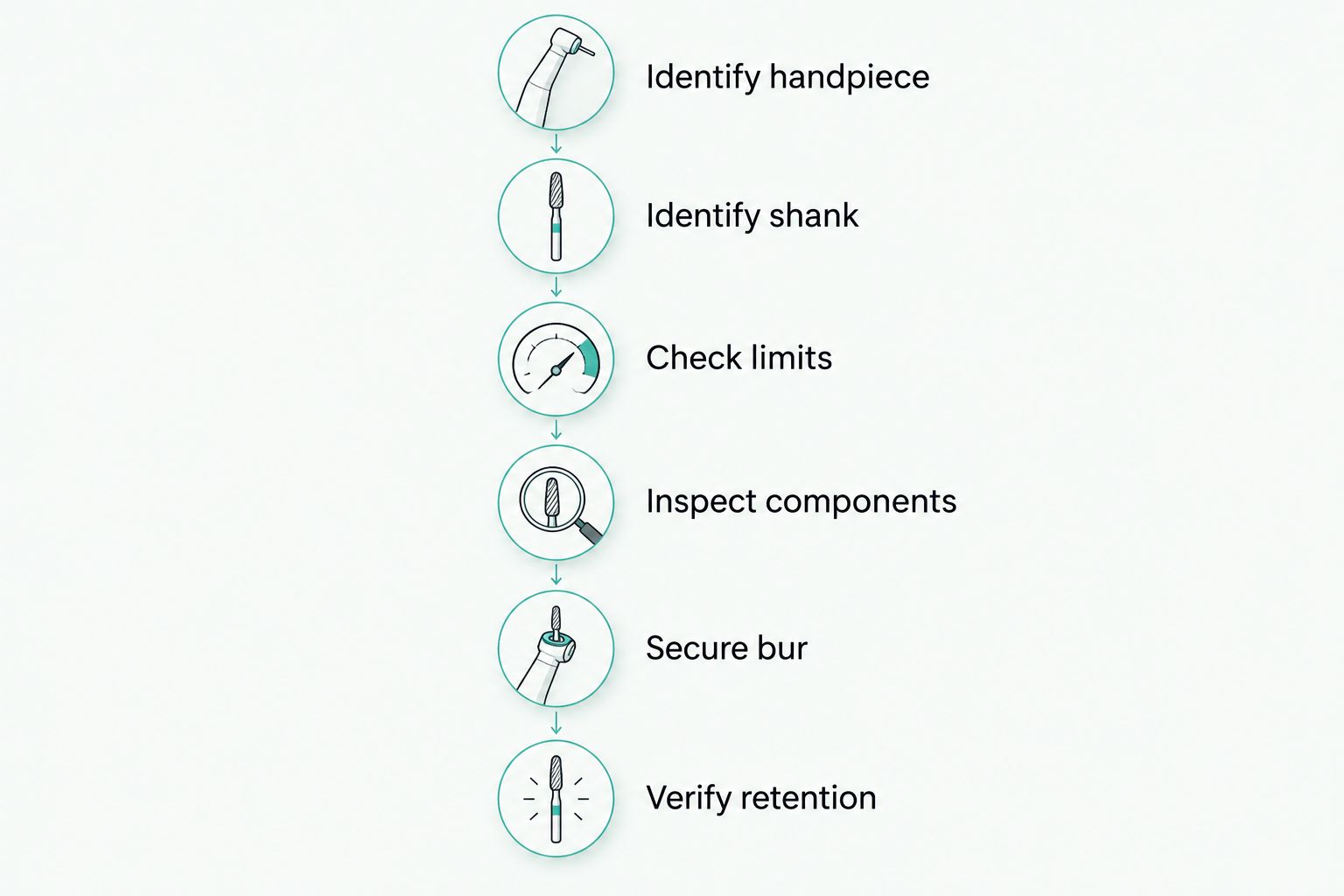
Use this sequence when evaluating a new handpiece, introducing a different bur or investigating a retention complaint. Follow the model’s instructions for use throughout; this sequence does not replace its operating or servicing procedure.
- Identify the handpiece. Record the manufacturer, exact model and head or attachment version. Confirm that the instructions correspond to that configuration rather than a similar-looking model.
- Identify the shank. Read the bur packaging and manufacturer’s specification. Confirm friction-grip, latch-type or straight-handpiece construction rather than identifying the bur by its cutting-head shape.
- Check the dimensional limits. Compare nominal shank diameter, permissible overall length and any cutting-head restrictions against the handpiece instructions. Include restrictions for extended-length instruments.
- Inspect before insertion. Check the bur for visible damage, contamination or a distorted shank. Inspect the accessible chuck area as directed without probing or dismantling it outside the approved procedure.
- Insert and secure correctly. Keep the handpiece stopped, operate the release mechanism as instructed, and seat the bur to the specified position. Release or lock the mechanism before checking retention.
- Complete the prescribed check. Perform the manufacturer’s pre-use retention and operational checks. Stop if the bur does not secure correctly or if abnormal vibration, noise or heating appears.
Record the result against the handpiece, not just the operatory. When instruments move between rooms, a location-only note makes it harder to identify the device that needs service.
Compare the common shank interfaces
The dimensions below are nominal category dimensions, not acceptance tolerances. Matching diameter alone does not establish compatibility. The retention geometry and manufacturer’s permitted instrument range must also match.
| Shank interface | Common nominal diameter | Retention distinction | Best for | Main constraint |
|---|---|---|---|---|
| Friction-grip, or FG | 1.6 mm | A compatible chuck grips the cylindrical shank | Procedures using a handpiece specified for FG instruments | Insertion depth, shank condition and permitted bur length remain critical |
| Latch-type, or RA | 2.35 mm | A compatible latch engages the shank’s retention feature | Procedures using a latch-type contra-angle | The diameter does not make an RA bur interchangeable with an HP bur |
| Straight-handpiece, or HP | 2.35 mm | A straight-handpiece chuck secures the specified shank | Procedures using a compatible straight attachment | Shank length and attachment instructions still govern use |
FG, RA and HP describe interfaces, not cutting indications. Select shape, grit and cutting material separately, after establishing that the shank and instrument dimensions are permitted.
Friction-grip chucks: check the full instrument envelope
For a friction-grip dental handpiece, the nominal 1.6 mm shank is only the starting point. Ask for permitted bur lengths, insertion requirements and restrictions on cutting-head dimensions. Do not assume an extended surgical instrument is acceptable because its shank enters the chuck.
A push-button release is convenient for instrument changes, but it does not remove the need for correct seating and inspection. Keep pressure off the release button during operation and follow the manufacturer’s handling instructions.
When comparing FG handpieces in 2026, request a demonstration of insertion, release and the prescribed retention check. Use an instrument the manufacturer permits. A demonstration with an unspecified bur does not answer whether your existing inventory is compatible.
Best for: practices standardizing around documented FG-compatible procedures and instruments. The limitation is that a shared nominal shank diameter does not make every bur length or head geometry acceptable.
Latch-type and straight-handpiece chucks: distinguish geometry
Latch-type and straight-handpiece instruments commonly share a nominal 2.35 mm diameter, but their retention arrangements differ. An RA bur’s retention feature must engage the intended latch mechanism. An HP instrument must match the straight attachment’s chuck and dimensional requirements.
Do not use apparent fit as permission to interchange them. If an instrument enters an attachment but does not lock as described in the instructions, stop rather than trying another insertion position or improvising a workaround.
For equipment buyers, the practical check is an instrument list attached to the quote. Specify the procedures, current bur references and proposed attachment. Have the supplier confirm compatibility against the manufacturer’s documentation before you authorize the order.
Best for: practices purchasing attachments for an identified RA or HP instrument inventory. The limitation is that equal nominal diameters can conceal incompatible retention geometry.
Why dental handpiece bur retention varies
A retention problem is not automatically a defective bur or a failed chuck. Check these factors systematically, without attempting an unapproved repair:
- Shank compatibility: The instrument must match the documented interface, diameter and retention geometry.
- Insertion and locking: Incomplete seating or an incorrectly operated release mechanism prevents the intended engagement.
- Bur condition: Visible bending, surface damage or contamination warrants removing the instrument from use and following the applicable instructions.
- Chuck condition: Wear, damage or contamination requires assessment through the manufacturer’s maintenance or service process.
- Instrument dimensions: Overall length and cutting-head geometry must remain within the handpiece’s approved limits.
- Maintenance procedure: Cleaning, lubrication where required, and reprocessing must follow the exact model’s instructions, including any exceptions.
Do not assign a universal retention-force threshold across handpieces. A calibrated chuck assessment belongs to the specified test method and appropriate service personnel; a chairside tug is not a substitute.
What should you do when a bur slips or will not lock?
Remove the affected handpiece from clinical service when retention is uncertain. Stop operation before handling the bur, identify the handpiece and instrument involved, and follow your practice’s incident and equipment-control procedures.
Record what happened: failure to seat, movement during the prescribed check, unexpected release or rotation-related symptoms. Include the bur reference and any visible damage. These observations help the service provider investigate without relying on a general report that the handpiece feels loose.
Do not repeatedly test a suspect chuck on patients, modify a shank or attempt an internal adjustment without authorization. Ask the manufacturer or authorized service provider which inspection and repair process applies. Return the device to service only after the required corrective action and checks are complete.
What should a 2026 handpiece quote confirm?
A useful quote identifies the exact handpiece and the evidence supporting its compatibility with your instruments. It should also separate maintenance responsibilities from repair coverage.
ProElite Dental Supply is best for dental handpiece buyers seeking equipment supply rather than patient-facing dental care. For a qualified enquiry, provide the intended procedures, existing drive system, coupling details and bur references instead of requesting a handpiece by appearance alone.
Ask the supplier to document:
- The exact model, attachment and chuck mechanism being quoted.
- Permitted shank types, nominal diameters and instrument-length limits.
- Required cleaning, lubrication and reprocessing procedures.
- Whether chuck inspection or replacement requires factory or authorized service.
- Which chuck, bearing and misuse exclusions appear in the product-specific warranty.
- Responsibility for repair authorization, transport and return-to-service checks.
For your 2026 purchasing file, retain the applicable instructions and written compatibility confirmation alongside the quotation. Do not substitute a general brand brochure for model-specific documentation.
A lower acquisition expense does not settle the ownership decision. Compare maintenance supplies, staff handling requirements and repair arrangements without assuming that consumables, chuck replacement or transport are included.
Does a compatible coupling mean the bur will fit?
No: coupling compatibility and bur compatibility are separate checks. The coupling connects the handpiece to its supply or drive interface; the chuck retains the cutting instrument.
Confirm both independently. A handpiece can match the intended connection while remaining unsuitable for a particular bur or procedure.
Can you use the same bur in air-driven and electric handpieces?
Only when both exact handpieces permit that instrument. Drive type alone does not establish shank compatibility, allowable speed, instrument length or cutting-head limits.
Review the bur manufacturer’s operating restrictions as well as the handpiece instructions. The acceptable combination must satisfy both, including the applicable speed and procedural limitations.
Does bur retention prove that the handpiece is ready for use?
No: secure retention is necessary, but it is not a complete readiness assessment. Required reprocessing, correct assembly and the manufacturer’s operational checks remain separate obligations.
For a 2026 maintenance review, audit those checks together while recording them separately. Passing one check must not conceal an unresolved problem elsewhere in the handpiece.
FAQ
How do I know which bur fits my dental handpiece?
Match the bur’s shank type, nominal diameter, length and retention geometry to the exact handpiece instructions. Confirm the bur manufacturer’s operating restrictions as well; apparent fit alone is insufficient.
What diameter is a friction-grip dental bur shank?
A friction-grip dental bur shank is nominally 1.6 mm in diameter. The handpiece’s permitted length, insertion requirements and other instrument restrictions still apply.
Are latch-type and straight-handpiece burs interchangeable?
No: latch-type and straight-handpiece burs are not interchangeable merely because both commonly have a nominal 2.35 mm shank diameter. Their retention geometry and intended attachments differ.
What should I do if a bur pulls out during a retention check?
Remove the handpiece from clinical service if the bur fails the manufacturer’s prescribed retention check. Follow the specified inspection and service process rather than attempting an unapproved chuck adjustment.
Does a push-button chuck accept every friction-grip bur?
No: a push-button chuck accepts only instruments permitted by that handpiece’s instructions. Check shank specification, insertion depth, overall length and cutting-head restrictions.
Can I judge chuck condition with a manual pull test?
A prescribed manual check can identify an obvious retention problem, but it does not certify that a chuck meets a quantitative retention specification. Use the manufacturer’s test method and service process when chuck condition is in question.
What should I send when asking for a replacement handpiece quote?
Send the exact existing handpiece and coupling details, intended procedures and current bur references. Ask for written compatibility confirmation, maintenance instructions and product-specific warranty terms.
One last thing
Two burs can share a nominal diameter and still require different retention mechanisms. Make the shank interface a separate field in your purchasing records rather than recording diameter alone.
For your next ProElite Dental Supply dental handpiece enquiry, attach the bur packaging reference and existing attachment model. That gives the supplier a specific compatibility question to resolve before purchase—not an assumption to discover chairside.