

Portable dental X-ray batteries: charging and replacement planning
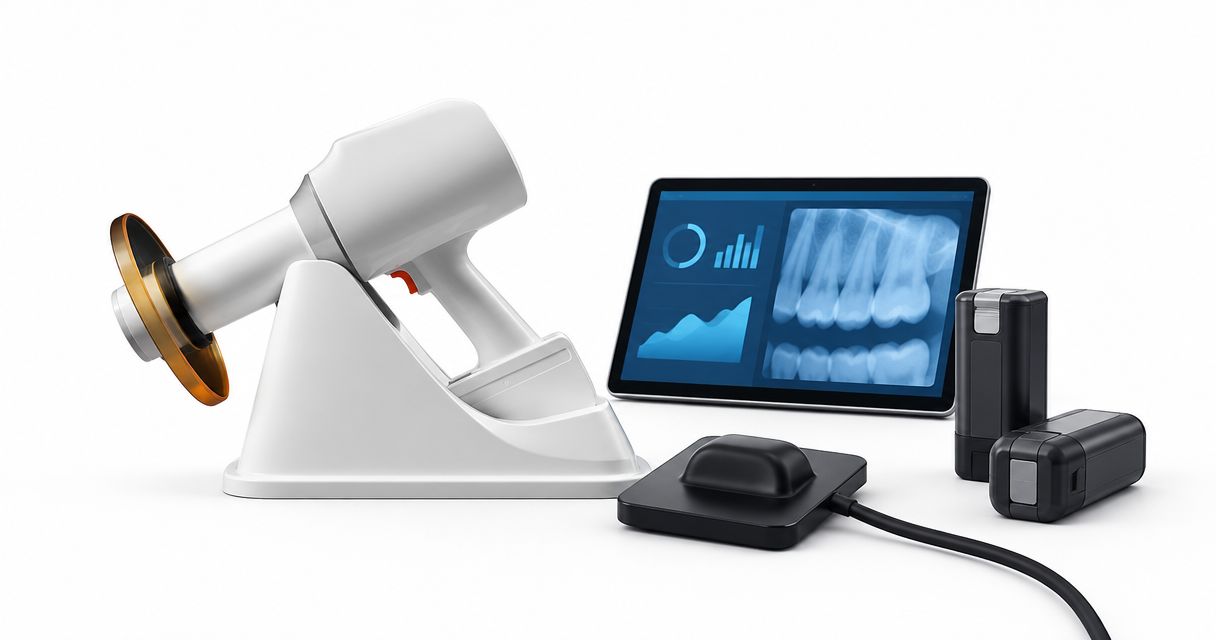
A portable dental X-ray battery needs a charging routine and a replacement budget, not a wait-until-it-dies approach. Plan to recharge the pack after every clinical day and plan to swap it once it has logged roughly 300 to 500 charge cycles — about 12 to 24 months of daily use in a single-operatory practice. Charging habits rarely cause downtime; running a unit on a battery that's already past its useful cycle count, with no spare on hand, is what stalls an exam chairside in 2026.
- A portable dental x ray battery typically holds 300 to 500 full charge cycles before it needs replacing, not just recharging.
- Single-operatory practices can run on overnight charging alone; multi-chair and mobile teams need a second battery in rotation.
- The Eighteeth HyperLight portable X-ray system is FDA cleared and runs on a rechargeable lithium-ion pack that fits this planning window.
- Battery failure, not charger failure, is the most common reason a handheld unit goes down mid-shift in 2026.
Why this matters
A dead battery on a handheld unit doesn't just delay one exposure — it pushes the whole chairside schedule back while someone hunts for a charger or reschedules the patient. Practices that treat battery life as a maintenance line item instead of an afterthought avoid that scramble entirely.
The HyperLight portable X-ray system is built around a rechargeable lithium-ion pack, and that chemistry has a known degradation curve you can plan around rather than guess at. Mobile and outreach teams feel this hardest, since they can't just plug into a spare unit down the hall.
How to plan charging and replacement for a portable dental X-ray battery
The routine is the same across most handheld units — the difference is how many exposures you're pushing through one pack per day.
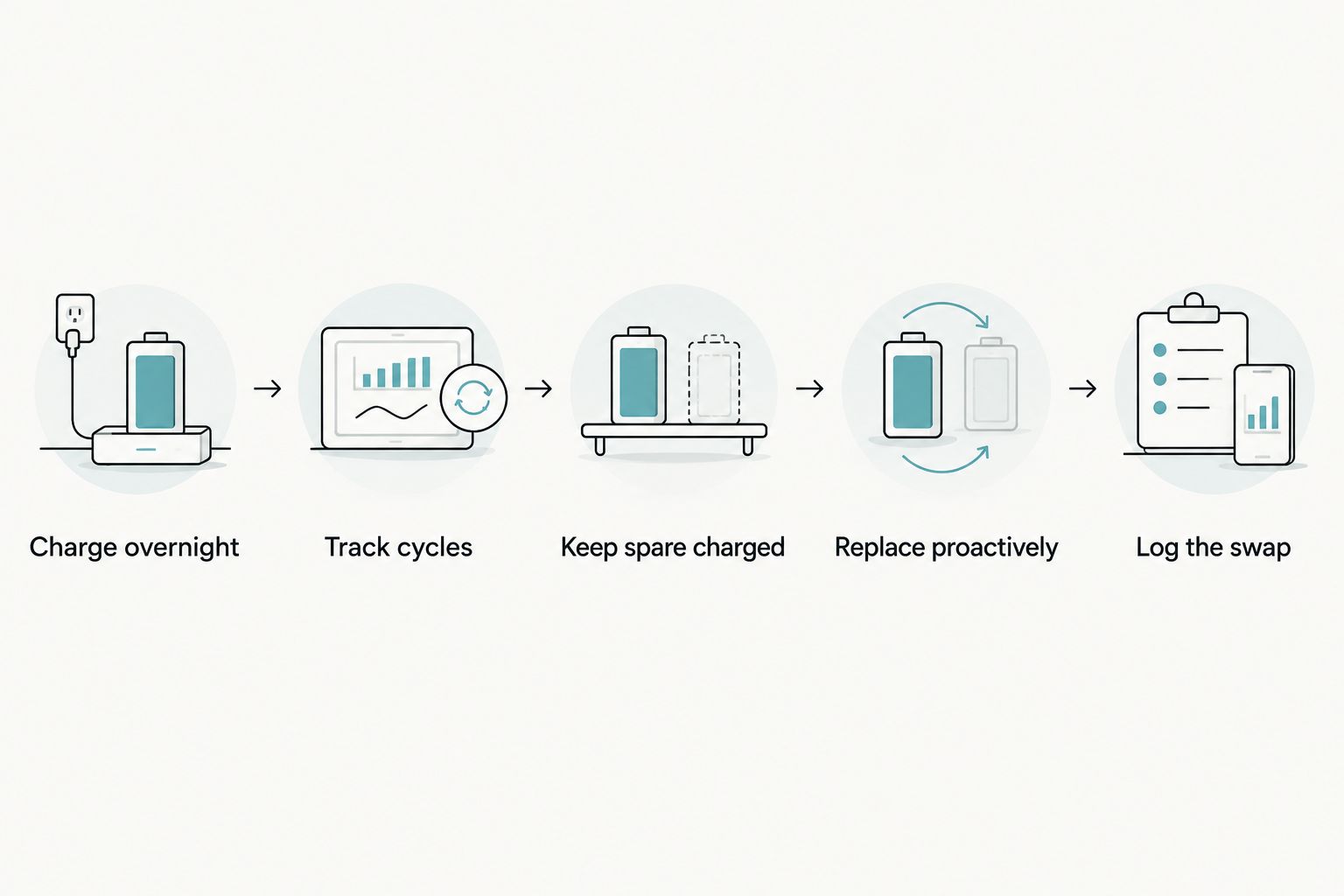
- Charge overnight, every night, on a dedicated charging stand rather than topping off mid-day.
- Track cycle count or charge date on a simple log sheet taped inside the equipment cabinet.
- Keep one spare battery charged at all times if more than one operatory shares the unit.
- Replace proactively near the 300-500 cycle mark, not after the unit starts cutting exposures short.
- Log every swap in your equipment maintenance file — service techs ask for this history when a warranty claim comes up.
| Setup | Charging approach | Backup battery needed? | Best for |
|---|---|---|---|
| Single operatory, handheld unit | Overnight charge on stand | Optional | Low-volume practices, 1-2 exams/day per unit |
| Shared handheld across multiple chairs | Overnight charge plus mid-day top-off | Yes, one spare minimum | Multi-op practices rotating one unit |
| Mobile/outreach cart-mounted unit | Charge before each outreach day, no mains access in the field | Yes, two spares recommended | Mobile dentistry teams, school and nursing-home visits |
For a side-by-side on handheld versus cart-mounted setups beyond battery logistics, the portable X-ray units buying checklist covers the rest of the purchase decision.
Battery replacement: plan around 300 to 500 charge cycles
Lithium-ion packs degrade gradually, not suddenly. A pack at the end of its cycle life doesn't just die — it holds less charge per session, meaning the unit starts needing a mid-day top-off it never used to need. That's the signal to replace, not just recharge.
At roughly 300 to 500 full cycles, expect noticeably shorter runtime between charges. For a practice charging once a day, five days a week, that puts replacement somewhere between 12 and 24 months out — sooner for practices that run two charge cycles a day on a shared unit. Warranty and replacement terms on sensor and imaging hardware vary by cable type and damage cause, which the sensor warranty and replacement terms guide breaks down in more detail — worth checking before you assume a degraded battery is covered the same way a cracked cable would be.
Why charging and replacement needs vary
- Exposures per day — a unit running 20+ exposures daily cycles its battery faster than one used for occasional single-tooth periapicals.
- Operatories sharing one unit — splitting one handheld X-ray across three chairs multiplies daily charge demand without multiplying battery capacity.
- Ambient temperature in mobile settings — outreach vans and school visits expose packs to heat and cold that accelerate capacity loss.
- Storage between charges — leaving a battery fully depleted for weeks between outreach events shortens its usable life faster than keeping it partially charged.
- Standby drain — units left powered on between patients draw down charge even without taking exposures.
- Battery age at purchase — a refurbished or carried-over unit may already be partway through its cycle count before it reaches your practice.
How long does a portable dental X-ray battery last on a single charge?
A single charge typically covers a full clinical day of handheld exposures in a single-operatory practice, though exact runtime depends on exposure count and standby time between patients. Units shared across multiple chairs burn through a charge faster and usually need a spare battery in rotation.
Can you swap batteries mid-exam on a handheld unit?
Yes — most handheld portable dental X-ray units allow a battery swap between patients without powering down the whole system, as long as a charged spare is already on hand. The swap itself takes seconds; the planning failure is not keeping a spare charged in the first place.
Does a degraded battery affect the unit's FDA clearance?
No, a degraded or replaced battery does not change the FDA clearance status of the imaging unit itself, since clearance applies to the device's imaging function and output, not its power source. Replacing the battery with a manufacturer-approved pack keeps the unit within its cleared operating parameters.
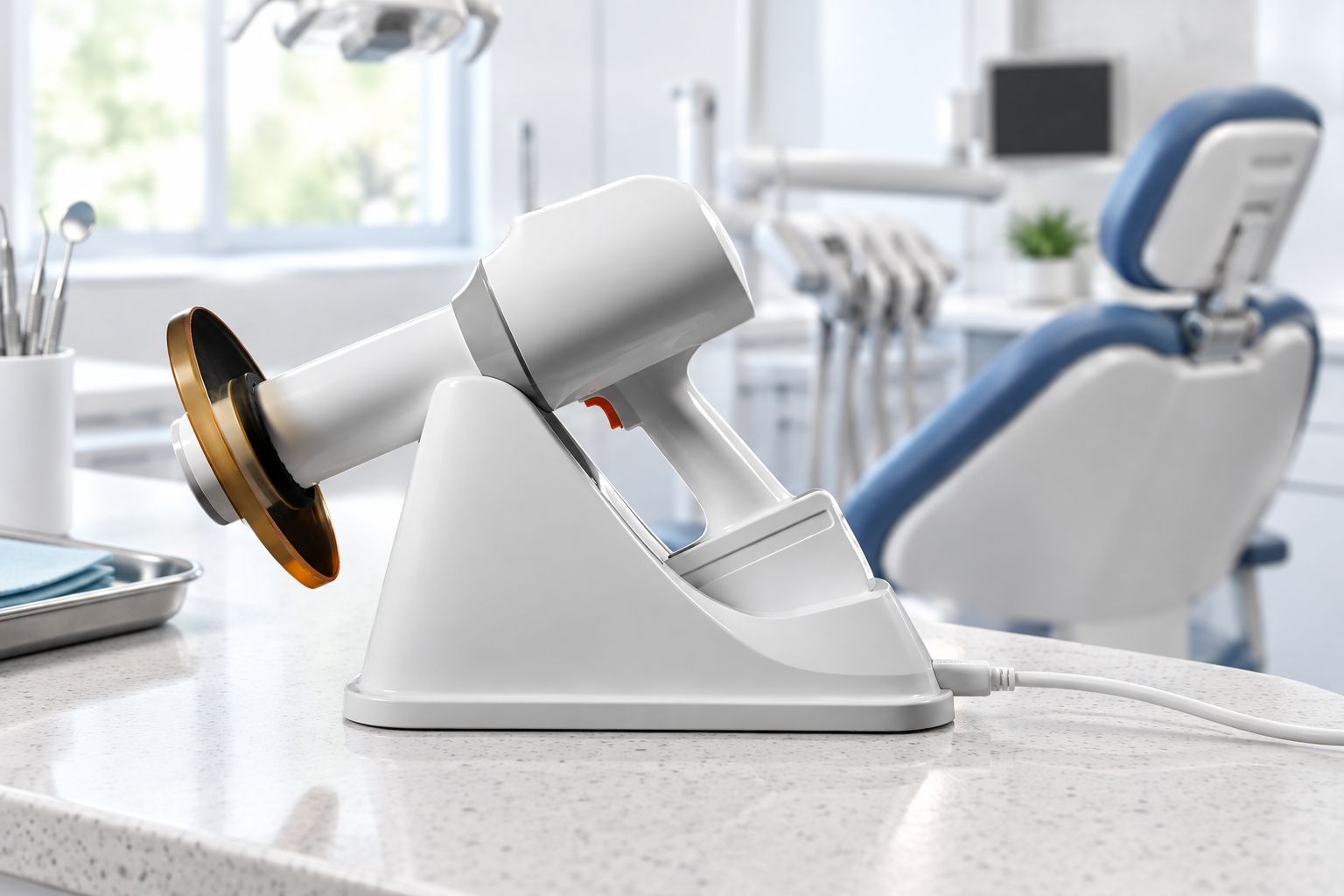
When it's time to replace rather than just recharge, the Hyperlight X-ray stand keeps the charging routine consistent across multiple units in a multi-operatory practice, and a protective case keeps spare packs and the charger from taking damage between charge cycles.


“If you're already swapping batteries before lunch, you don't have a charging problem — you have a capacity problem.”
FAQ
How often should you charge a portable dental X-ray battery?
Charge it overnight after every clinical day rather than waiting for a low-battery warning. A consistent overnight routine keeps a single-operatory practice covered without a mid-day top-off.
How many charge cycles does a portable dental X-ray battery last?
Most lithium-ion packs in portable dental x ray units last roughly 300 to 500 full charge cycles before capacity drops enough to warrant replacement. That translates to about 12 to 24 months in a practice charging daily.
Do mobile dentistry teams need extra batteries?
Yes, mobile and outreach teams should carry two spare batteries rather than one, since there's no mains charger available mid-route. A single spare leaves no buffer if a pack degrades faster than expected in the field.
Is a handheld portable dental X-ray better than a cart-mounted unit for battery management?
Handheld units are simpler to charge since there's one battery per device, while cart-mounted units often run off a larger onboard pack shared across a session. Practices with multiple operatories usually find handheld units easier to rotate and recharge independently.
Does battery replacement void the warranty on a portable dental X-ray unit?
Battery replacement with a manufacturer-approved pack does not void the imaging system's warranty, but using an unapproved third-party battery can. Check the unit's specific warranty terms before sourcing a replacement pack outside the original supplier.
What's a sign a portable X-ray battery needs replacing, not just recharging?
Noticeably shorter runtime between charges and a need for mid-day top-offs that weren't required before are the clearest signs. That pattern means the battery has likely passed its usable cycle count, not that the charger has failed.
Can you overcharge a portable dental X-ray battery overnight?
No, modern lithium-ion charging stands cut off current once the pack reaches full charge, so leaving a unit on its stand overnight does not overcharge it. The bigger risk is leaving a battery fully depleted for weeks, which shortens its usable life faster than normal cycling.
One last thing
The part practices skip is storage between charges, not charging itself. A battery left fully depleted in a drawer for weeks between outreach events degrades faster than one kept partially charged and protected — which is exactly what a dedicated case is for when a pack isn't on the stand.