

Portable dental equipment for nursing-home visits
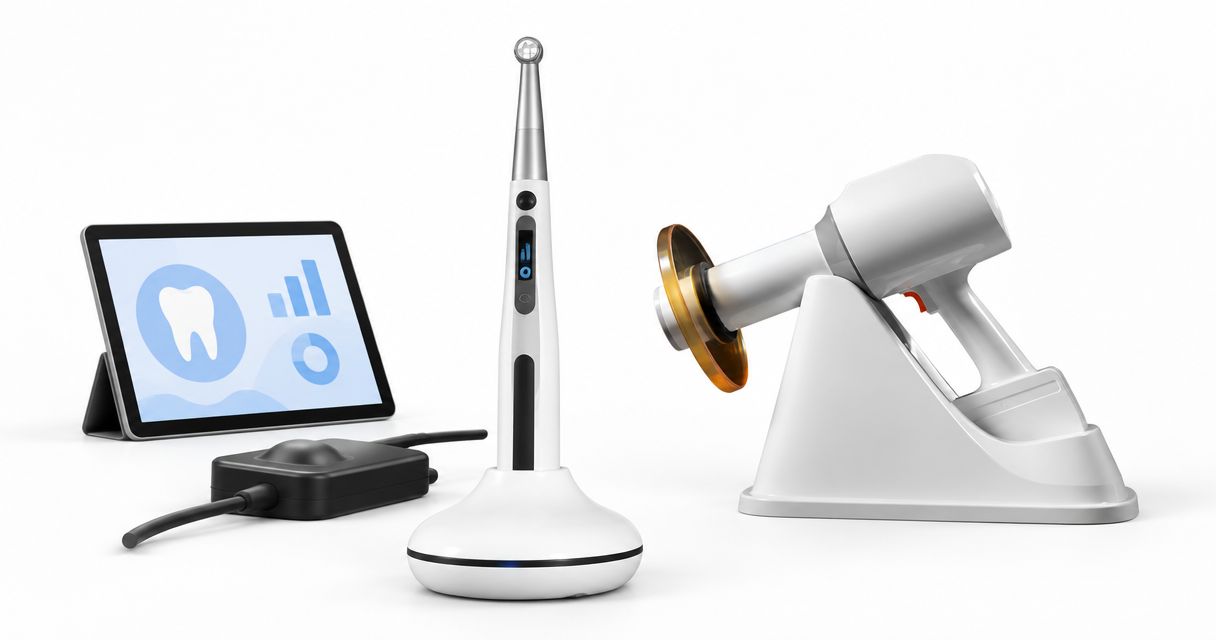
Nursing-home dental visits run on portable dental equipment that fits in a car trunk and operates without a fixed operatory, built to deliver restorative, diagnostic and preventive care to residents who can't travel to a clinic. A unit chosen for a fixed-location practice rarely survives repeated transport, battery-only power and infection control between rooms — this guide covers what actually changes when the visit comes to the patient instead of the other way around.
- A handheld, battery-powered X-ray unit with a padded transport case is the baseline for nursing-home dental routes in 2026.
- Suction and compressor needs are set by the room, not the cart — portable dental equipment still needs a mobile power source.
- Match curing lights and handpieces to bedside angles; a chairside design doesn't translate to a reclined bed.
- Battery runtime and sensor cable durability cause more missed visits than any single piece of hardware failing outright.
- ProElite Dental Supply stocks portable dental equipment built for mobile circuits, from handheld X-ray units to transport cases.
Why portable dental equipment matters for nursing-home visits
Mobile and nursing-home dental programs don't get a second trip when a sensor cable fails bedside or a handpiece motor won't hold charge through a multi-room circuit. Running a unit through a portable X-ray buying checklist before purchase matters more here than in a fixed operatory, because a return visit to swap equipment usually means a rescheduled resident and a second staff trip.
Infection control is the other variable that's different. A fixed op relies on in-room sterilization and a dedicated instrument processing area; a nursing-home circuit has neither. Equipment and consumables need to be packaged, barriered and transported in a way that holds up to being opened and closed in a resident's room, then re-packed for the next stop — all without a sterilization center down the hall.
Build a portable X-ray and sensor kit that survives bedside transport
The X-ray unit is usually the single piece of equipment a nursing-home visit can't proceed without — periapicals and bitewings drive diagnosis and documentation for the whole appointment. The HyperLight portable X-ray system is built around handheld, battery operation rather than an AC-tethered cart, which matters when the nearest outlet is across the room or behind a bed frame.
- Confirm battery-powered, handheld operation rather than a cart that needs an outlet near the chair
- Pack a padded, rigid transport case — sensor cables are the most common field failure on mobile routes
- Carry a backup sensor cable or a second sensor if the route covers more than a handful of residents per day
- Check Size 1 and Size 2 image receptor compatibility for edentulous and partially edentulous patients
- Verify the unit is FDA-cleared before it goes on a route serving a licensed facility
Plan suction and compressor needs around the room, not the cart
A portable operatory cart is only as mobile as its air and suction source. Reviewing compressor and suction needs for mobile dental visits before you commit to a cart configuration avoids buying a setup that works in the demo room but stalls on-site.
- Confirm whether the compressor is self-contained or requires a separate tank in the vehicle
- Measure suction hose length against a typical nursing-home room layout, not a dental op
- Check noise output — some facilities restrict compressor use near memory care units
- Plan a backup manual suction option for rooms without accessible outlets
- Confirm the cart's footprint clears a standard hospital-bed doorway
Match your curing light and handpiece to bedside positioning constraints
A chairside curing light or handpiece assumes a reclined patient at a fixed angle under an overhead light. Bedside work means working around a hospital bed rail, a reclined-but-not-flat resident, and ambient room light you can't dim. Cordless, lightweight units matter more on a mobile route than output specs alone.
- Prioritize cordless curing lights with a compact tip for restricted bedside access
- Choose an electric or air-driven handpiece based on what the cart's power source actually supports
- Pack spare curing light tips — they're the first consumable lost on a mobile route
- Confirm handpiece coupling compatibility with the motor you're carrying, not assumed
- Carry a second handpiece if the day's schedule runs past a handful of residents
Stock consumables and diamond burs for a full visit day without resupply
There's no supply closet on a nursing-home route — what's in the case is what you have for the day. Burs, barriers and disposables need to cover the full resident list with a margin, because a mid-route resupply trip eats into the time budgeted for care.
- Build a bur set around the procedures the route actually performs — extractions, restorations, adjustments
- Pack diamond burs in sealed, labeled sleeves to avoid cross-contamination between rooms
- Count consumables against the day's resident list plus a buffer, not against an average day
- Keep a barrier and PPE kit separate from the X-ray and handpiece case so restocking doesn't require unpacking everything
Standardize infection control and transport protocols between residents
Without a dedicated sterilization area, infection control on a nursing-home route depends on protocol discipline, not equipment alone. The same case that held sterile instruments into a resident's room needs a clear re-pack procedure before it enters the next one.
- Separate used and unused instrument trays in transport cases with physical dividers
- Use single-use barriers wherever the equipment design allows it
- Document turnover steps so any staff member on the route follows the same sequence
- Carry sharps and biohazard containers rated for transport, not just in-office use
Build a maintenance and battery-check schedule before the circuit, not after
Battery failure mid-route is the most common reason a nursing-home visit gets cut short. A charge-and-check routine before the van leaves the office prevents a dead sensor or handpiece motor from ending the day early.
- Charge all battery-powered units the night before, not the morning of
- Log battery cycles on the X-ray unit and handpiece motor to catch degradation early
- Inspect sensor and curing light cables for wear before each route, not on a failure
- Schedule a periodic service check with the equipment supplier rather than waiting for a breakdown
Comparing portable dental equipment options for nursing-home routes
| Option | Best for | Key limitation |
|---|---|---|
| Handheld battery X-ray unit | Single-operator routes, tight room layouts | Shorter battery life than a tethered unit |
| AC-tethered portable X-ray cart | Facilities with reliable in-room outlets | Less maneuverable around beds and wheelchairs |
| Full mobile operatory bundle (e.g., Jinme E8) | Teams running a full restorative day on-site | Larger footprint, needs van transport |
| Padded aluminum transport case | Protecting sensors and handpieces in transit | Adds setup/teardown time per stop |
Verdict: for a small team running one to two rooms at a time, a handheld battery X-ray unit paired with a padded transport case covers most nursing-home routes without the footprint of a full mobile bundle.


Common mistakes nursing-home teams make with portable dental equipment
- Buying chairside-spec equipment for a bedside workflow. A curing light or handpiece built around a fixed op chair doesn't account for hospital bed rails and reclined-but-not-flat positioning.
- Skipping a backup sensor or cable. One cable failure on a multi-resident circuit can end the visit for everyone still on the list.
- Underestimating compressor noise restrictions. Some memory care units restrict equipment noise, and that's rarely checked before the cart is purchased.
- Treating infection control as office protocol transplanted into a room. Without a sterilization area on-site, re-pack discipline between residents has to be built into the route, not assumed.
- Not charging equipment the night before. A dead battery mid-circuit is the single most preventable reason a nursing-home route gets cut short.
“A chairside curing light or handpiece doesn't translate to a reclined bed — bedside positioning is the real test for portable dental equipment.”
FAQ
What's the best portable dental equipment for nursing-home visits?
A battery-powered handheld X-ray unit paired with a padded transport case covers most single- or two-operator nursing-home routes in 2026. Larger teams running a full restorative day on-site typically add a mobile operatory bundle.
Do nursing-home dental teams need a full mobile operatory bundle?
Not always. A full bundle like a complete mobile dental system suits teams doing restorative work across multiple rooms per visit, while lighter routes get by with a handheld X-ray unit and a portable case.
Is handheld portable X-ray equipment safe for nursing-home residents?
FDA-cleared handheld portable X-ray units are built for bedside and mobile clinical use. Confirm FDA clearance status directly with the supplier before putting any unit on a licensed-facility route.
How long does battery-powered portable dental equipment last on a route?
Battery runtime varies by unit and usage pattern, so check the manufacturer's current specifications before planning a multi-room circuit. Charging every unit the night before a route is the most reliable way to avoid a mid-circuit failure.
What's the difference between a handheld and cart-based portable X-ray unit?
A handheld unit runs on battery power and maneuvers around beds and wheelchairs more easily; a cart-based unit typically needs a nearby outlet and more floor space. Nursing-home rooms usually favor the handheld format.
How do you sterilize instruments on a nursing-home dental route?
Without an on-site sterilization area, teams separate used and unused trays with physical dividers in transport cases and rely on single-use barriers wherever the equipment design allows it. Protocol discipline between rooms matters more than any single piece of equipment.
Can diamond burs and consumables be reused across nursing-home visits?
Burs and disposables should be packed and sealed per resident and tracked against the day's full list plus a buffer, not reused loosely across stops. Cross-contamination risk is higher on a mobile route without a central sterilization center.
One last thing
The equipment spec sheet rarely predicts what fails on a nursing-home route — it's almost always a cable, a battery, or a case that wasn't padded enough for the trunk of a car. Build the kit around transport durability first, then layer in imaging and restorative capability on top of that.